

Table of Contents
- Why Barbers Overspend on Chairs and What Actually Matters
- Salon Chair vs Barber Chair Differences: Which One Works for Your Shop
- Refurbished Barber Chairs for Sale: Durability, Warranties, and Real Costs
- Portable Barber Station Setup Guide: Mobile Shop Essentials on a Budget
- Key Features That Justify the Price: Hydraulic Pump Height, Stability, and Weight Capacity
- Total Cost of Ownership: Repairs, Replacement Parts, and Long-Term Value
- Buying Mistakes That Cost More Than Premium Chairs
- Frequently Asked Questions
Last Updated: October 20, 2026
Why Barbers Overspend on Chairs and What Actually Matters
The biggest misconception about barber chairs is that you need to spend thousands of dollars to get a reliable one. Many barbers assume premium pricing equals durability, but that's not always true. The reality is simpler: most barbers overspend because they don't understand what features actually matter for their specific workflow. The best chair isn't always the most expensive one, it's the one that fits your actual needs and budget constraints.
When you're evaluating alternatives to expensive barber chairs, focus on what delivers real value: hydraulic pump height adjustment, stability under daily use, and upholstery that holds up to constant client contact. These three elements determine whether a chair will serve you well for years or become a frustrating liability within months. Everything else, fancy footrests, premium leather, ornate styling, is secondary to function.
The cost of a chair extends far beyond the purchase price. Repairs, replacement parts, reupholstering, and downtime when equipment fails add up quickly. A cheaper chair that needs constant maintenance can cost more over five years than a mid-range option purchased upfront. Understanding total cost of ownership is what separates smart buyers from those who end up frustrated and out of pocket.
Salon Chair vs Barber Chair Differences: Which One Works for Your Shop
A salon chair vs barber chair distinction matters more than most people realize. These aren't interchangeable tools, and using the wrong type creates workflow problems that compound daily.
Barber chairs are engineered for the specific demands of barbering: precise height adjustment for line work, stable bases that don't shift during clipper cuts, and hydraulic systems designed for frequent up-and-down movement.
Salon chairs prioritize comfort and appearance for longer appointments (hair coloring, treatments, styling). They recline further, have softer cushioning, and emphasize aesthetic design. But they're often less stable during the aggressive, repetitive motions of clipper work. The hydraulic pump may not handle the constant adjustment cycle that a busy barber performs 20-30 times per day.
The practical difference: A salon chair in a barber shop will feel wobbly during detail work, and the hydraulic system will wear faster because it's not rated for that usage pattern. A barber chair in a salon feels overly rigid and doesn't provide the comfort clients expect during longer appointments.
For your shop, the choice depends on your service mix. High-volume fade shops need barber chairs. Shops offering longer services (beard work, coloring, treatments) can blend both types. Mobile barbers working solo almost always need barber chairs because portability and stability matter more than comfort features.
Refurbished Barber Chairs for Sale: Durability, Warranties, and Real Costs
Refurbished chairs represent a legitimate way to access alternatives to expensive barber chairs without sacrificing reliability. But the refurbished market has quality tiers, and not all refurbished chairs are created equal.
A properly refurbished barber chair has been disassembled, inspected, repaired, reupholstered, and tested. The hydraulic system is replaced or rebuilt to factory specs. When done correctly, a refurbished chair performs identically to a new one, and costs 40-50% less. The catch: you need to know what "properly refurbished" actually means from the seller.
Red flags in refurbished listings include vague descriptions ("gently used"), no mention of hydraulic system replacement, and missing warranty information. Legitimate refurbished chairs come with documentation of what was replaced and what warranty covers the work. Many quality refurbished chairs carry 1-2 year warranties on the hydraulic system and frame, a signal that the seller stands behind the work.
Used chairs (not refurbished, just secondhand) are cheaper but riskier. The hydraulic system may fail within weeks if it hasn't been serviced. Upholstery damage that looked minor in photos can worsen quickly under daily use. Unless you're buying from a trusted source who can verify maintenance history, used chairs are a gamble that often costs more in repairs than the initial savings.
For barbers on tight budgets, refurbished from a reputable supplier beats used every time. You get reliability closer to new equipment at a fraction of the cost. Just verify the warranty and ask specific questions about what was replaced.
Portable Barber Station Setup Guide: Mobile Shop Essentials on a Budget
A portable barber station doesn't require expensive, specialized equipment. The key is choosing a portable barber station setup that prioritizes stability and essential features while eliminating unnecessary bulk.
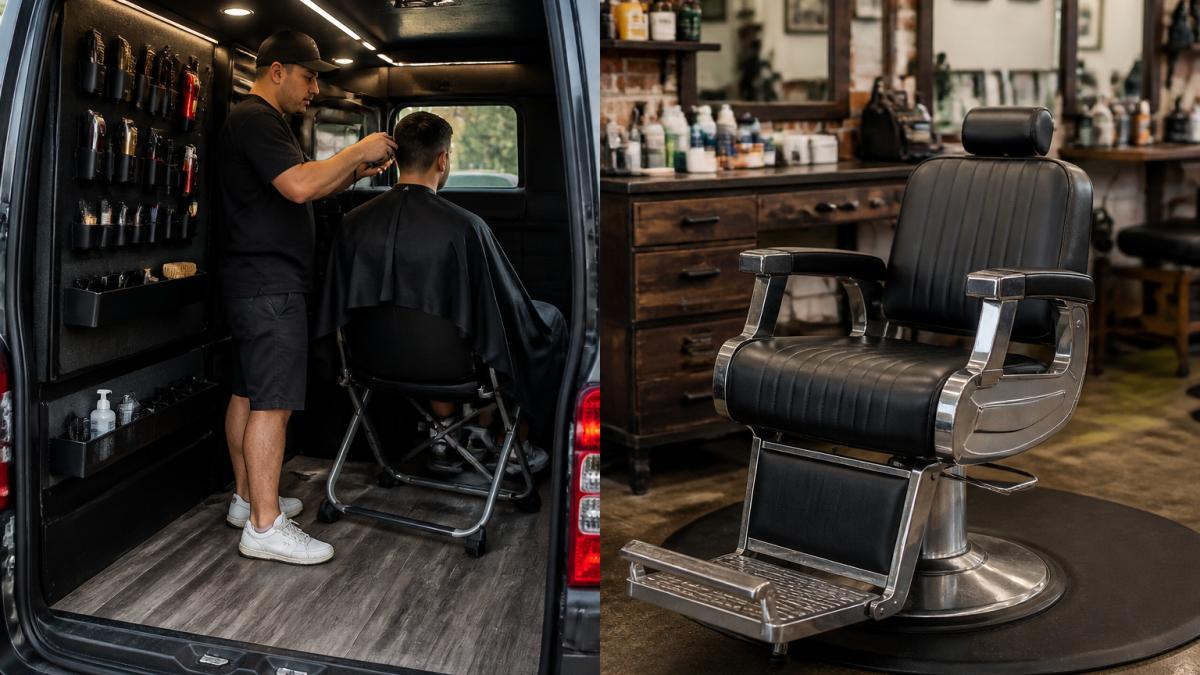
Start with a folding barber chair designed for travel. These chairs weigh 30-40 pounds, fold to roughly 40 inches long, and fit in most vehicle trunks or work vans. Stability matters more than luxury here, a reinforced base prevents tipping when you're working at different angles.
Next, organize your tools in a compact, portable kit. A rolling tool case or wall-mounted organizer that fits in your vehicle keeps clippers, trimmers, combs, and supplies accessible without cluttering your workspace. Many mobile barbers use a small folding table as a tool station, keeping everything within arm's reach.
Lighting is critical in mobile setups. Portable LED work lights (battery-powered or rechargeable) cost under $50 and make a massive difference in cut quality. Poor lighting is the #1 complaint from mobile barbers who skip this step.
Sanitation and water access depend on your location. If you're working in clients' homes, bring sanitizing spray, clean towels, and a water bottle for rinsing tools. If you're working from a vehicle, a portable water container and disposal system keep everything clean and professional.
The total investment for a solid portable setup, chair, tools, lighting, sanitation supplies, runs significantly less than a permanent shop chair. Many mobile barbers spend $300-600 total and operate profitably. The trade-off is portability over comfort; clients understand they're getting convenience, not a luxury salon experience.
Key Features That Justify the Price: Hydraulic Pump Height, Stability, and Weight Capacity
Not every feature on a barber chair matters equally. Understanding which ones actually affect your work quality separates smart purchases from overpaying for cosmetics.
Hydraulic pump height is non-negotiable. The pump determines how high and low the chair adjusts. For tall barbers (6'2" and above), a high hydraulic pump (typically 20+ inches of adjustment) prevents back strain during long days. For shorter barbers, a standard pump works fine.
Base stability directly impacts cut quality. A reinforced base with a wider footprint (typically 24-28 inches across) resists tipping and wobbling. During detail work on fades and lines, any movement throws off your hand position. Cheap chairs have narrow bases that shift under pressure.
Weight capacity matters for durability, not just for larger clients. A chair rated for 300 pounds experiences less stress than one rated for 250 pounds, even if your typical client weighs 180 pounds. Higher weight capacity indicates a sturdier frame and hydraulic system designed to handle stress.
Recline mechanism and locking affect workflow. A smooth recline with reliable locking prevents clients from shifting mid-cut. Poor locking mechanisms are frustrating and dangerous. Test the recline and lock before committing; this is where cheaper chairs often fail first.
Upholstery quality matters for longevity, but it's replaceable. Heavy-duty vinyl or leather holds up better than thin fabric, but a worn-out seat can be reupholstered for $150-300. Don't overpay for premium upholstery on a new chair if the frame and hydraulics are weak.
Total Cost of Ownership: Repairs, Replacement Parts, and Long-Term Value
The purchase price is only the beginning. Understanding total cost of ownership reveals why some alternatives to expensive barber chairs deliver better value than premium options.
A cheap chair ($300-500) might need hydraulic pump replacement within 18-24 months of heavy use. Hydraulic pump replacement runs $200-400 depending on the chair model. Reupholstering costs $150-300. If the base cracks or welds fail, repair costs spike to $300-500 or more.
A mid-range chair ($800-1,200) typically needs minimal repairs in the first three years if maintained properly. Hydraulic fluid top-ups cost $20-30. Upholstery damage might require spot repair or reupholstering around year four. Over five years, maintenance and repairs run $300-600 total. The per-year cost is dramatically lower.
Premium chairs ($2,000+) have the same repair needs as mid-range chairs, they just started at a higher price point. The premium often reflects branding and aesthetics, not superior durability.
Factoring in downtime is crucial. When a chair breaks, you either lose billable hours or pay rush fees for emergency repair. A reliable mid-range chair minimizes downtime. A cheap chair breaks more often, costing you in lost revenue beyond repair costs.
The smart financial move: Invest in a mid-range chair with a solid warranty. You'll spend less over five years than you would on either a cheap chair (repairs) or a premium chair (overpaying upfront). Evaluating chairs based on five-year cost, not just purchase price, is a smart approach.
Buying Mistakes That Cost More Than Premium Chairs
Most barbers make the same purchasing errors repeatedly. Recognizing these mistakes before you buy saves thousands in wasted money and frustration.
Mistake 1: Choosing based on appearance alone. A beautiful chair that doesn't fit your height or shop workflow is dead weight. Aesthetic appeal fades quickly when you're dealing with back pain or struggling with stability.
Mistake 2: Ignoring warranty details. A chair with no warranty or a 30-day warranty is risky. Hydraulic systems often fail after the initial break-in period.
Mistake 3: Buying without testing. If possible, sit in the chair and test the recline and height adjustment. Many online purchases result in returns because the chair doesn't feel right in person.
Mistake 4: Overestimating portability needs. Some barbers buy portable chairs for stationary shops, paying extra for features they don't use.
Mistake 5: Neglecting maintenance. Cheap chairs fail faster partly because barbers skip maintenance on budget equipment. Regular hydraulic fluid checks, bolt tightening, and upholstery care extend any chair's life.
Mistake 6: Buying based on price alone. The cheapest chair rarely delivers value. Mid-range chairs ($800-1,200) offer the best price-to-durability ratio. Spending slightly more upfront saves thousands in repairs and frustration over five years.
| Common Mistake | Impact | Prevention |
|---|---|---|
| Choosing by appearance | Poor ergonomics, back pain | Test before buying, prioritize function |
| Ignoring warranty | Expensive repairs after 30 days | Verify 1-2 year hydraulic warranty |
| Buying without testing | Returns, wasted time, wrong fit | Test in person or use flexible return policy |
| Overestimating portability | Paying extra for unused features | Match chair type to your actual setup |
| Skipping maintenance | Premature failure, downtime | Check hydraulic fluid, tighten bolts monthly |
| Price-only decisions | Constant repairs, higher total cost | Compare five-year ownership cost, not purchase price |
Choosing a barber chair is a business decision, not just a furniture purchase. The right alternatives to expensive barber chairs balance upfront cost, durability, and your specific workflow needs.
When evaluating options, focus on hydraulic pump height (matching your body), base stability (preventing wobble during detail work), and five-year total cost (including repairs).
Frequently Asked Questions
What are the most reliable budget-friendly barber chair brands?
Budget barber chairs from established manufacturers often prioritize hydraulic pump reliability and base stability over premium upholstery. Look for chairs with reinforced bases, 800-pound weight capacity, and lockable reclining mechanisms. Refurbished models from reputable suppliers can offer the same durability as new premium chairs at 40-60% of the cost. Check warranty coverage and return policies, these signal manufacturer confidence in durability.
Can you use a salon chair for barbering services?
Salon chairs and barber chairs differ in critical ways. Barber chairs typically feature higher hydraulic pump heights (ideal for standing clients), stronger reinforced bases for frequent adjustments, and lockable recline mechanisms. Salon chairs work for some barbering but lack the stability and adjustment range for high-volume professional use. For daily professional barbering, a proper barber chair prevents ergonomic strain and client discomfort.
Are refurbished barber chairs a good investment for new shops?
Refurbished barber chairs can be excellent investments if sourced from reputable suppliers offering warranties and upholstery guarantees. A reupholstered chair with a new hydraulic pump and reinforced base performs like new at a fraction of premium pricing. Verify the chair's history, test the pump height adjustment, and confirm warranty terms. New shops often recoup savings quickly while maintaining professional-grade comfort and durability.
How do I set up a portable barber station on a budget?
Portable barber station setups require a folding or compact barber chair, a rolling tool cart, and organized storage for clippers and supplies. Choose lightweight chairs with stable bases that fold without compromising safety. Invest in quality hydraulic mechanisms and lockable reclining features even in compact models. Organize tools in labeled compartments to maximize efficiency in tight spaces. Mobile barbers benefit from modular, upgradeable equipment that grows with their business.