

Last Updated: October 25, 2026
Quick Summary
Yes, professional barber combs are worth it for beginners because a carbon fiber comb costs just $2.49 to $2.79 and outlasts a drugstore comb, working out cheaper per client. Saw-cut teeth glide instead of dragging, so you make fewer mistakes while learning sectioning and blending.
- Start with the all-purpose carbon comb at $2.79 before adding specialist combs.
- A carbon comb used daily typically lasts a year or more; a moulded comb fails in three to six months.
- Fine-tooth combs suit fades and short hair, wide-tooth combs move bulk hair.
- Clean each comb after every client: remove hair, wash, disinfect, dry fully.
- Skip the upgrade if you only cut hair occasionally for family or keep a buzz cut.
Table of Contents
- The Short Answer: What $2.79 Buys a Beginner
- Professional Barber Comb vs Regular Comb: Where the Difference Shows Up
- The Best Barber Combs for Beginners: A Starter Comparison
- Tooth Spacing, Length, and Shape: Picking the Right Comb Type
- How the Clipper Over Comb Technique Changes Your Comb Choice
- How to Clean Barber Combs and Make Them Last
- When a Professional Comb Is Not Worth It
- Building Your First Comb Kit at Fade Supply Co
- Frequently Asked Questions
The Short Answer: What $2.79 Buys a Beginner
Yes, professional barber combs are worth it for beginners, and the math is almost embarrassing.
Fade Supply Co exists for exactly this moment: the student or new barber building a first kit who cannot afford to guess.
Most beginners get this wrong: they spend on clippers, then grab any comb from a drawer.
Below, we break down where the difference actually shows up, compare five starter combs side by side, and tell you honestly when a cheap comb is fine.
Professional Barber Comb vs Regular Comb: Where the Difference Shows Up
A professional barber comb is a precision tool built for repeated contact with hair and clippers; a regular comb is a grooming accessory built to part hair in a bathroom mirror.
The U.S. Occupational Safety and Health Administration guidance on bloodborne pathogens matters here too, because a comb you can properly clean and disinfect is a comb you can use on client after client.
Saw-Cut Teeth vs Moulded Teeth
Saw-cut teeth are individually cut into the comb, leaving smooth, rounded edges. Moulded teeth are formed in a mold, and the seam lines left behind create tiny ridges that catch hair strands.
A saw-cut comb pulls less, straightens sections more cleanly, and gives defined lines with less effort. For a beginner still learning tension and angle, less drag equals fewer mistakes.
Carbon Fiber, Acetate, Wood, and Plastic
Carbon fiber combs are lightweight, heat-resistant, and anti-static, which is why they dominate professional kits. Acetate looks premium but costs more; wooden combs dislike water and clipper heat; basic plastic is cheapest and most likely to develop static and burrs.
For a first professional comb, carbon fiber is the sensible pick: it survives hot tools, resists static, and costs less than a coffee.
The Best Barber Combs for Beginners: A Starter Comparison
Most comb guides list styles and leave you to guess. This one gives you the math: five combs cover everything a beginner needs, and together they cost less than a single mid-range clipper guard set.
| Comb | Price | Size | Best For |
|---|---|---|---|
| Percu Carbon Cutting Comb #PC-014 | $2.79 | 19.5 x 4 cm | Sectioning and precision cutting |
| Percu Carbon All-Purpose Cutting & Styling Comb #PC-020 | $2.79 | 22 x 3 cm | One-comb starter kit, all hair types |
| Percu Carbon Tapering Comb #PC-018 | $2.49 | 18.5 x 3 cm | Tapering and detailing |
| Percu Carbon Flat Top Clipper Comb #PC-037 | $2.79 | 20.5 x 4 cm | Flat top haircuts, clipper work |
| Percu Fade Comb #PC-046 | $2.79 | 22.5 x 4.5 cm | Fade lines and clipper-over-comb |
The Cost-Per-Use Math
A drugstore comb runs about $1 to $2; a professional carbon comb runs $2.49 to $2.79, roughly a dollar more. Spread that dollar over the tool's life. A carbon comb used daily typically lasts a year or more; a moulded drugstore comb often shows burrs and bent teeth within months. Cut ten heads a week and a $2.79 comb lasting twelve months costs well under a penny per client, while the drugstore comb that fails in three months costs more per client because you replace it four times.
What to Buy First
If you buy only one comb, start with the Percu Carbon All-Purpose Cutting & Styling Comb #PC-020. It is the most versatile of the group: 22 cm long, slim at 3 cm, and built for cutting and styling across all hair types.

If you know you will be cutting and sectioning constantly, the Percu Carbon Cutting Comb #PC-014 is the dedicated tool. At 19.5 cm it is compact enough for tight work around the ears and neckline, with fine teeth for clean sections.

What Can Wait
The fade comb and the flat top comb are specialists. Buy them once a client asks for those cuts or you start practicing clipper-over-comb in earnest. Buying all five on day one spends $13.65 and uses two for the first month; buying the all-purpose comb first spends $2.79 and adds tools as the work demands.
Best for: students and new barbers who want one dependable comb before adding more. Skip if: you already own a quality all-purpose comb and only need a fade-specific tool.
Tooth Spacing, Length, and Shape: Picking the Right Comb Type
Tooth spacing decides how much hair the comb grabs, and that spec should drive your choice more than brand or color. Fine-tooth combs pick up small sections for detail work; wide-tooth combs move bulk hair without snagging.
Length and shape come second: a long comb gives reach across the head for sectioning, a slim comb fits tight areas, and a short comb gives control for detailing.
Fine-Tooth, Wide-Tooth, and Tapering Designs
Fine-tooth combs suit short hair, fades, and precise cutting. Wide-tooth combs suit longer hair, wet detangling, and bulk movement.
The Percu Carbon Tapering Comb #PC-018 is the clearest example: 18.5 cm long, 3 cm wide, and built specifically for blending and tapering work.

For fades, the Percu Fade Comb #PC-046 is the specialist. At 22.5 x 4.5 cm, its finely spaced teeth give closer control and better visibility while you blend, and the flexible carbon body handles clipper-over-comb without chattering.
Percu Carbon Cutting Comb #PC-014 →
How the Clipper Over Comb Technique Changes Your Comb Choice
Clipper over comb is a cutting method where you hold the comb against the head and run clippers along its teeth to remove length and blend, using the comb as your guide.
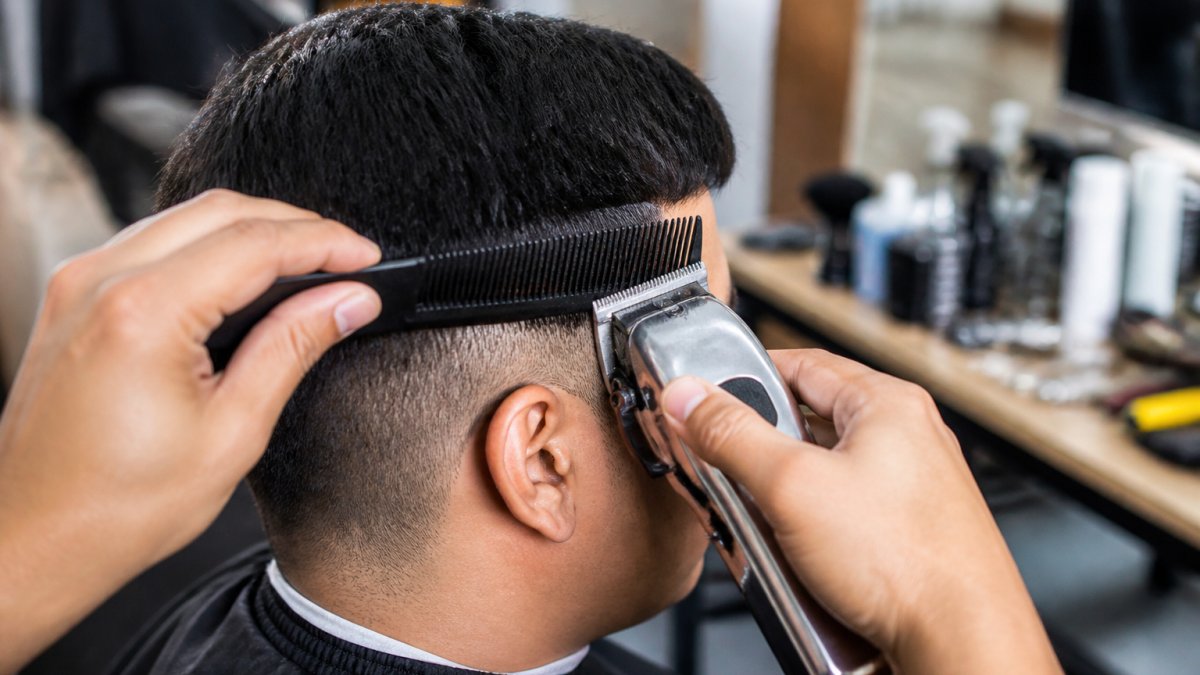
Thin, flimsy combs bend under clipper pressure and produce uneven lines. The Percu Carbon Flat Top Clipper Comb #PC-037 is designed for this work: 20.5 x 4 cm, heat-resistant carbon fiber, and sturdy enough to hold a straight guide line while the clipper passes over it.
Watch out: pressing too hard with the clipper against a soft comb bends the teeth and gouges the cut. Let the comb's edge do the guiding, and keep your clipper blade flat.
How to Clean Barber Combs and Make Them Last
Cleaning a barber comb takes under a minute per client and is the difference between a tool that lasts years and one that warps or discolors in months. The routine: remove hair, wash with soap and warm water, disinfect, dry fully. What most guides skip is the lifespan math, how long a comb should last, when to replace it, and how cleaning habits change cost-per-use.
- Brush out all loose hair after every client
- Wash with mild soap and warm water, not boiling water
- Disinfect with an approved solution between clients
How Long a Comb Should Last
A carbon fiber comb used daily and cleaned after every client typically lasts a year or more; a moulded plastic comb used the same way often shows burrs, bent teeth, or a cracked spine within three to six months. The difference is not just material but how the teeth are cut: saw-cut teeth have smooth, rounded edges that resist the micro-cracks that start at a moulded seam line. That is why the $2.79 carbon comb outlasts the $1.50 drugstore comb, and why the cost-per-use math favors the professional tool.
Signs It Is Time to Replace
Replace a comb when you see any of these:
- Burrs or rough edges on the teeth, these drag hair and leave tracks
- Bent or missing teeth, the comb no longer gives a straight guide line
- A crack at the spine or between teeth, the comb can snap mid-cut
A comb with any of these is not a bargain at any price. It is a tool that will cost you a client's trust.
Heat, Storage, and the Sanitation Rules
Heat is the enemy of most combs, so keep them off hot clipper blades and out of hot towel cabinets. Carbon fiber handles heat far better than basic plastic, another reason it earns its place in a working kit.
Check your state board's sanitation rules for the disinfectant your area requires, since requirements vary by state. The U.S. Occupational Safety and Health Administration guidance on bloodborne pathogens is the baseline for why disinfecting between clients matters, but your state board sets the specific approved solutions and contact times.
The Lifespan-to-Cost Connection
Here is the part that ties cleaning back to the purchase decision. A comb that lasts a year at $2.79 costs about 23 cents a month; one that lasts three months at $1.50 costs 50 cents a month, more than double, plus the time and frustration of replacing it. Cleaning and storing your comb properly gets you to the twelve-month mark; skip the routine and the cheap comb quietly becomes the expensive choice.
When a Professional Comb Is Not Worth It
A professional comb is not worth it if you cut hair occasionally for family, keep a buzz cut, or only comb dry hair before leaving the house.
The upgrade also makes little sense if you have not yet committed to barbering as a craft. Wait until you are enrolled, apprenticing, or cutting regularly.
Honest limitation: our combs are professional-grade tools built for daily use, not luxury display pieces.
Building Your First Comb Kit at Fade Supply Co
A beginner's first comb kit should cover three jobs, sectioning, blending, and fading, for under ten dollars. Start with the all-purpose comb for daily cutting and styling, add the fade comb for clipper-over-comb work, then the tapering comb once you start blending lengths.
That is the entire argument for professional barber combs: the tools are cheap, the mistakes they prevent are not.
Fade Supply Co stocks these combs alongside the rest of a working station, with quick shipping to keep your kit complete, secure checkout, and gear chosen for daily professional use by barbers, students, and shop owners alike.
Frequently Asked Questions
What is the difference between a barber comb and a regular comb?
A barber comb is built for haircutting, not grooming. The teeth are saw-cut rather than moulded, so the edges are smooth and the hair slides through without snagging. Professional barber combs use materials like carbon fiber that stay rigid under clipper pressure and resist heat from styling tools. A regular drugstore comb flexes too much during clipper-over-comb work, which throws off your guide line. The gap shows up fastest on fades and tapers, where a fraction of a millimeter changes the blend.
How many combs should a beginner barber have?
Three covers almost everything in your first year. Start with an all-purpose cutting and styling comb for general sectioning, a fade comb for clipper-over-comb blending, and a tapering comb for detail work around the neckline and ears. At Fade Supply Co that set runs about $8 total, which is less than one drugstore multipack. Add a flat-top clipper comb only when you start taking those specific requests. Buying the trio first stops you from over-spending on tools you will not touch for months.
Are carbon fiber barber combs better than plastic combs?
For cutting work, yes. Carbon fiber combs hold their shape when you press them against a client's head during clipper-over-comb, and they carry anti-static properties that keep flyaways from ruining a blend. They are also heat-resistant, so a hot styling tool will not warp the teeth. Plastic combs cost less up front but flex under pressure and develop rough edges that pull hair. At $2.49 to $2.79 per comb, the carbon option is not a real budget stretch for a beginner.
How do you clean and maintain barber combs?
Pull loose hair out after every client, then wash the comb in warm water with a few drops of dish soap or an approved disinfectant. Scrub between the teeth with a small brush, rinse, and dry fully before it goes back on the station. Check the teeth weekly for burrs or chips and retire any comb that snags. Never leave carbon combs soaking in hot water or sitting on a clipper blade, since both shorten the life of the teeth.
Which comb is best for clipper-over-comb work?
A fade comb with finely spaced teeth gives you the closest control and the best visibility while blending. The Percu Fade Comb #PC-046 measures 22.5 x 4.5 cm, which is long enough to ride flat against the head and wide enough to keep your guide line steady. For flat-top work, switch to a clipper comb built for that shape. The comb matters as much as the clipper here: a flexing drugstore comb will bounce and leave track marks in the fade.
If your kit is still a mix of borrowed tools and drugstore leftovers, it is time to fix the cheapest part of the problem first. Get started with Fade Supply Co and build a station you can trust, one comb at a time.
