

Table of Contents
- What Makes Barber Shears for Fades Different
- Understanding Blade Length and Fade Precision
- Scissor-Over-Comb Technique for Fades Explained
- Blending Shears vs Thinning Shears: Which You Need
- Steel Quality, Ergonomics, and Weight Balance
- Professional Barber Shear Maintenance and Longevity
- Recommended Shears and Investment ROI
- Conclusion
Last Updated: August 22, 2026
What Makes Barber Shears for Fades Different
When cutting fades, your shears define the precision line between two different lengths, fundamentally different from general cutting work. Barber shears for fades must glide through hair cleanly without pulling, maintain consistent blade tension across dozens of clients daily, and deliver edge control for seamless blending.
The difference lies in blade geometry and steel quality. Fade shears have a convex edge, a curved blade design creating a sharper cutting surface than beveled edges in standard scissors. Fades require tight, controlled motions, not long sweeping cuts. A dull or poorly tensioned blade tears hair instead of cutting it, leaving rough lines clients notice immediately.
At Fade Supply Co, we provide professional-grade barber tools designed to help barbers perform at their best.
Understanding Blade Length and Fade Precision
The ideal blade length for fade work is between 5.5 and 6 inches. Shorter blades give superior control over tight lines, while longer blades let you cover more hair with each pass during blending. Most professional barbers doing high-volume fades land in the 5.75-inch range.
Blade length directly affects your cutting angle and precision. A 5.5-inch shear forces a more controlled hand position with fingers closer together and less wrist freedom, exactly what you need carving a clean line between a zero-fade and quarter-inch. When blending the mid-section with scissor-over-comb technique, those extra half-inches of blade let you work faster without sacrificing blend quality.
Blade length also depends on hand size. Smaller hands feel more stable with 5.5-inch shears, while larger hands prefer the reach of 6-inch. An uncomfortable grip leads to hand fatigue, which leads to inconsistent cutting pressure and uneven fades.
Scissor-Over-Comb Technique for Fades Explained
Scissor-over-comb is the foundational blending technique for fades. You hold the comb flat against the scalp, run it upward through the hair, and cut the hair extending above the comb teeth. The comb acts as a guide, and the shear removes only what sticks out, creating a gradual transition between lengths.
The technique requires barber shears with specific properties. Your blade needs to be sharp enough to cut cleanly as it passes the comb teeth; a dull edge crushes hair instead, creating rough blends. The blade must maintain consistent tension, loose blades chatter against the comb, leaving uneven lines, while tight blades slow your speed and tire your hand.
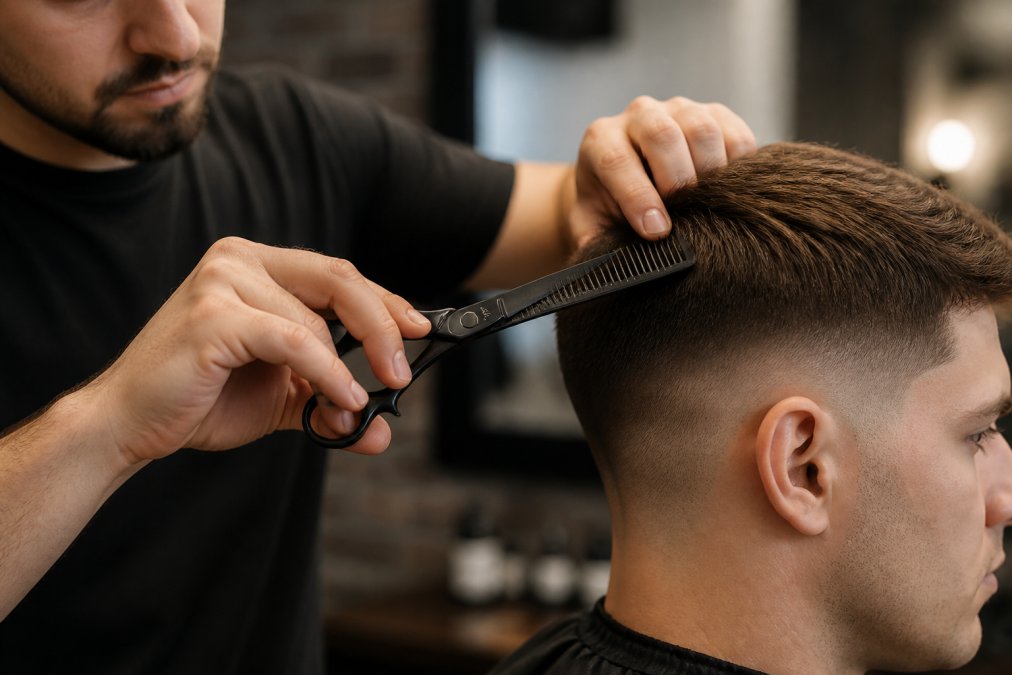
Hand positioning is critical. Your index and middle fingers go through the finger holes, and your ring finger rests on the finger rest, a small ledge on the bottom blade. This three-point contact provides stability and control during small, precise cuts. Poor ergonomics cause the shear to shift in your hand, throwing off your line.
The Percu Virtual Line Shears at $49.99 deliver reliable performance for scissor-over-comb work with offset handles and balanced weight distribution that keeps your hand stable during repetitive blending passes. For barbers building their kit, this is a solid entry point that won't compromise fade quality.

Blending Shears vs Thinning Shears: Which You Need
These serve different purposes, and most barbers need both.
Thinning shears have one serrated blade and one regular blade, removing 30-40% of hair while leaving some behind. You use them to soften lines and reduce density in specific areas. In fade work, thinning shears are essential for blending the mid-section after clippers establish base lines.
Blending shears (texturizing shears) are specialized thinning shears with higher serration counts, removing 50% or more per pass. They're designed specifically for softening hard lines and creating seamless transitions.
Practically, thinning shears are your workhorse for fade blending, while blending shears are your precision tool for fixing overly harsh transitions. Most barbers rely on thinning shears for 80% of blending work and use blending shears for detail work.
The Percu Oblivion Professional Cobalt Shear Set at $149.95 gives you both a cutting shear and thinning shear in one package. Matched steel quality and blade tension across both tools means your hand feels consistent moving between them. Mismatched shears create muscle memory confusion and slow your work.

Steel Quality, Ergonomics, and Weight Balance
Japanese stainless steel is the industry standard for professional-grade shears (the American Academy of Dermatology). It holds an edge longer than alternatives and resists corrosion better than carbon steel. The trade-off is cost, but Japanese stainless steel shears require less frequent sharpening and last longer.
Weight balance matters more than total weight. A 2.5-ounce shear balanced correctly feels lighter than a 2.2-ounce shear that's poorly balanced. The balance point should sit at your finger rest. When held with relaxed fingers, it should feel neutral, not tipping forward or backward. Poor balance creates fatigue as your hand muscles constantly compensate.
Ergonomic handle design includes offset handles (reducing wrist strain), properly sized finger rests, and detachable rests for hand size adjustment. The pivot screw connecting the blades is critical, loose pivots allow blade chatter and inconsistent cutting, while overly tight pivots create resistance and fatigue. Quality shears have tension adjustment mechanisms to dial in perfect blade tension.
Professional barbers doing high-volume fade work should spend $50-150 per shear. The Percu Italian Line Professional Shears at $79.99 deliver Japanese stainless steel, offset ergonomic handles, and hand-sharpened edges at a working barber's price. The Sky Line model at $69.99 is another solid choice if watching your budget.
Professional Barber Shear Maintenance and Longevity
Your barber shears will outlast your clippers with proper maintenance. Clean them after every client, hair, skin oils, and product buildup dull the edge faster than actual use. A quick dry wipe takes 10 seconds. Every few days, use a damp cloth with mild soap and water, then dry thoroughly. Never leave shears wet; moisture causes corrosion.
Check blade tension weekly in a high-volume shop. Hold the shear horizontally with the blade pointing up. The sweet spot is where the blade closes smoothly with light finger pressure and stays closed without falling open. Most quality shears have an adjustment screw at the pivot; turning it clockwise tightens tension, counterclockwise loosens it.
Professional sharpening should happen every 3-6 months depending on volume. A high-volume barber cutting 12-15 clients daily should sharpen every 3 months. A dull shear damages hair by crushing instead of slicing. Don't attempt to sharpen your own shears; send them to a professional service for $10-20 per shear.
Store your shears in a protective case or sheath. A simple leather sheath costs $5-10 and extends your shear lifespan significantly.
Recommended Shears and Investment ROI
Building a fade-focused shear kit doesn't require buying everything at once. Start with one quality cutting shear, add a thinning shear within a month, and consider a second pair after 3-6 months of heavy use.
For barbers just starting out: The Percu Virtual Line Shears at $49.99 are your entry point. They deliver Japanese stainless steel and offset ergonomic handles at an apprentice-friendly price. These shears handle scissor-over-comb blending effectively and hold an edge well for daily use.
For working barbers building a complete kit: The Percu Oblivion Professional Cobalt Shear Set at $149.95 gives you a cutting shear and thinning shear matched in steel quality and balance. For a barber doing 10-12 fades daily, this set pays for itself in reduced sharpening costs and faster work within 2-3 months.
For experienced barbers refining their technique: The Percu Italian Line Professional Shears at $79.99 and Percu Sky Line Shears at $69.99 both excel at specific cutting styles. The Italian Line works well for sliding cuts, while the Sky Line is a versatile all-purpose fade shear.

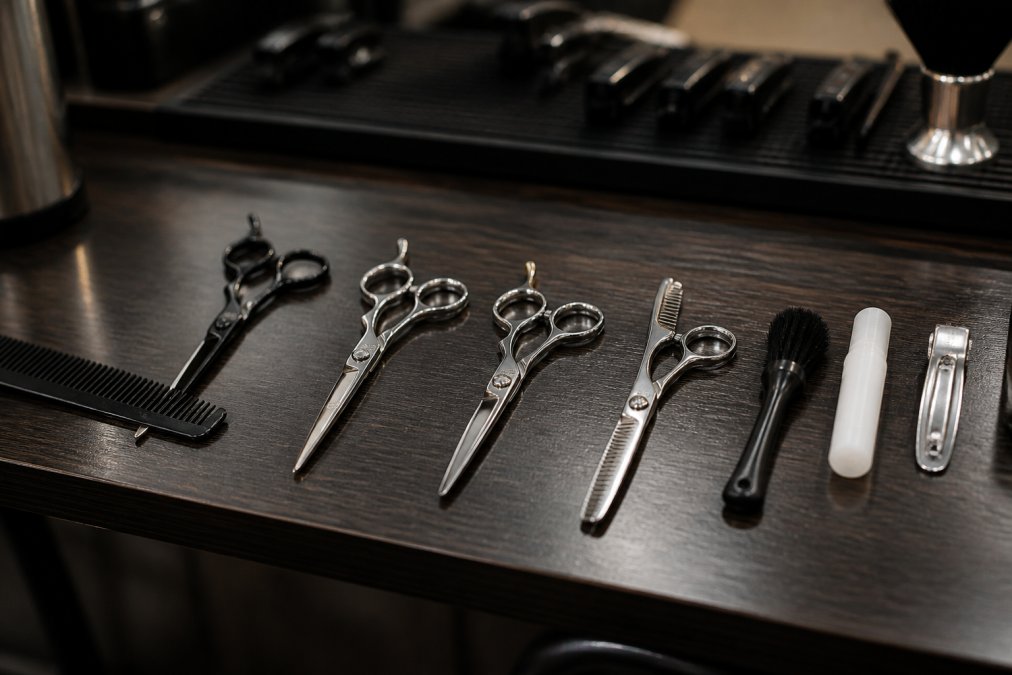
A quality fade shear costs $50-150. A dull or poorly balanced shear costs you time, roughly 15-30 seconds per client on blending work. In a shop doing 100+ fades per week, that's 25-50 minutes of lost productivity. At standard barber rates ($20-40 per fade), you're losing $80-200 per week in efficiency. A $100 shear investment pays for itself in one week.
A quality barber shear lasts 3-5 years with proper maintenance. A budget shear lasts 6-12 months. Over 5 years, you'll buy 5-10 budget shears or 1-2 quality shears. The total cost of ownership heavily favors professional-grade tools.
Conclusion
Choosing the right barber shears for fades is one of the highest-ROI decisions you'll make in your career. The difference between quality and budget shears shows up in your blend quality, cutting speed, and hand fatigue by day's end. At Fade Supply Co, we've built our catalog around professional-grade tools that barbers actually use behind the chair.
Start with the Percu Virtual Line Shears or Italian Line Professional Shears, depending on your budget. Add a thinning shear within your first month. Maintain them properly, and they'll be your most reliable tools for years. Get started with Fade Supply Co and build a shear kit that matches your technique and ambition.
Frequently Asked Questions
Q: What blade length is best for barber shears used in fades?
A: Blade length for fade work typically ranges from 5.5 to 6.5 inches. Shorter blades (5.5 inches) offer better control for detail work and fade detailing on tight areas, while 6-inch blades provide versatility for both bulk removal and precision cutting. Your choice depends on hand size and cutting style, many barbers prefer 6 inches as the professional standard for scissor-over-comb fading techniques.
Q: How do blending shears vs thinning shears differ for fade work?
A: Blending shears have wider tooth spacing and remove less hair per cut, ideal for softening lines and creating smooth transitions in fades. Thinning shears remove more bulk and are better for texturizing and reducing density. For fade detailing, blending shears excel at precision work, while thinning shears handle the initial bulk removal. Many professionals use both in their fade workflow.
Q: How often should I maintain my barber shears?
A: Professional barber shear maintenance should happen weekly: clean blades with a damp cloth after each shift, check blade tension, and oil the pivot screw. Store shears in a protective case to prevent damage. Proper maintenance extends lifespan, making it a solid investment ROI.
Q: What's the difference between professional-grade and consumer-grade barber shears?
A: Professional-grade shears use Japanese stainless steel or cobalt, feature hand-sharpened convex edges, and maintain blade tension through precision engineering. Consumer-grade alternatives often use lower-quality steel, dull faster, and can pull hair instead of cutting cleanly. For fade work where precision matters, professional-grade shears deliver consistent results, reduce hand fatigue, and justify their higher initial cost through durability and performance.
This article was written using GrandRanker