

Table of Contents
- Essential Barber Chairs and Stations
- Professional Clippers, Trimmers, and Cutting Tools
- Sanitation and Hygiene: Barber Shop Sanitation Requirements
- Station Organization and Furniture
- Barber Station Setup Guide for Efficiency
- Portable Barber Station Setup for Mobile Professionals
- Maintenance, Ergonomics, and Long-Term Shop Operations
- Frequently Asked Questions
Last Updated: September 28, 2026
Essential Barber Chairs and Stations
A hydraulic barber chair is the centerpiece of every professional station and a key item on any barber shop owner equipment checklist. Quality directly impacts client satisfaction and barber efficiency, prioritize smooth height adjustment, comfortable headrests, and stable footrests.
High-volume shops use chairs frequently, so invest in reinforced bases, durable upholstery, and firm adjustment mechanisms.
You'll need a sturdy work surface at least 36 inches wide for tools. Many barber shop owners include fixed countertops and portable station mats on their barber shop owner equipment checklist for flexibility.
Poor lighting forces barbers to lean closer, straining neck and shoulders. Install task lighting at 400-500 lux directly above or beside each chair to prevent fatigue and ensure precision.
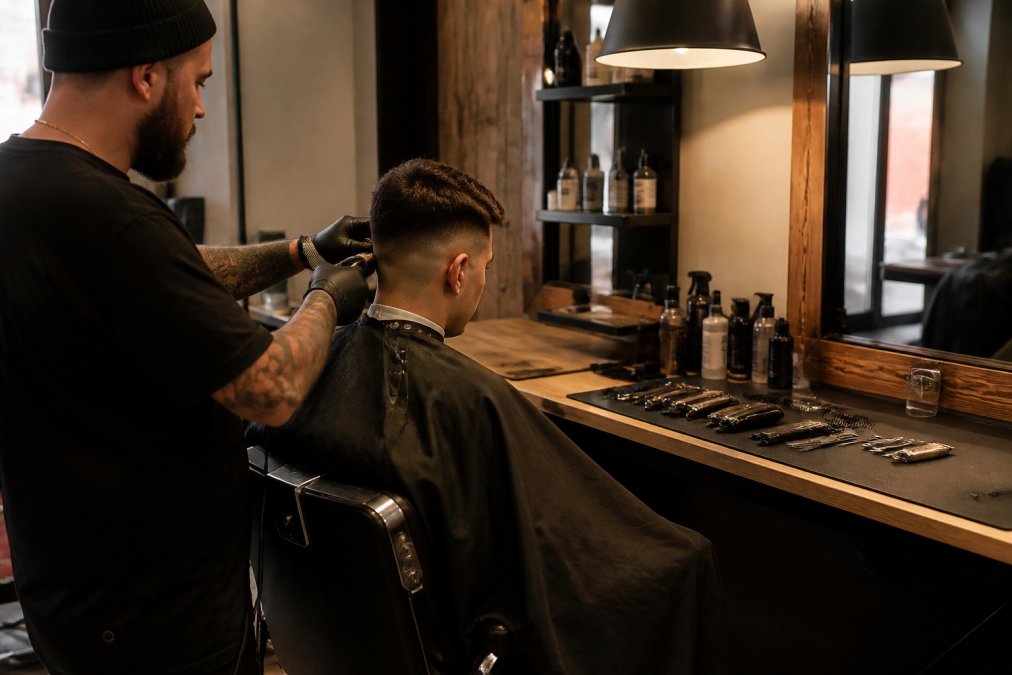
Professional Clippers, Trimmers, and Cutting Tools
Professional clippers are non-negotiable. Detachable blade trimmers let you swap blades in seconds, essential for high-volume work.
Rotary motors run cooler and last longer; magnetic motors offer faster vibration for detail work. Choose based on barber preference and maintenance capacity.
Motor Type and Longevity Trade-offs
Blade Quality and Sharpening Schedules
Detachable blade systems let you rotate fresh blades throughout the day. Store used blades in a sterilization jar between uses.
Sharpen blades regularly; dull blades pull hair and increase repetitive strain.
Daily stropping extends intervals between professional sharpenings.
Clipper Maintenance and Motor Care
Clean clippers daily with a small brush after every 2-3 haircuts to prevent motor overheating.
Oil blades daily with 2-3 drops of clipper-specific oil. Never use household oils; follow manufacturer specs precisely.
Check blade tension monthly. A quarter-turn adjustment on the tension screw often restores performance without repair.
Repair vs. Replace Decision Framework
If a motor dies on an older clipper, replace it. If only the blade is damaged, replace the blade. Keep a repair log to identify chronic failures.
Maintain a backup clipper per barber to prevent service delays.
Cutting Shears, Thinning Scissors, and Straight Razors
Shears handle detail work around ears and nape; thinning scissors blend fades.
Sharpen shears regularly. Never force dull shears; sharpen immediately if they feel sticky.
A straight razor completes your arsenal for edge detail or shaving services. Strop before every use and hone professionally every 6-12 months. A well-maintained razor lasts a long time.
Sanitation and Hygiene: Barber Shop Sanitation Requirements
Every tool touching client skin must be disinfected between uses, it's a legal requirement and infection prevention essential.
Use Barbicide or similar solutions, submerging tools for 10-15 minutes. A sterilization jar with removable basket streamlines rotation.
Use fresh neck strips for every client. A dispenser keeps them organized and accessible.
Use disposable capes to eliminate washing and reduce cross-contamination. Stock enough to never run short mid-day.
Use dedicated blade disposal containers to prevent cuts and protect staff. Never leave loose blades on counters.
Install hand sanitizer dispensers at each station. Wash hands between every client, it's the simplest sanitation practice.
Station Organization and Furniture
A disorganized station wastes time searching for tools.
Station mats create defined workspaces. Magnetic mats secure clippers and tools in fixed positions, eliminating fumbling.

Rolling carts keep supplies organized and mobile beside the chair, eliminating mid-service steps.
Wall-mounted shelving displays products and clears counter space. Keep frequently used items at eye level.
Towel warmers improve client comfort and help open pores for cleaner shaves.
Fade Supply Classic Disinfecting Jar →
Barber Station Setup Guide for Efficiency
Position chairs 3-4 feet apart. Each station needs its own lighting, mirror, and work surface for privacy and efficiency.
Ergonomic Chair Height and Working Posture
Ergonomic setup impacts retention and productivity. Poor station setup can cause chronic pain.
Ideal working height places the client's head at the barber's mid-chest with elbows at 90 degrees. Verify chair adjusts 17-21 inches before purchasing.
Test chairs with barbers at minimum and maximum height. Arms should bend at 90 degrees when holding clippers.
Mark optimal height on each chair with tape to prevent uncomfortable adjustments mid-shift.
Footrest and Lower Body Support
A stable footrest 12-15 inches below the seat prevents weight shifting and leg fatigue. Replace wobbly footrests.
Anti-Fatigue Mats and Floor Positioning
Anti-fatigue mats reduce leg strain during long shifts. Barbers who stand on hard flooring all day develop chronic foot, ankle, and knee pain. A quality mat provides measurable relief.
Position the mat so the barber stands on it while working, not beside it. The mat should extend at least 2 feet in front of the chair and 1 foot on either side, giving the barber room to shift weight and adjust stance without stepping off the mat. A mat that's too small defeats its purpose.
If budget is tight, prioritize mats for your most experienced barbers first.
Mirror Placement and Neck Strain Prevention
Mirror placement matters for both client satisfaction and barber posture. The mirror should be at eye level when the barber stands in normal working position. Angling it slightly downward helps clients see their fade taking shape. A good mirror is 24-30 inches wide, wide enough to show the entire head and shoulders.
Critically, the mirror should be positioned so the barber can glance at it without tilting their head excessively. If the mirror is too high or too far away, the barber must crane their neck repeatedly, leading to cervical spine strain and chronic neck pain. The mirror should be 18-24 inches from the barber's face when standing in working position.
Test mirror height with your barbers before installation. Have them stand in working position and look at the mirror naturally. Their line of sight should be roughly horizontal or slightly downward, not upward.
Lighting and Visual Fatigue
Poor lighting forces your barber to lean closer to the client's head, straining their neck and shoulders. Install task lighting directly above or to the side of each chair, ideally 400-500 lux (the brightness equivalent of a well-lit office). This prevents fatigue during long shifts and catches details that matter for precision work.
Use warm lighting (2700K color temperature) for overall ambiance, it feels inviting and reduces eye strain. Add bright task lighting (4000K-5000K, 400-500 lux) directly over the chair for detail work. This combination allows barbers to see clearly without squinting or leaning.
Lighting that's too dim forces barbers to adopt poor posture to see better; lighting that's too bright causes eye fatigue and headaches. Test lighting with your barbers and adjust based on their feedback.
Electrical Outlet Placement and Cord Safety
Station Counter Height and Work Surface Depth
Color and Ambient Lighting for Focus and Mood
Portable Barber Station Setup for Mobile Professionals
Mobile barbers face unique constraints. Your setup must fit in a car or small van, assemble quickly, and deliver professional results in unfamiliar spaces.
Maintenance, Ergonomics, and Long-Term Shop Operations
Clipper maintenance extends equipment life. Clean clippers daily, hair clogs the motor and causes overheating. Use a small brush to remove hair from the blade and motor housing. Oil the blade according to manufacturer specs (usually 2-3 drops of clipper oil daily).
Frequently Asked Questions
What equipment is needed to start a barber shop?
A functional barber shop requires hydraulic barber chairs, professional clippers and trimmers, cutting shears and razors, sanitation supplies (sterilization jars and barbicide), neck strips, disposable capes, towels, station mats, storage furniture, and point-of-sale software. For a single-chair setup, budget $3,000-$5,000 for essential equipment. Multi-chair shops require proportionally more inventory and furniture. Mobile barbers need portable versions of these same tools, prioritizing durability and compact storage.
What sanitation equipment is required by state boards for barber shops?
State barber boards require disinfection protocols using EPA-approved solutions like Barbicide in sterilization jars. You'll need a hot towel warmer for clean linens, blade disposal containers for safe sharp disposal, and neck strips to maintain hygiene between clients. All tools must be cleaned and disinfected between services. A sterilization jar with a removable basket, like the Fade Supply Classic Disinfecting Jar, helps organize and store tools safely. Check your specific state's board requirements, as standards vary by jurisdiction.
How do you organize a barber station for maximum efficiency?
Station organization starts with a dedicated work surface. Use a station mat or magnetic mat to keep clippers, trimmers, and shears within arm's reach. A neck strips dispenser keeps hygiene supplies accessible without clutter. Store frequently used tools at eye level, reserve drawers for backup supplies, and keep the station mat clear of non-essentials. Magnetic mats with six positions help secure metal tools, reducing dropped equipment and saving setup time. This layout reduces wasted motion during high-volume service days.
What's the difference between a stationary and portable barber station setup?
A stationary barber shop station setup includes a heavy hydraulic chair, full-size station furniture, multiple storage units, and permanent electrical connections. A portable barber station setup prioritizes compact, lightweight equipment: a portable chair or stool, a hard-shell clipper case for tool storage, a compact station mat, and minimal linens. Mobile barbers benefit from cases designed for specific clipper models and foldable storage solutions. Portable setups sacrifice some comfort and efficiency for flexibility, ideal for barbers working out of vehicles or rotating between locations.
How often should barber shop equipment be maintained or replaced?
Professional clippers and trimmers should be serviced every 6-12 months, depending on daily use volume. Hydraulic chairs need annual inspection for leaks and smooth operation. Cutting shears should be sharpened every 3-6 months. Disinfection jars and neck strips dispensers are durable but may need replacement if damaged. Linens (capes, towels, neck rolls) wear out faster and should be replaced as needed. High-volume shops may need clipper maintenance every 6 months; light-use stations can stretch to 12 months. Keep a maintenance log to track service dates and plan replacements before equipment fails.
Do you offer bulk or shop owner pricing for barber equipment?
Fade Supply Co serves barber shop owners stocking multiple stations. For specific bulk pricing or shop owner discounts, contact our team directly at support@fadesupplyco.com. We're committed to supporting independent shops and multi-chair operations with dependable equipment and fair pricing. Our product range, from station mats to disinfecting jars to clipper cases, is designed for professional-grade durability that holds up in high-volume environments.
Building a barber shop owner equipment checklist requires thinking beyond the basics. The right setup, chairs, clippers, sanitation, and organization, separates shops that thrive from those that struggle. Fade Supply Co provides professional-grade tools designed by barbers for barbers, with quick shipping to keep your stations fully stocked and your team working efficiently. Shop our collection and invest in equipment that lasts.