

Table of Contents
- What Makes a Clipper Actually Good for Skin Fades
-
Best Professional Clippers for Skin Fades: Top Picks
- Wahl 5 Star Cordless Magic Clip: Best for Blending All Hair Textures
- Andis Master Cordless: Best Raw Power for High-Volume Shops
- BaBylissPRO FXONE LoPROFX: Best for Barbers Who Can't Stop Between Clients
- Gamma+ Ergo Cordless: Best Magnetic Motor with Zero-Gap Capability
- Oster Fast Feed: Best Quiet Pivot Motor for Client Comfort
- Cordless vs. Corded Clippers for Professional Fading
- Zero-Gap Hair Clippers: When and Why to Close the Blade
- Best Clipper Guards for Skin Fades: Building Your Guard System
- Clipper Maintenance and Oiling Guide for Professional Longevity
- Conclusion
Last Updated: August 6, 2026
Choosing the wrong clipper for skin fades costs you in chair time, rework, and client retention. At Fade Supply Co, we've built this guide around real-world performance. The best professional clippers for skin fades share three traits: consistent motor torque at low guard settings, blade geometry that closes tight without pulling, and enough run time to survive a full Saturday.
Quick Picks:
- Best Overall: Wahl 5 Star Cordless Magic Clip, stagger-tooth blade blends every hair texture
- Best Raw Power: Andis Master Cordless, 7,200+ SPM rotary motor for high-volume shops
- Best for Non-Stop Use: BaBylissPRO FXONE LoPROFX, interchangeable battery system
- Best Magnetic Motor: Gamma+ Ergo Cordless, 10,000 SPM with zero-gap capability
- Best for Client Comfort: Oster Fast Feed, pivot motor runs whisper-quiet
What Makes a Clipper Actually Good for Skin Fades
A clipper that's good for skin fades delivers consistent torque at its lowest blade setting, maintains cutting speed through dense hair, and allows precise blade-gap adjustment without losing alignment. Most consumer-grade machines fail on the third point: the blade closes, but the gap isn't uniform, creating lines instead of blends.
Motor Type: Magnetic, Rotary, and Pivot Compared
Magnetic motors run at 7,000-10,000 SPM with snappy, responsive cutting action ideal for precision work but generate more heat during extended sessions.
Rotary motors produce more torque at lower speeds, pushing through thick or coarse hair without bogging down. The Andis Master Cordless uses a high-speed rotary motor rated at over 7,200 SPM but runs louder than alternatives.
Pivot motors are the quietest option, using electromagnetic pivot action for smooth, consistent cutting with less vibration. The Oster Fast Feed's pivot motor generates torque often described as twice that of comparable magnetic units.
| Motor Type | SPM Range | Best For | Noise Level | Heat Output |
|---|---|---|---|---|
| Magnetic | 7,000-10,000 | Precision fading, blending | Moderate | Higher |
| Rotary | 5,000-7,200+ | Bulk removal, coarse hair | Higher | Moderate |
| Pivot | 3,500-5,000 | Client comfort, smooth blends | Low | Lower |
Blade Geometry and DLC Coating
Stagger-tooth blades, like Wahl's patented 2161 blade, have alternating tooth lengths that grab and cut hair at multiple depths simultaneously, creating graduated transitions ideal for blending.
Fade blades (zero-gap blades) have teeth machined to close completely flat for true skin-level cuts. The BaBylissPRO FXONE uses a Black Titanium Metal Injection Molded fade blade that achieves this without alignment drift.
DLC (Diamond-Like Carbon) coating reduces friction between blade surfaces, keeping blades cooler and extending edge retention. According to surface coating research from the American Chemical Society, DLC-coated surfaces reduce friction coefficients by up to 90% compared to uncoated metal.
Best Professional Clippers for Skin Fades: Top Picks
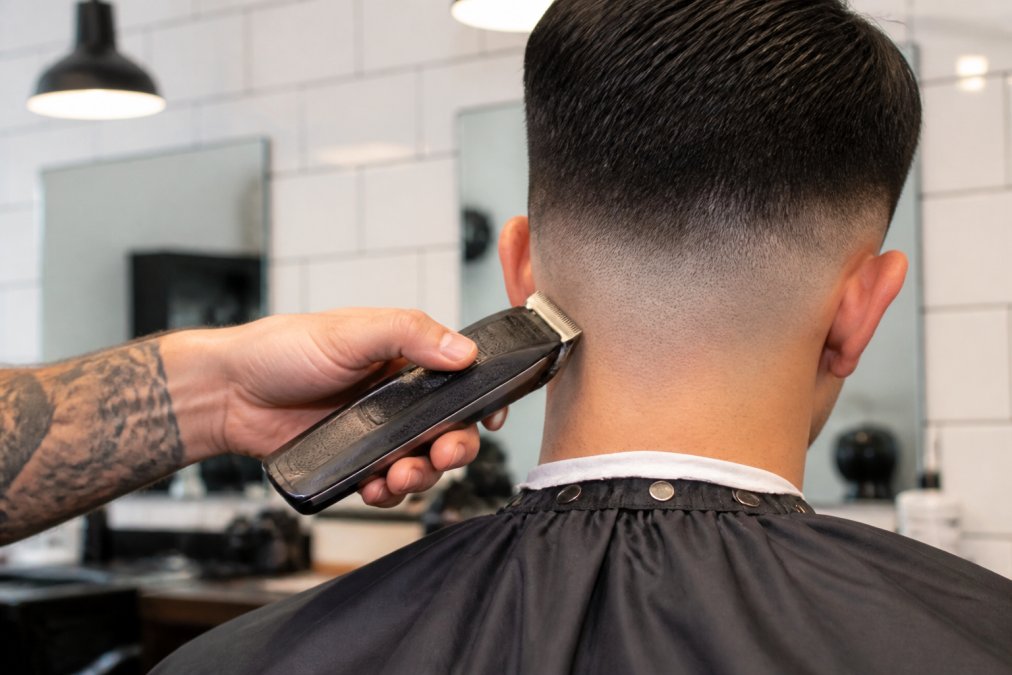
Wahl 5 Star Cordless Magic Clip: Best for Blending All Hair Textures
The Wahl 5 Star Cordless Magic Clip is the most versatile fading clipper available. Its patented stagger-tooth blade (model 2161) blends as it cuts, producing seamless transitions across all hair textures. Battery life exceeds 100 minutes on a lithium-ion charge, and cord/cordless capability ensures you're never stranded. The adjustable taper lever gives quick access to multiple cutting lengths without swapping guards.
Best for: Barbers handling diverse clientele who need one clipper to fade, blend, and taper across all hair types.
Pros:
- Stagger-tooth blade produces seamless blends
- 100+ minute run time handles a full day
- Cord/cordless flexibility
Cons:
- Blade may need more frequent adjustment for very close skin fades
Andis Master Cordless: Best Raw Power for High-Volume Shops
The high-speed rotary motor running at over 7,200 SPM excels at bulk removal and pushing through dense, resistant hair. The unbreakable aluminum housing survives drops and years of heavy use. The carbon-steel adjustable blade runs from #000 to #1, delivering over 90 minutes of run time on a one-hour charge with LED battery indicator.
Best for: High-volume shops where durability and motor power outweigh noise concerns.
Pros:
- 7,200+ SPM rotary motor handles any hair type
- Aluminum housing built for years of daily use
- 90+ minute battery with 1-hour charge
Cons:
- Louder than magnetic or pivot motor alternatives
- Higher price point
BaBylissPRO FXONE LoPROFX: Best for Barbers Who Can't Stop Between Clients
The interchangeable FXONE lithium battery system solves the cordless problem: swap the battery in seconds, keep cutting. The N1 brushless motor with dual ball bearings runs more efficiently, generating less heat and requiring less maintenance. The Black Titanium Metal Injection Molded fade blade is precision-machined for close, accurate fades. The 5-detent locking stretch taper lever gives five locked cutting positions.
Best for: Independent and mobile barbers needing continuous cordless operation without charging breaks.
Pros:
- Interchangeable battery system eliminates downtime
- Brushless motor runs cooler and requires less maintenance
- Fade blade designed for precise skin fades
Cons:
- Additional batteries sold separately
- Higher upfront investment
Gamma+ Ergo Cordless: Best Magnetic Motor with Zero-Gap Capability
The turbocharged magnetic motor runs at 10,000 SPM, the highest of any clipper here, delivering exceptional cutting precision at the skin line. The fully adjustable zero-gap fade blade closes completely flat for true bald fade capability without a separate trimmer. Battery delivers 120 minutes of run time with a 105-minute rapid charge. The package includes eight double magnetic guards and cleaning kit.
Best for: Barbers prioritizing maximum SPM, zero-gap precision, and customizable ergonomic setup.
Pros:
- 10,000 SPM magnetic motor for maximum cutting speed
- Zero-gap capable blade for true skin-level fades
- 120-minute battery with rapid charge
Cons:
- Modular system adds complexity
Oster Fast Feed: Best Quiet Pivot Motor for Client Comfort
The pivot motor runs at noticeably lower noise levels than rotary or magnetic alternatives, a real advantage with anxious clients or children. The smooth, consistent cutting action prevents snagging and pulling through wet or dry hair without adjustment. The adjustable blade runs from #000 to #1.
Best for: Client-comfort-focused barbers where quiet operation is a priority.
Pros:
- Whisper Quiet pivot motor reduces client anxiety
- Smooth cutting action prevents pulling
- Lightweight design for extended sessions
Cons:
- Not ideal for true bald/zero-gap fades
Cordless vs. Corded Clippers for Professional Fading
Cordless clippers are now the professional standard for fading work. A corded clipper tethers your movement, creating tension that subtly affects wrist angle and cutting consistency. Cordless freedom lets you move fluidly without compensating for cable drag.
Cordless motor output drops as the battery depletes, affecting cutting consistency during the last 20 minutes of a charge cycle. High-quality lithium-ion batteries in professional clippers like the Andis Master and Gamma+ Ergo minimize this effect. For high-volume shops, own both: a primary cordless clipper for fading and a corded backup for charging time. Mobile barbers should prioritize battery life and charge speed. The BaBylissPRO FXONE's interchangeable battery system was designed for this use case.
Zero-Gap Hair Clippers: When and Why to Close the Blade
Zero-gap closes the clipper blade so the bottom blade sits flush with or slightly beyond the top blade, producing a cut as close to skin as mechanically possible. This is essential for the base of a skin fade where hair disappears entirely before transitioning into the gradient.
Loosen the blade screws slightly, push the bottom blade forward until it aligns flush with the top blade's teeth, and retighten.
Three important cautions:
- Only zero-gap blades designed for the adjustment. Closing a standard blade beyond its intended range will cause it to bite into skin. The Gamma+ Ergo and BaBylissPRO FXONE fade blade are both rated for zero-gap use.
- Check blade temperature before a zero-gap pass. A hot blade at zero-gap will cause skin irritation. Let the clipper cool or use blade coolant spray.
- Zero-gap is a finishing tool, not a primary cutting position. Use it for the final 1-2 passes at the skin line, then open the blade back up for blending work.
Best Clipper Guards for Skin Fades: Building Your Guard System
The best clipper guards create consistent, measurable length increments so your fade has defined reference points to blend between. A functional guard system typically runs from #0.5 through #3, with half-guard increments for fine blending transitions. The Gamma+ Ergo includes eight double magnetic guards that attach securely without wiggle.
Recommended guard sequence for a standard skin fade:
- #0.5 guard: lowest blending guard, just above the skin line
- #1 guard: primary low fade reference point
- #1.5 guard: transition between low and mid
- #2 guard: mid-fade reference
- #2.5 guard: upper mid transition
- #3 guard: top of the fade before natural hair length
Magnetic attachment guards hold more consistently than friction-fit guards during active cutting and swap faster between clients.
Clipper Maintenance and Oiling Guide for Professional Longevity
A blade that runs dry generates heat, dulls faster, and damages the motor through increased resistance. A properly oiled and aligned clipper will outlast an identical neglected one by years.
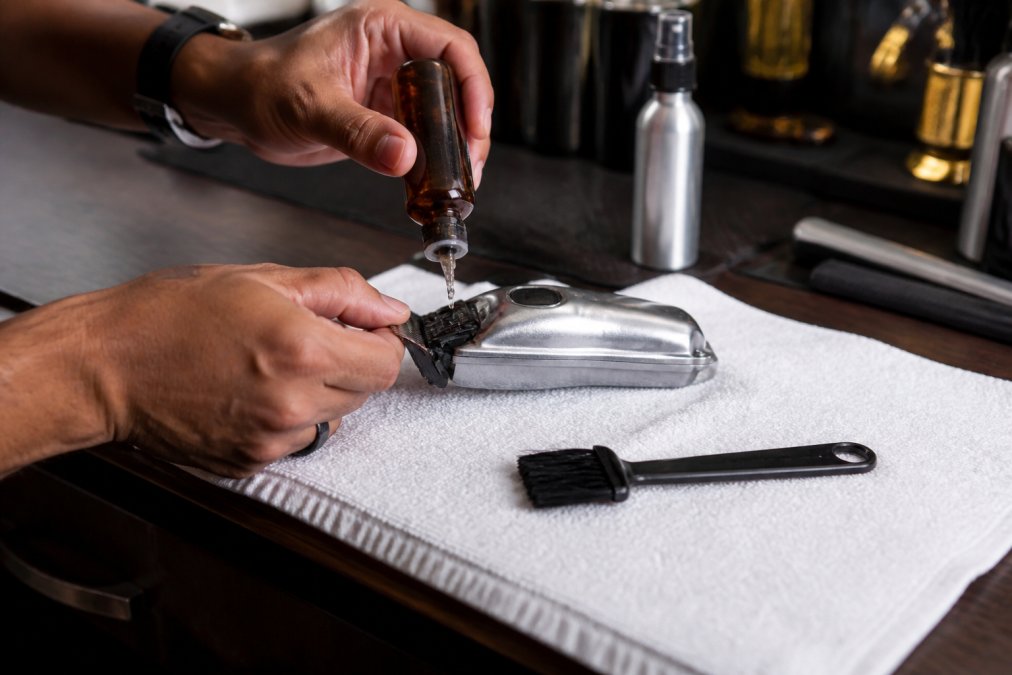
Daily Oiling Routine
Oil your blades at the start of every shift and after every 30-45 minutes of continuous use:
- Run the clipper and apply 2-3 drops of clipper oil across the top of the blade teeth
- Let the oil work through the blade mechanism for 10-15 seconds
- Wipe excess oil with a clean cloth before the next client
Use clipper-specific blade oil, not household oil or WD-40. According to Wahl Professional's blade care documentation, regular oiling is the single most effective maintenance practice for extending blade life.
Sanitization Protocols Between Clients
Blade sanitization between clients is a licensing requirement in every U.S. state. Most state cosmetology boards require that implements contacting the skin be disinfected with an EPA-registered disinfectant between clients. Check your specific state board requirements through the Professional Beauty Association's state licensing resource.
The standard protocol:
- Remove visible hair from blade with a cleaning brush
- Spray blade with EPA-registered barbicide or equivalent disinfectant spray
- Allow contact time as specified on the disinfectant label (typically 30-60 seconds)
- Wipe blade clean before the next client
- Apply fresh oil after disinfecting, as disinfectant sprays strip blade lubrication
Troubleshooting Common Fade Issues
Most fade problems trace back to equipment rather than technique.
Pulling or snagging at the skin line: The blade is dry, dull, or misaligned. Oil the blade first. If pulling continues, check blade alignment, the top blade should sit 1-2mm back from the bottom blade's teeth. Replace a dull blade rather than compensating with pressure.
Uneven fade line: Guard wobble or inconsistent hand pressure. Check that the guard is seated fully and practice the same wrist angle on both sides.
Shadow at the skin line after zero-gap pass: Blade temperature is too high. Use blade coolant spray, let the clipper rest 60 seconds, then repeat the pass.
Motor bogging down in thick hair: Insufficient oil, a dull blade, or the clipper running too long without a break. Oil, check blade sharpness, and give the motor 2-3 minutes to cool.
Fade blending lines visible after completion: Guard increments are too large. Add half-guard sizes and use the taper lever for micro-adjustments between guard sizes.
| Problem | Most Likely Cause | Fix |
|---|---|---|
| Pulling at skin line | Dry or dull blade | Oil blade; replace if dull |
| Uneven fade line | Guard wobble or hand angle | Reseat guard; check technique symmetry |
| Shadow after zero-gap | Blade heat expansion | Cool blade; use blade spray |
| Motor bogging | Dull blade or heat buildup | Oil; rest motor; check blade |
| Visible blend lines | Guard increments too large | Add half-guard sizes; use taper lever |
Fading consistently at a professional level requires tools that keep up with the pace of a real shop. Whether you're a barber student building your first kit or a shop owner replacing worn-out equipment, the clippers above represent the strongest options for skin fade work. Fade Supply Co stocks professional-grade barbering tools selected by people who have worked behind the chair, with quick shipping that keeps your station stocked. Browse the collection and get the tools your craft demands.
Frequently Asked Questions
What clippers do professional barbers use for skin fades?
Most professional barbers working skin fades reach for clippers with high-speed motors, adjustable taper levers, and blades capable of zero-gap settings. The Wahl 5 Star Cordless Magic Clip, Andis Master Cordless, and BaBylissPRO FXONE LoPROFX are among the most common choices in high-volume shops. The right pick depends on your dominant cutting style, hair density of your clientele, and whether you prioritize cordless freedom or maximum motor torque.
Do I need a zero-gap clipper for a skin fade?
Not always, but it helps significantly for a tight skin fade. Zero-gapping closes the space between the fixed and moving blade, allowing the clipper to cut as close as possible to the skin. Many barbers zero-gap a dedicated fade clipper while keeping a second clipper at a standard setting for bulk removal. If you work bald fades regularly, a blade that supports zero-gap adjustment without losing alignment under load is worth prioritizing.
What is the difference between a taper blade and a fade blade?
A taper blade adjusts cutting length gradually across the blade width, making it ideal for blending transitions between lengths. A fade blade is designed with a flatter, more precise edge geometry to cut extremely close to the skin with minimal margin for error. For skin fades, fade blades deliver tighter results at the zero line. Many professional clippers for skin fades include a taper lever that functions similarly to a taper blade by changing the blade gap mid-cut.
Are cordless clippers better for professional fading?
For most barbers, yes. Cordless clippers eliminate cord drag, which matters when you are rotating around a client's head and need precise control. Modern lithium-ion batteries in professional models deliver 90 to 120 minutes of run time, enough for a full shift with proper charging habits. Barbers in high-volume shops often keep a second battery or a corded backup available. The trade-off is that cordless clippers require consistent charging discipline to avoid losing power mid-fade.
How do I maintain professional hair clippers for longevity?
Oil the blades before and after every use with two to three drops of clipper oil along the blade rail. After each client, brush out all hair debris and spray the blade with a disinfectant approved for barbering tools. Check blade alignment weekly and re-zero-gap as needed since heavy use causes blades to shift. Every few weeks, remove the blade assembly and deep-clean the housing. Consistent clipper maintenance prevents heat buildup, blade dulling, and premature motor wear.
This article was written using GrandRanker