

Table of Contents
- Why Barber Clipper Oil Matters for Your Tools
- How to Apply Oil to Clipper Blades Correctly
- How to Keep Clippers Sharp With Regular Maintenance
- Clipper Blade Maintenance Schedule for Professional Barbers
- Signs Your Clippers Need Lubrication Now
- Professional-Grade Barber Clipper Oil Products to Buy
- Common Mistakes That Damage Clipper Blades
- Conclusion
Last Updated: August 23, 2026
Why Barber Clipper Oil Matters for Your Tools
Barber clipper oil is essential maintenance. The moment you stop oiling your blades, friction builds, heat dissipates poorly, and cutting performance degrades. Hair residue accumulates in blade teeth, your motor works harder, and corrosion begins eating away at precision components.

At Fade Supply Co, we work directly with barbers in high-volume shops, mobile operators, and students. Every single one has learned that investing five minutes a day in proper blade maintenance saves hundreds in equipment replacement costs. The real cost of skipping lubrication isn't just dull blades, it's downtime when a clipper fails mid-shift and lost revenue when you can't service clients.
Professional-grade barber clipper oil is engineered to handle specific demands of clipper motors and precision blades. Some thin out under heat, leaving blades unprotected. Others gum up, attracting hair and debris. Quality formulations cool effectively, resist oxidation, and maintain consistent viscosity whether you're working through a busy Saturday or storing clippers overnight.
How to Apply Oil to Clipper Blades Correctly
Proper application technique is where most barbers either get it right or create problems. The goal is to deliver just enough lubricant to critical contact points without excess that attracts hair and debris.
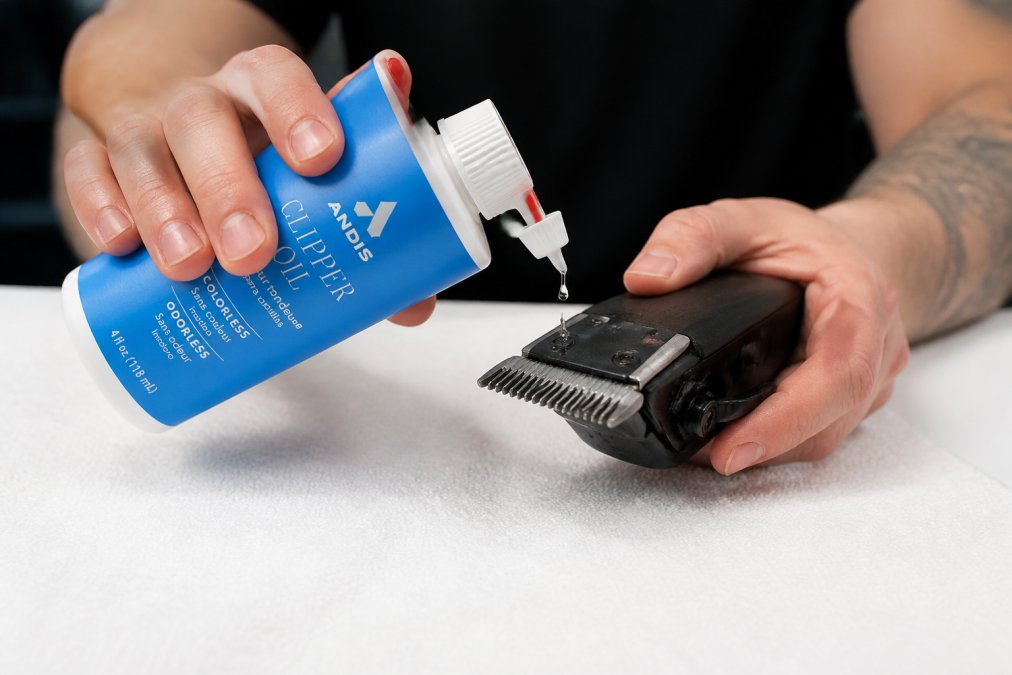
Start with the clipper running at operating speed. The motor's vibration helps distribute oil evenly across blade surfaces and into the teeth where friction occurs. Apply oil drop-wise, one or two drops, directly onto the top blade while it's moving. The motion distributes the oil; you're not trying to manually coat every surface.
The most common mistake is applying oil to stationary blades. Oil pools instead of distributing, leading to over-oiling that drips onto clients or collects hair. Apply while running, use restraint with amount, and let blade motion handle distribution.
After application, run the clipper for another 5-10 seconds to work the oil through the blade assembly and into the motor. This cooling effect reduces thermal buildup that degrades blade edge and motor performance. Wipe away visible excess with a clean towel. You should see a light sheen, not a wet coating.
Frequency depends on your workload. A busy Saturday might require oiling every 15 minutes. A slower day might stretch to 30 minutes. Learn to recognize your specific clippers' signals, when motor pitch changes or vibration increases, that's your cue that lubrication is needed.
How to Keep Clippers Sharp With Regular Maintenance
Keeping clippers sharp is about preventing conditions that dull blades prematurely. Friction reduction through proper lubrication is the foundation. When blades slide without adequate oil, microscopic wear accelerates and the cutting edge degrades faster than normal use would cause.
Blade alignment directly affects sharpness. Even a blade with a perfect edge won't cut cleanly if misaligned. Oil application helps keep blades seated correctly by reducing friction that causes slight shifting during operation.
Hair residue and dried product buildup accelerate blade dulling. Debris trapped between blade teeth creates micro-scratches that compound over time. Daily cleaning removes this buildup before it becomes a problem. Use a small brush or compressed air to clear blade teeth, then apply barber clipper oil. This combination keeps blades functioning like new significantly longer than either approach alone.
Heat dissipation during operation is critical. When clippers run hot, metal expands slightly, blade alignment shifts, and the cutting edge becomes less precise. Proper oil application reduces friction-induced heat, keeping blade temperature stable and maintaining that tight, clean cut throughout your day.
Clipper Blade Maintenance Schedule for Professional Barbers
A structured maintenance schedule prevents reactive equipment failure mid-shift. Professional barbers should follow a tiered approach: daily, weekly, and monthly tasks.
Daily maintenance happens during your workday. Apply barber clipper oil every 15-20 minutes during active cutting. Clean blade teeth with a brush between clients to remove hair and product buildup. Check blade temperature by touching the clipper side, if hot, oil immediately.
End-of-day maintenance takes five minutes. After your last client, run clippers for 30 seconds with a final oil application. This ensures lubrication penetrates the blade assembly and motor. Wipe excess oil away, then store clippers in a cool, dry location. Never leave clippers with dried product or hair debris.
Weekly deep maintenance happens during slower periods. Disassemble blades if your clipper model allows it. Soak blades in a blade care dip jar or cleaning solution for 10-15 minutes to dissolve dried product and old oil buildup. Rinse thoroughly, dry completely, then apply fresh barber clipper oil before reassembling.

Monthly inspection identifies wear before it becomes a problem. Check blade alignment, top and bottom blades should be perfectly parallel with no visible gaps or overlap. Inspect the blade edge under good lighting for wear or chips. Listen to motor sound for any pitch changes suggesting internal issues.
| Maintenance Task | Frequency | Duration | What It Prevents |
|---|---|---|---|
| Oil application | Every 15-20 min during use | 30 seconds | Friction, heat buildup, blade wear |
| Blade cleaning | Between clients | 1-2 minutes | Hair residue, product buildup, corrosion |
| End-of-day oil | After final client | 1 minute | Overnight drying, moisture intrusion |
| Weekly deep clean | Once per week | 15 minutes | Oxidation, stubborn debris, motor strain |
| Monthly inspection | Once per month | 5 minutes | Misalignment, chips, internal damage |
Shop owners managing multiple barbers should post this schedule visibly and audit compliance weekly. Consistent maintenance across chairs maintains predictable performance and extends equipment lifespan.
Signs Your Clippers Need Lubrication Now
Your clippers communicate when they need attention. A well-lubricated clipper has a steady, consistent hum. When lubrication is insufficient, you'll hear a higher pitch or slight grinding noise. Apply oil immediately when you hear it.
Increased heat is another clear signal. Professional clippers should run warm but not hot. If the barrel feels uncomfortably warm after 15-20 minutes of use, lubrication is needed. Heat indicates friction is building faster than normal.
Visible blade wear or dullness developing faster than expected suggests your lubrication frequency needs adjustment. If clients complain about pulling hair or rough cuts after just a week of normal use, increase oil application frequency.
Difficulty cutting cleanly, especially when cutting close to skin for fades, indicates blade performance is compromised. Start by applying oil and running the clipper for 30 seconds. If performance doesn't improve, the issue is likely blade dullness or alignment requiring professional sharpening.
Visible corrosion, rust spots, or discoloration on the blade indicates your current maintenance isn't preventing oxidation. Clean the affected area, apply fresh barber clipper oil, and adjust your storage conditions.
Professional-Grade Barber Clipper Oil Products to Buy
Focus on formulations specifically engineered for clipper motors and precision blades. Generic machine oils don't have the right viscosity or cooling properties. Professional-grade products extend equipment lifespan and maintain cutting performance.
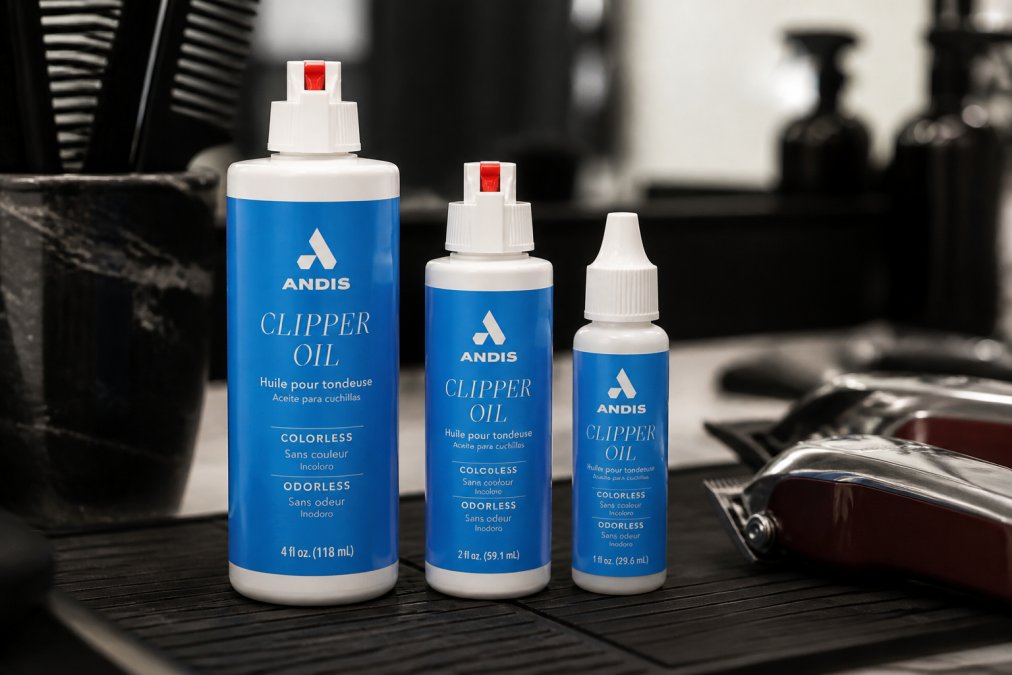
Andis Clipper Oil 4 oz. is the industry standard. This formulation is specifically designed for all clipper and trimmer blade types. It provides consistent lubrication without thinning under heat. The 4 oz. size costs $4.99 and lasts several weeks with daily use. The dropper design makes controlled application easy, and the oil doesn't attract excessive hair or debris.
Andis Blade Care Dip Jar 16 oz. serves weekly deep-cleaning purposes. The 16 oz. jar ($14.99) holds enough for regular blade soaking. It cleans away hair, product buildup, and dried oil while simultaneously lubricating and preventing rust. For barbers who disassemble blades weekly, this is essential.
Andis Cool Care 15.5 oz. ($11.99) cleans and lubricates without removing blades from the clipper. You spray it directly onto running blades for fast maintenance between clients. This is ideal for high-volume operations where you need quick maintenance without mess.

All three products are available through Fade Supply Co with quick shipping. These are the products barbers actually use in professional shops. Fade Supply Co stocks what works because we understand what barbers need to perform at their best.
Common Mistakes That Damage Clipper Blades
Understanding what NOT to do is just as important as knowing proper maintenance.
Over-oiling is common. Barbers apply too much, too frequently, creating mess and attracting hair and dried product. More oil isn't better; the right amount applied correctly matters. One or two drops applied while the clipper runs is sufficient.
Applying oil to stationary blades means oil pools instead of distributing. Always apply while the clipper is running at operating speed.
Storing clippers in humid environments without protection invites corrosion. Store clippers in cool, dry locations. Mobile barbers should invest in storage cases that protect equipment from humidity and temperature swings.
Ignoring heat signals allows thermal damage to compound. When clippers run hot, immediately stop, apply oil, and let them cool. Continuing through heat accelerates blade warping and motor wear.
Using generic machine oils or household lubricants creates problems because they have wrong viscosity for clipper motors. Professional barber clipper oil is formulated specifically for this application.
Neglecting weekly deep cleaning allows debris to accumulate inside the blade assembly. Over weeks and months, this buildup restricts blade movement and forces the motor to work harder. A 15-minute weekly soak prevents this entirely.
Replacing clipper oil with cleaning solution only leaves blades unlubricated. Cleaning is necessary but not sufficient. Always clean, then oil.
Conclusion
Barber clipper oil is preventative maintenance that directly impacts your income and reputation. Every day you work with properly maintained clippers, your clients see better results. Every day you skip maintenance, you're accelerating toward equipment failure and compromised cutting performance.
Fade Supply Co carries professional-grade barber clipper oil products selected based on real-world experience behind the chair. The Andis Clipper Oil, Blade Care Dip Jar, and Cool Care formulations are what professional barbers actually use because they work. Quick shipping means you can stock up today and maintain your equipment tomorrow. Your clippers are the foundation of your business, invest in their care, and they'll perform reliably for years.
Professional Barber Association guidelines on equipment maintenance
Andis official clipper care recommendations
OSHA guidelines on tool maintenance and workplace safety
Frequently Asked Questions
What is the best oil for barber clippers?
Professional-grade clipper oil formulated specifically for blade maintenance delivers the best results. Look for oils that reduce friction, prevent corrosion, and cool the blade during use. Andis Clipper Oil is a trusted choice, it's specially formulated to lubricate and cleanse clipper blades while extending their lifespan. Avoid household oils like mineral oil or synthetic alternatives meant for other tools; they don't provide the same heat dissipation and rust inhibition that barber clippers require during high-volume use.
How often should you oil barber clippers?
For professional barbers in high-volume shops, oil your clippers daily or after every 4-5 haircuts. Mobile barbers and those with lighter schedules can oil every 2-3 days. If you notice increased friction, heat buildup, or reduced cutting performance, that's a sign you need lubrication immediately. A quick maintenance schedule prevents blade wear and keeps your clipper motor running smoothly. Many professionals use a dip jar like Andis Blade Care for deeper cleaning and lubrication weekly.
What can I use instead of clipper oil?
While some barbers experiment with alternatives, professional clipper oil is the safest choice. Household oils like coconut oil, baby oil, or general machine oil can damage blade alignment, leave residue buildup, and fail to prevent rust effectively. DIY alternatives also risk voiding your clipper warranty and creating performance issues mid-shift. Professional-grade oils are formulated with the right viscosity and chemical composition for clipper motors and precision blades. The cost of a bottle ($4.99-$14.99) is far less than replacing damaged clippers.
Where can I buy clipper oil?
Professional barber supply retailers like Fade Supply Co stock trusted brands such as Andis Clipper Oil and Andis Cool Care. These products are available online with fast shipping, so you can keep your station stocked without downtime. Fade Supply Co offers Andis Clipper Oil 4 oz for $4.99, Andis Blade Care Dip Jar 16 oz for $14.99, and Andis Cool Care 15.5 oz for $11.99. Buying online ensures you get authentic, professional-grade products backed by barber-focused retailers who understand your maintenance needs.
This article was written using GrandRanker