

Table of Contents
- What Makes a Barber Station Truly Professional Grade
- Essential Cutting Tools: Clippers, Trimmers, and Shears
- Barber Tool Sanitation Requirements Every Shop Must Meet
- Barber Station Organization Ideas That Save Time and Reduce Fatigue
- Must-Have Grooming Accessories and Client Comfort Supplies
- Ergonomic Health, Injury Prevention, and Anti-Fatigue Equipment
- Building Your Setup: Budget Tiers and What to Buy First
- Conclusion
Last Updated: August 8, 2026
Setting up a professional barber station from scratch or upgrading an existing one is one of the most important investments a barber will make. At Fade Supply Co, a veteran-owned supplier built on real experience behind the chair, we've put together this guide to help you buy professional grade barber station essentials without wasting money on gear that won't survive a high-volume shop. Below, you'll find every essential category, specific product recommendations, and a budget-tiered setup strategy that works whether you're a student just starting out or a shop owner stocking five chairs.
The biggest mistake most barbers make when building a station? They prioritize the clippers and ignore everything else. A skin-tight fade requires the right trimmer, yes, but it also requires a clean station, organized tools, and a setup that doesn't destroy your wrists and back after a ten-hour shift.
What Makes a Barber Station Truly Professional Grade
Professional grade barber station essentials are tools and equipment built to withstand daily, high-volume use without performance degradation. The difference between professional and consumer grade isn't just price, it's motor torque, blade steel quality, ergonomic design, and serviceability.
A professional-grade station meets three criteria: every tool performs consistently across back-to-back clients, the setup supports the barber's physical health over years of work, and the station meets state board sanitation requirements without improvisation. Professional grade also means buying tools that can be serviced. Blades should be alignable, motors replaceable, and clipper guards standardized. When something breaks at 2 PM on a Saturday, you need a tool that can be fixed, not thrown away.
Essential Cutting Tools: Clippers, Trimmers, and Shears
The cutting tools at your station define your output. Everything else supports them.
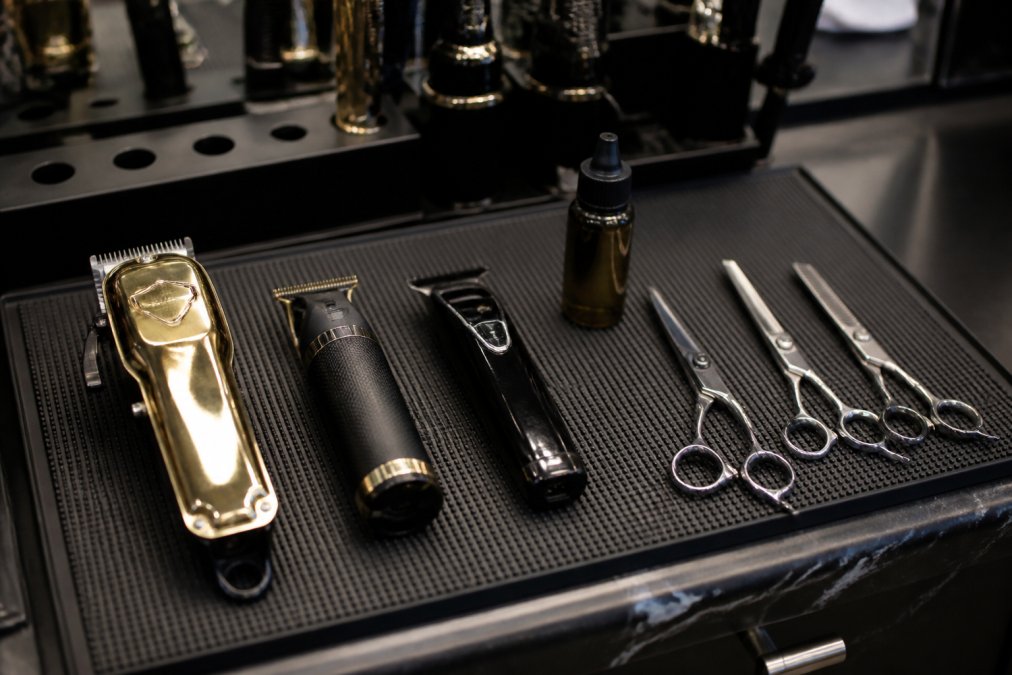
A professional station needs at minimum: one primary clipper for bulk removal and fading, one trimmer for lining and detail work, and one pair of shears for scissor-over-comb and finishing.
Best Professional Barber Clippers for Beginners and Veterans
The Wahl Professional 5 Star Series Cordless Legend Clipper ($144.99) is the most reliable all-around clipper for both beginners and experienced barbers working high-volume. Its powerful motor handles all hair types without bogging down mid-fade, and cordless operation gives full maneuverability around the chair. The 5 Star Series has been a shop-floor standard for years because it can be maintained. Blade alignment is straightforward, replacement parts are widely available, and the motor doesn't degrade the way cheaper units do after months of daily use.

Cordless vs. Corded: Cordless clippers offer freedom of movement and are essential for mobile barbers. Corded models provide uninterrupted power for extremely high-volume work. Most professionals keep one of each.
Trimmers, Shears, and Straight Razor Essentials
The StyleCraft Rebel Super Torque Modular Cordless Trimmer ($164.99) runs at 7,500 SPM with enough motor torque for fast bulk removal and ultra-sharp lining in a single tool. The modular design lets you swap components rather than replacing the entire unit when a part wears out.

For shears, professional-grade thinning scissors and cutting shears should be made from high-carbon or Japanese steel for edge retention. Ergonomic offset handles reduce hand and wrist fatigue during long cutting sessions.
Straight razor shaving requires a barber strop for blade maintenance, blade oil to prevent corrosion, and a sharps container for safe disposal of single-use blades. State regulations vary on straight razor use, so confirm your state board's requirements before adding shaving services.
Barber Tool Sanitation Requirements Every Shop Must Meet
Barber tool sanitation requirements are set at the state level by cosmetology and barber licensing boards and are non-negotiable. Operating without proper sanitation protocols puts your license at risk and your clients' health at risk.
Most state boards require:
- Immersion in an EPA-registered disinfectant solution for combs, shears, and non-electrical implements
- Disinfection of clipper blades between every client using a spray or liquid disinfectant
- Proper storage of disinfected tools in a clean, covered container
- Safe disposal of single-use items (neck strips, razor blades) in appropriate waste receptacles
- A sharps container for used straight razor blades, compliant with OSHA standards
The [EPA's registered disinfectants list for barbershops | epa.gov] is the authoritative source for confirming which products meet federal standards.
The Fade Supply Acrylic Disinfecting Jar, 37 oz ($44.99) is purpose-built for this. The removable basket makes it easy to retrieve tools without contaminating the solution, and the 37 oz capacity handles combs, shears, and smaller implements for a full station.
You also need a disinfectant spray for electrical tools, clean towels or paper towels for wiping down surfaces between clients, and a maintenance kit with blade oil and clipper cleaning brushes.
Barber Station Organization Ideas That Save Time and Reduce Fatigue
A disorganized station costs you time on every single client. Reaching across a cluttered counter, searching for a specific clipper guard, or knocking over a disinfecting jar mid-cut adds up to real lost revenue across a full day.
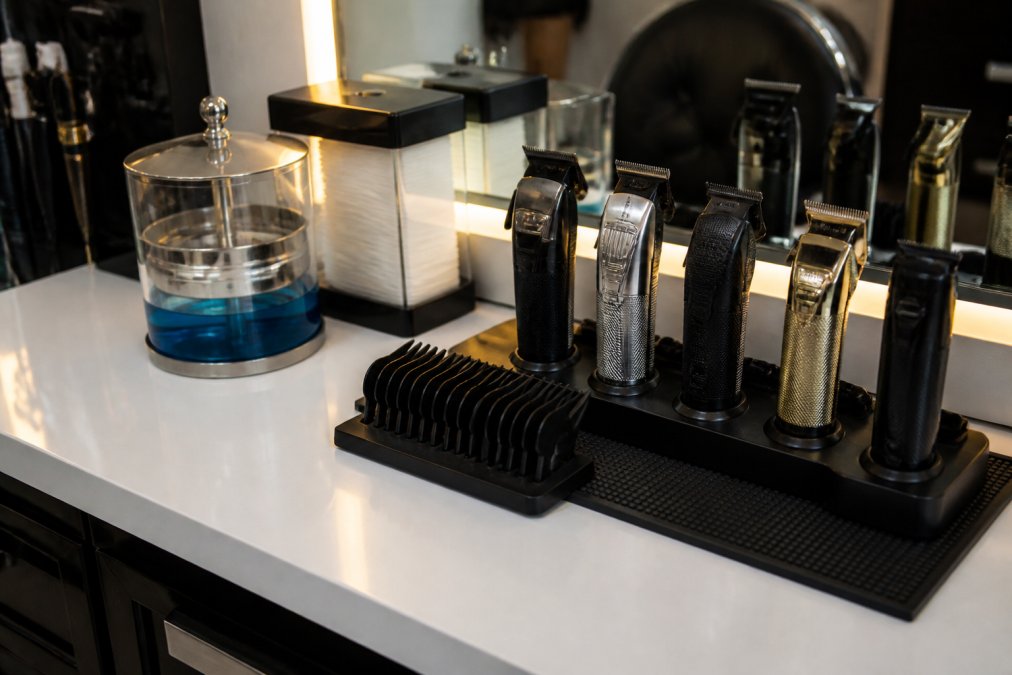
The most effective barber station organization ideas center on one principle: every tool should have a fixed home within arm's reach from your working position.
Station organization essentials:
- A magnetic mat to secure clippers and trimmers upright and prevent rolling
- A dedicated clipper guard holder so guards are visible and sorted by size
- A disinfecting jar positioned at the back of the counter, away from the cutting zone
- A neck strip dispenser mounted for one-handed access
- A duster brush hook within reach but out of the cutting path
The Fade Supply Magnetic Station Mat, 6 Magnet ($59.99) holds tools securely with six embedded magnets, protecting both counter and tools from impact damage. The Fade Supply Guard Vault, 10 Slot ($18.99) keeps ten guide combs organized, visible, and ready.
Must-Have Grooming Accessories and Client Comfort Supplies
Client comfort directly affects your reputation. A client who leaves with a stiff neck from a poorly fitted cape or hair down their collar from missing neck strips will notice.
The Fade Supply Heritage Cape ($27.99) pairs classic pinstripe style with a professional adjustable closure that fits all neck sizes and holds up through daily washing without fading or fraying.

Neck strips are non-negotiable. The Sanek Neck Strips, 12 Packs of 60 ($18.87) provides 720 strips per order. The Graham SANEK Neck Strips Holder Dispenser ($16.33) keeps the roll accessible for one-handed dispensing.
A quality duster brush removes cut hair from the neck and face without irritating skin. The Fade Supply 8-Piece Hair Gripper Set ($18.99) adds sectioning capability for detailed work.
Ergonomic Health, Injury Prevention, and Anti-Fatigue Equipment
This is the section most barber supply guides skip entirely. It shouldn't be.
Barbering is physically demanding work. Standing on hard floors for eight to ten hours, holding tools at shoulder height, and repeating the same wrist and arm movements hundreds of times per day creates cumulative stress on the body. Carpal tunnel syndrome, lower back pain, and shoulder impingement are occupational risks for barbers.
Anti-fatigue equipment every barber station needs:
- An anti-fatigue mat positioned in the barber's standing zone
- A barber chair with a hydraulic pump that adjusts smoothly
- Tools with ergonomic grip design and lightweight clipper bodies
- A counter backbar at the right height so you're not hunching forward
Anti-fatigue mats work by providing a cushioned, slightly unstable surface that encourages micro-movements in your legs and feet, reducing static load on joints. The difference after a full day on a quality mat versus hard tile floor is significant.
For clipper selection, motor vibration matters beyond cutting performance. Excessive vibration transferred to the hand and wrist over thousands of hours of use is a real injury risk. Professional-grade clippers are engineered to minimize vibration at the handle.
Building Your Setup: Budget Tiers and What to Buy First
The common mistake when building a station is buying everything at once at the wrong quality level. A smarter approach is to tier your investment: start with tools that directly affect client outcomes, then build out the organization and comfort layer.
| Priority | Item | Fade Supply Co Option | Price |
|---|---|---|---|
| Tier 1, Day One | Professional clipper | Wahl 5 Star Cordless Legend | $144.99 |
| Tier 1, Day One | Professional trimmer | StyleCraft Rebel Super Torque | $164.99 |
| Tier 1, Day One | Neck strips (bulk) | Sanek Neck Strips 12-pack | $18.87 |
| Tier 1, Day One | Barber cape | Fade Supply Heritage Cape | $27.99 |
| Tier 1, Day One | Disinfecting jar | Fade Supply Acrylic Jar 37 oz | $44.99 |
| Tier 2, Week One | Magnetic station mat | Fade Supply Magnetic Mat 6-Magnet | $59.99 |
| Tier 2, Week One | Guard organizer | Fade Supply Guard Vault 10-Slot | $18.99 |
| Tier 2, Week One | Hair grippers | Fade Supply 8-Piece Gripper Set | $18.99 |
| Tier 2, Week One | Neck strip dispenser | Graham SANEK Dispenser | $16.33 |
| Tier 3, Month One | Anti-fatigue mat | Quality commercial mat | Varies |
| Tier 3, Month One | Professional shears | Japanese steel, ergonomic handle | Varies |
| Tier 3, Month One | Straight razor + strop | Per state board requirements | Varies |
For barber students: Start with Tier 1 only. The clipper and trimmer are the highest-use purchases; everything else can be added as income grows.
For shop owners stocking multiple chairs: Tier 1 and Tier 2 for every station, with shared supplies bought in bulk. The per-station cost for a complete Tier 1 and Tier 2 setup using the products above comes to approximately $490 before shears, chair, and anti-fatigue equipment.
For mobile barbers: Prioritize the cordless clipper and trimmer, a compact magnetic mat, and a portable disinfecting jar. The entire Tier 1 and Tier 2 setup fits in a professional rolling case.
Sustainability and Eco-Friendly Disposal
Responsible disposal is both an ethical and regulatory matter. Single-use items, neck strips, and razor blades generate significant waste in a high-volume shop.
For straight razor blades, a sharps container is required by OSHA standards. Never dispose of used blades in regular trash. Many municipalities offer sharps disposal programs through local pharmacies or waste management facilities.
For neck strips and other paper waste, consider consolidating orders to reduce packaging. Buying neck strips in bulk reduces per-unit packaging waste and lowers your per-client supply cost.
Some barbers are transitioning to reusable capes with antimicrobial fabric treatments to reduce single-use plastic cape usage. Durability is the key metric: a cape that lasts three years of daily washing has a significantly lower environmental footprint than disposable alternatives.
Conclusion
Building a professional barber station is an ongoing investment in your craft, your health, and your clients' experience. The tools you choose determine the quality of every cut you deliver, and the setup you build determines how long you can sustain that quality without physical burnout.
Fade Supply Co exists specifically for barbers who refuse to compromise on either. Founded by a veteran with real experience behind the chair, the collection covers every tier of the setup outlined above, from the Wahl 5 Star Cordless Legend and StyleCraft Rebel trimmer to magnetic station mats, disinfecting jars, and client comfort supplies. Shipping is fast, because a barber without their tools isn't working.
Shop the full collection at Fade Supply Co and build the station your craft deserves.
Frequently Asked Questions
What are the essential tools for a professional barber station?
A fully stocked professional barber station needs cordless clippers, a precision trimmer, thinning shears, a straight razor, clipper guards, a disinfecting jar, barber capes, neck strips, a duster brush, blade oil, and an anti-fatigue mat. Organization tools like a magnetic station mat and guard vault keep everything accessible during high-volume days. Starting with these barber station essentials covers the full range of services most clients request.
What is the difference between home-use and professional-grade barber tools?
Professional-grade tools are built for continuous daily use across dozens of clients. They use higher-torque motors, heat-resistant housings, and blades engineered for precision fade technique and tapering. Consumer tools are designed for occasional home use and typically overheat, lose blade alignment faster, and lack the cutting speed required in a high-volume shop. The performance gap becomes obvious within the first few weeks of professional use.
What are the barber tool sanitation requirements in the US?
State cosmetology boards regulate sanitation standards for barbershops across the US. Most require that reusable tools like shears, combs, and clipper blades be disinfected between each client using an EPA-registered disinfectant solution. Single-use items like neck strips must be disposed of after each service. Sharps, including straight razor blades, must be discarded in an approved sharps container. Always verify your specific state board's rules, as requirements vary by state.
How do I organize a professional barber station for efficiency?
Start with a magnetic station mat to keep clippers and trimmers secure and within reach without cluttering the counter. Add a clipper guard vault so guide combs are visible and sorted by size. Use a disinfecting jar for combs and shears, and mount a neck strip dispenser at the edge of the counter. Group tools by frequency of use: daily essentials in front, specialty tools toward the back. This layout cuts down on mid-service searching and keeps your workflow consistent.
Do I need a barber license to buy professional barber equipment?
No license is required to purchase professional-grade barber tools or station essentials in the US. Any barber student, shop owner, or independent barber can buy clippers, shears, sanitation supplies, and station furniture without restriction. However, using certain tools on paying clients does require a valid state barber license. Check your state's cosmetology or barber board for licensing requirements before offering services commercially.
This article was written using GrandRanker