

Table of Contents
- Why a Daily Clipper Cleaning Routine Matters
- Tools and Supplies for Clipper Cleaning
- Step-by-Step Daily Clipper Cleaning Routine
- How to Oil Clipper Blades Correctly
- Choosing the Best Clipper Disinfectant Spray
- Barber Station Sanitation Standards to Follow
- Troubleshooting Common Clipper Issues
- Storage and Rust Prevention Between Clients
- Frequently Asked Questions
Last Updated: September 16, 2026
Why a Daily Clipper Cleaning Routine Matters
A daily clipper cleaning routine means removing hair, debris, and biological residue from clipper blades after every client, then disinfecting, lubricating, and cooling the blade before the next cut. A blade that skips, pulls, or overheats mid-fade costs you money and reputation in the same minute. Skipping the routine dulls your blade faster and turns your clipper into a cross-contamination vector.
Tools and Supplies for Clipper Cleaning
The right kit is small, cheap, and non-negotiable: a stiff brush, a dip jar or spray disinfectant, clipper oil, and a clean towel. A common mistake is buying one "all-in-one" product and calling the station stocked, cleaning and disinfecting are separate jobs.

Step-by-Step Daily Clipper Cleaning Routine
This is the sequence to run after every client, not just at end of day. Total time: about two minutes.
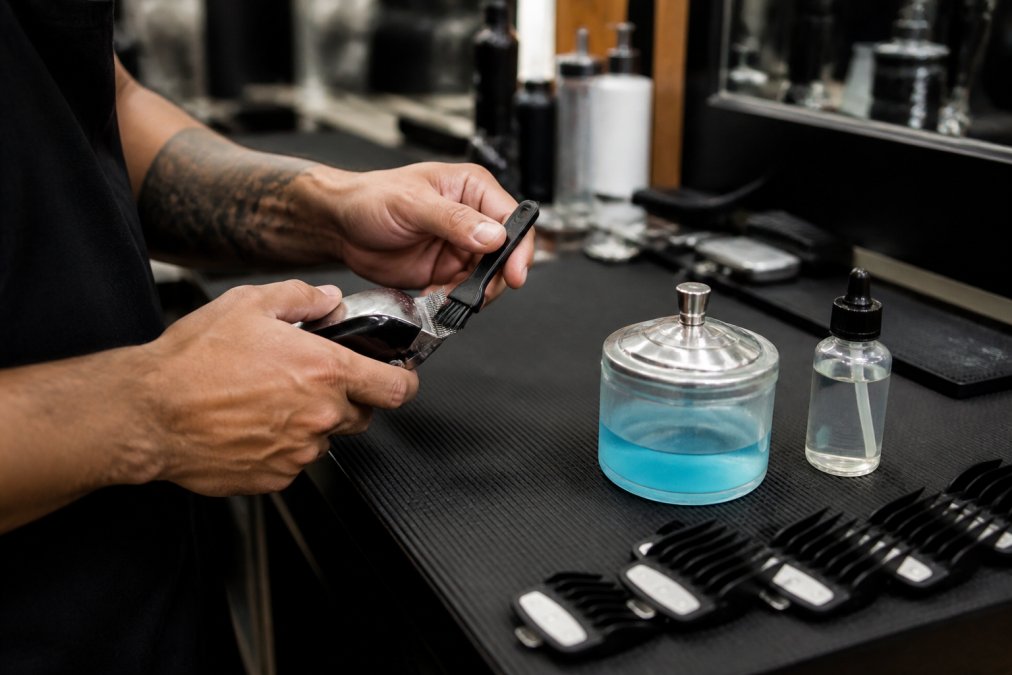
Step 1: Brush Off Loose Hair and Debris
Unplug the clipper first. Use a stiff brush to sweep hair out of the blade teeth and housing gap, working from heel to tips. Buildup packed between the moving and stationary blades is the leading cause of drag, heat, and uneven fades.
Step 2: Use the Running Dip Technique
The running dip technique means dipping the blade into a blade wash jar while the clipper runs, letting agitation flush debris out of the blade assembly. Dip a few seconds, lift, and repeat until the wash runs clear. Never dip a hot blade into a cold jar or vice versa; thermal shock warps blade alignment.
Step 3: Disinfect and Cool the Blade
Spray or wipe the blade with a disinfectant rated for implements, then let it air dry completely before oiling. Cleaning removes visible debris; disinfection reduces pathogens to a safe level. Skipping dry time dilutes your oil and shortens blade life.
| Step | Action | Time | Frequency |
|---|---|---|---|
| 1 | Brush off hair and debris | 30 sec | After every client |
| 2 | Running dip in blade wash | 30 sec | After every client |
| 3 | Disinfect and air dry | 45 sec | After every client |
| 4 | Oil the blade | 15 sec | After every client or every few cuts |
How to Oil Clipper Blades Correctly
Oiling clipper blades is a fifteen-second job most barbers do wrong. The goal is friction reduction between the moving and stationary blades, not saturation. One or two drops along the blade edge, clipper running, is enough.
Choosing the Best Clipper Disinfectant Spray
The best clipper disinfectant spray is labeled for use on implements, dries without residue, and won't corrode the blade. Look for an EPA-registered product: disinfectant claims in the United States are regulated, and the registration number confirms the product was reviewed for the pathogens it claims to kill.
Barber Station Sanitation Standards to Follow
Barber station sanitation standards come down to three rules: clean before you disinfect, disinfect between every client, and store implements so they can't recontaminate. Your state board sets the specific requirements, and the OSHA bloodborne pathogens standard governs how you handle any tool that contacts blood or broken skin.
What the Rules Actually Require
Most state barbering boards phrase it the same way: implements that contact skin must be cleaned of visible debris and disinfected between clients, and any implement contacting blood or broken skin falls under bloodborne pathogen protocols. Your clipper isn't exempt because it looks clean, hair, skin cells, and sebum are visible debris even when the blade looks shiny.
The distinction that matters at the station:
- Cleaning removes visible debris, hair, skin, product buildup. It does not kill pathogens.
- Sanitizing reduces the number of pathogens on a surface to a level considered safe by public health standards. It is a lower bar than disinfection.
- Disinfecting destroys or inactivates most pathogenic microorganisms on inanimate objects, using an EPA-registered product labeled for the contact time required. This is the standard for implements that touch skin.
- Sterilizing destroys all microbial life, including spores. It is generally reserved for surgical instruments, not clippers, unless your state board specifically requires it for a given tool.
The Daily Visual Inspection Checklist
Most guides skip this step. Before the day starts and again at close, run a two-minute visual inspection of every clipper at the station to catch problems before they become mid-fade failures.
Before the first client:
- Blade teeth are free of packed hair and visible debris
- Blade is oiled, a thin sheen, no pooling
- Blade is aligned, the moving blade sits flush against the stationary blade with no gap or offset
- Housing screws are snug (loose screws cause vibration and uneven cuts)
- Cord or battery contacts are clean and undamaged
- Dip jar solution is at the fill line and not cloudy with debris
- Disinfectant spray has not expired and the nozzle works
After the last client:
- Every blade brushed, dipped, disinfected, dried, and oiled
- Blades stored so air can move around them
- Dip jar solution replaced on the manufacturer's schedule
- Clean and dirty implements separated in labeled containers
- Any blade that pulled, snagged, or ran hot flagged for replacement or realignment
Station Design That Enforces the Standard
The rules only work if the station makes them easy. Three layout moves do most of the work:
- One reach, one motion. Dip jar, spray, brush, and oil live within arm's reach of the chair. If a barber has to walk to a cabinet, the routine gets skipped on busy days.
- Separate clean and dirty. Two labeled containers, never one. A clean blade dropped into a bin with used combs is contaminated again.
- Replace, don't scrub. Keep a second cleaned blade at the station. When one starts pulling, swap it in thirty seconds and clean the pulled blade at the next break.
The Rules Most Shops Break Without Knowing
-
Reusing dip jar solution past its schedule. The manufacturer specifies a replacement interval for a reason. Solution loaded with hair and debris stops disinfecting and starts spreading.
-
Spraying a running clipper. Spray into the blade with the clipper off, then run it briefly to distribute. Spraying a running motor pulls mist into the housing.
-
Storing wet blades. A blade that goes into a closed case damp will rust. Dry fully, oil lightly, then store.
-
Skipping the housing. Hair packs into the housing gap and the motor vents. Brush the housing, not just the blade.
-
Clean visible debris from all implements after each client
-
Disinfect clippers, scissors, and combs between clients
-
Store clean and dirty implements in separate, labeled containers
-
Replace dip jar solution on the schedule the manufacturer specifies
-
Keep a maintenance checklist posted at each station
Troubleshooting Common Clipper Issues
Most clipper problems trace to one of four causes: hair buildup, poor lubrication, blade misalignment, or overheating. Diagnose in that order, the cheap fixes come first.
- Blade pulls or snags hair: Hair packed between blades, or the blade is dull. Clean and oil first; if it still pulls, replace the blade.
- Clipper runs hot: Friction from a dry blade or a worn blade. Oil the blade and let it cool with a coolant spray before the next client.
- Uneven cut or lines in the fade: Blade alignment is off, often from thermal shock after dipping. Realign or replace.
- Clipper won't cut at full power: Debris in the housing or a blade that needs replacement. Brush the housing and check blade tension.
- Rust spots on the blade: Moisture left on the blade after cleaning. Dry fully before storage and use a rust-preventative spray.
Storage and Rust Prevention Between Clients
Rust is a moisture problem, not a blade problem. Between clients, wipe the blade dry, oil it lightly, and set the clipper where air can move around it. Never store a clipper in a closed case with residual moisture on the blade.
Why Blades Rust (And Why It's Usually Not the Blade's Fault)
Clipper blades are typically carbon steel or stainless steel. Carbon steel holds an edge longer but rusts faster; stainless resists corrosion but still develops surface rust in prolonged moisture. Water plus oxygen plus bare metal equals iron oxide, and wet disinfectant sprays, damp towels, and humid shop air all feed the reaction. The three conditions that cause rust:
- Residual moisture left on the blade after cleaning or disinfecting
- Humidity in a closed drawer, case, or vehicle
- Chemical residue from disinfectants that aren't wiped or dried off
Fix the first two and you eliminate most rust.
Storage That Actually Prevents Rust
- Daily, between clients: Wipe the blade dry with a clean towel, oil it lightly, and rest the clipper on a ventilated stand or open tray. Air movement is the goal.
- Overnight: Remove the blade if your model allows it and store it flat on a dry surface. A covered but ventilated station drawer beats a sealed bag every time.
- Longer storage: A light coat of clipper oil on the blade, stored in a dry, room-temperature space. Avoid garages, vehicles, and bathrooms, all three swing in humidity.
- Mobile barbers: Keep a sealed dip jar and a dry towel in a separate compartment from wet items. Moisture from a damp towel is a common cause of rust for barbers working out of a vehicle.
Eco-Friendly and Non-Toxic Cleaning Alternatives
Barbers work with disinfectants all day in a small, poorly ventilated space. Chemical exposure is a real concern, and lower-toxicity options now meet the disinfection standard.

What to look for:
- EPA-registered disinfectants with a lower hazard profile. The registration number tells you the product has been reviewed for the pathogens it claims to kill. "Natural" is not a regulated claim on a disinfectant, the EPA registration is.
- Accelerated hydrogen peroxide (AHP) formulas. These break down into water and oxygen, have low odor, and are typically gentler on skin and lungs than quaternary ammonium or high-alcohol sprays. They still require the labeled contact time.
- Alcohol-free or low-VOC options for barbers sensitive to fumes. Check the safety data sheet (SDS), every shop is required to keep one on file for each chemical.
- Mechanical cleaning first. The stiff brush and dip jar do most of the work, so you need less disinfectant and breathe less of it.
What to avoid:
- Products that claim to "disinfect and lubricate" but leave a residue that traps hair. Residue is a maintenance problem, not a cleaning benefit.
- Unlabeled or repackaged solutions. If it doesn't have an EPA registration number and a contact time, it is not a disinfectant.
- Mixing products. Combining a disinfectant with a lubricant spray can create a film that neither cleans nor protects.
The Maintenance Items That Make This Routine Sustainable
Fade Supply Co carries the small maintenance items that keep the daily routine running: Andis Blade Care Dip Jar 16 oz. at $14.99 washes away hair and buildup while leaving blades clean, lubricated, and cool, and Andis Clipper Oil 4 oz. at $4.99 is the lubricating and cleansing oil for every station. Both ship fast for mid-week restocks.
Frequently Asked Questions
How often should a barber clean their clippers?
Brush off hair buildup between every client and run a full clipper cleaning routine at the end of each day. High-volume shops should also do a mid-shift blade wash if you notice drag, heat, or pulling. A consistent daily routine protects blade tension, reduces friction, and keeps your clippers cutting clean through back-to-back fades.
What is the difference between cleaning, sanitizing, and disinfecting clippers?
Cleaning removes visible hair and debris. Sanitizing lowers the number of germs to a safer level. Disinfecting kills or inactivates most pathogens on the blade. For barber station sanitation standards, you need all three in order: clean first, then disinfect. A product like Clippercide Spray handles disinfecting, cleaning, lubricating, cooling, and rust prevention in one step, which saves time between clients.
What are the best products for daily clipper maintenance?
A stiff brush for debris removal, a blade wash or dip jar for buildup, a disinfectant spray for pathogen control, and a dedicated clipper oil for lubrication. Andis Cool Care cleans, disinfects, and lubricates without removing the blade, while Andis Blade Care Dip Jar washes away hair and preservatives. Andis Clipper Oil at $4.99 is a cheap way to keep blades running cool and sharp.
How do I prevent clipper blades from overheating during a busy shift?
Heat comes from friction and hair buildup. Brush the blade between clients, apply a coolant spray like Andis Cool Care, and avoid pressing the clipper into the skin. A quick dip in a blade care jar also pulls heat out of the blade. If the blade still runs hot, check blade tension and alignment before your next client.