

Table of Contents
- Quick Comparison: Dependable Clippers for Daily Professional Use
- What Makes a Clipper Dependable for Daily Professional Use
- Professional Cordless Clipper Maintenance for Longevity
- Bulk Barber Supply Procurement Strategies for Shop Owners
- The Clipper Upgrade Cycle for Professionals
- Frequently Asked Questions
Last Updated: September 12, 2026
Quick Comparison: Dependable Clippers for Daily Professional Use
Dependable clippers are professional-grade cutting tools built to survive daily, high-volume use without losing torque, blade alignment, or battery consistency. At Fade Supply Co, we built our catalog around one hard truth: a clipper that dies mid-shift costs you a client, and a supplier that ships in three weeks costs you a month of income. This comparison breaks down what separates a tool that lasts from one that quits, and how to keep your station stocked without gambling on slow freight.
The five clippers below are the ones we recommend for daily professional use, ranked by how well they hold up under real shop conditions.
| Clipper | Price | Motor Speed | Runtime | Best For |
|---|---|---|---|---|
| StyleCraft Saber 2.0 Gold | $299.95 | 7,200 RPM | 2.5 hours | High-volume shops needing full-metal durability |
| Gamma+ Shorty (GP605M) | $249.99 | 7,500 RPM | 120 minutes | Detail work and tight fades |
| BaBylissPRO FXONE Lo-ProFX (FX829) | $254.99 | 6,800 RPM | 2.5 hours | Long sessions with low blade heat |
| BaBylissPRO FXONE Lo-ProFX Neon Yellow | $189.99 | 6,800 RPM | 2.5 hours | Barbers who already own FXONE batteries |
| Wahl 5 Star Cordless Senior | $164.99 | Rotary motor | 70 minutes | Traditional tapering and clipper-over-comb |
What Makes a Clipper Dependable for Daily Professional Use
Dependability comes down to three things: a motor that holds torque under load, a blade that stays aligned after hundreds of cuts, and a housing that survives being knocked off a station counter. Everything else is marketing.

Motor Power and Blade Durability
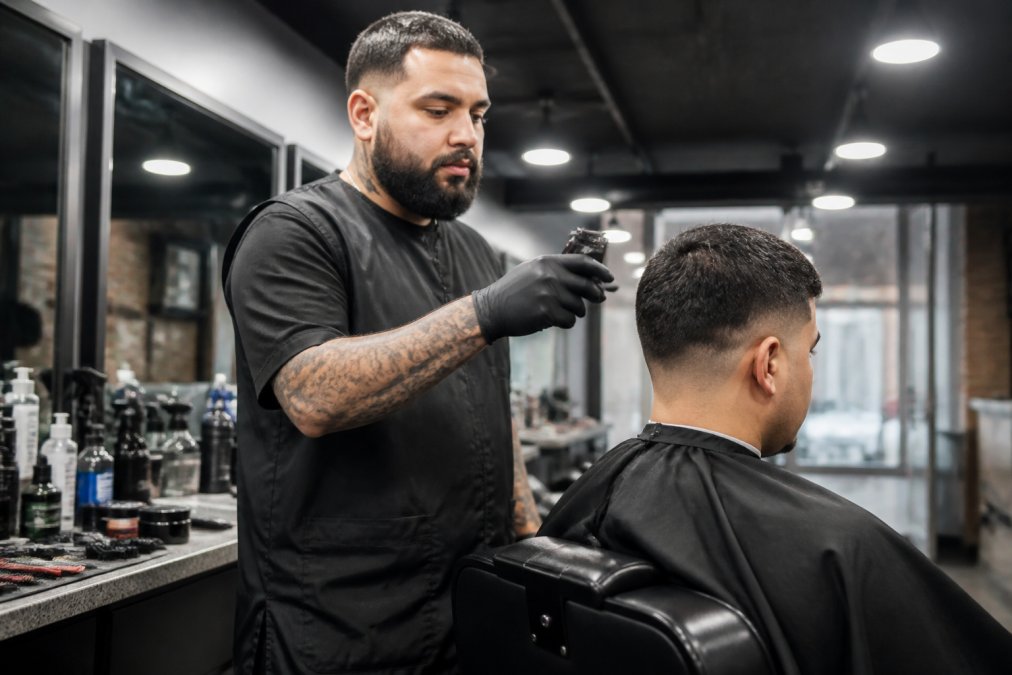
Brushless motors with digital control hold their speed as the blade loads up, which matters most on thick or wet hair. The StyleCraft Saber 2.0 runs an EON digital brushless motor at 7,200 RPM with a Black Diamond Carbon DLC Echo blade, and the Gamma+ Shorty pushes 7,500 RPM through a 45mm DLC fixed blade. Detachable blades that swap in seconds keep you working instead of stopping to realign. In practice, the barbers who get years out of a clipper are the ones who clean and oil the blade every few days, not the ones who buy the most expensive tool.

Ergonomics and Build Quality
Weight distribution decides whether your wrist survives a ten-hour Saturday. A full-metal body adds durability but also mass, so balance matters more than raw weight. The Wahl 5 Star Senior uses a metal bottom housing with a lighter overall profile for clipper-over-comb work, while the FXONE Lo-ProFX pairs an ultra-low-profile metal shield with an ergonomic grip for extended sessions (wahlusa.com). Look for a housing that feels planted in your hand without forcing a death grip.

Professional Cordless Clipper Maintenance for Longevity
Professional cordless clipper maintenance is the practice of cleaning, oiling, and inspecting your clipper on a fixed schedule so it keeps cutting at spec instead of degrading quietly. Skip it and you will notice pulling, heat, and uneven fades within weeks, and you will notice them mid-client, not between appointments.
Most practitioners find that the tools that fail early are not the cheapest ones. They are the ones run hot, run dirty, and run past the point where a five-dollar part should have been swapped. Maintenance is not a chore layered on top of your day. It is the cheapest insurance you have against a dead chair.
The Daily, Weekly, and Monthly Schedule
- Brush hair and debris from the blade after every client
- Apply two drops of clipper oil to the blade before each shift (wahlusa.com)
- Zero-gap check the blade weekly with the included screwdriver
- Inspect the cord or charging contacts weekly for fraying or corrosion
- Replace the cam follower at the first sign of rattle
- Rotate two clippers so neither runs hot all day
- Deep-clean the blade assembly and housing vents monthly with a soft brush and compressed air
- Check battery health monthly, a battery that no longer holds a full session is a failure waiting to happen
The Four Failure Modes That Actually Cost You Money
Understanding why clippers fail tells you what to stock. In a professional setting, four failure modes account for most downtime:
- Blade dulling and misalignment. The blade stops cutting cleanly, pulls hair, and forces you to go over the same area twice. This is the slowest failure and the easiest to ignore until a client notices.
- Cam follower wear. The small plastic or metal piece that drives the blade back and forth wears down and produces a rattle or a dead blade. It is inexpensive to replace and catastrophic to ignore.
- Battery degradation. Cordless runtime drops from a full session to half a session to a client and a half. You will not notice the trend until you are mid-fade with a dying tool.
- Motor and switch failure. The least common and most expensive. Usually caused by heat buildup from packed hair and a dull blade forcing the motor to work harder than it should.
What to Keep on the Shelf
Spare parts matter here. Keep a spare cam follower, screws, and at least one backup blade on hand for every clipper platform you run. A clipper that goes down at 2pm with a full book is a cost-of-failure problem, not a repair problem.
A practical spare-parts kit for a two-chair station looks like this:
- Two spare blades (one per platform)
- Two cam followers
- A small set of replacement screws and a screwdriver that fits them
- One spare battery per cordless platform
- One backup clipper that is charged and ready
The reason this matters is simple: a backup clipper on the shelf costs you nothing per day. A chair that stops for two hours costs you the client, the tip, and often the next appointment too. Maintenance and spare-parts stocking are the same discipline viewed from two angles, one prevents the failure, the other absorbs it when prevention is not enough.
Bulk Barber Supply Procurement Strategies for Shop Owners
Bulk barber supply procurement strategies are the ordering systems shop owners use to keep every chair stocked without tying up cash in dead inventory or waiting on slow freight. The goal is simple: never run out, never over-order. But the real goal underneath that is narrower, never let a supply decision cost you a client.
Most guides stop at "set a reorder point." That is the beginning of the system, not the system. What separates a station that stays stocked from one that stalls is a total-cost-of-ownership view of every part you buy and a contingency plan for when the fast shipment does not arrive.
The Total Cost of Ownership Framework
A clipper is not a one-time purchase. It is a stream of costs: the tool itself, the blades it consumes, the batteries it burns through, the parts it needs, and the downtime it causes when any of those run out. Comparing two clippers on sticker price alone is how shops end up with a cheap tool that costs more per year than a premium one.
A simple framework you can run on a notepad:
- Purchase price. What you pay today.
- Consumables per year. Blades, cam followers, oil, and batteries, multiplied by how often you replace them.
- Downtime cost per failure. Your average service price multiplied by the number of clients you lose when a chair stops for a shift.
- Expected failures per year. How often this tool or its parts fail under your volume.
- Resale or residual value. What the tool is worth when you upgrade.
Add lines 1 through 4, subtract line 5, and you have a rough annual cost of ownership. A $165 clipper that fails twice a year and costs you two clients each time is not cheaper than a $300 clipper that fails once. The math is not close.
Supply Chain Contingency Planning
This is the part most guides skip entirely, and it is the part that decides whether a slow shipment is an inconvenience or a shutdown.
A supply chain contingency plan for a barber station answers three questions before you need them:
- What are my critical items? The parts and tools that, if missing, stop a chair. For most shops that is blades, cam followers, batteries, and at least one working clipper per chair.
- Who is my second source? For every critical item, you need a second supplier you have already ordered from at least once. A backup supplier you have never used is not a backup, it is a hope.
- What is my buffer? How many weeks of critical items can you run on before you are exposed? A common pattern is two to four weeks of buffer on blades and cam followers, and one full spare battery per cordless platform.
Reorder Points That Actually Work
For a multi-chair shop, track consumption per chair per week, then order at a reorder point rather than when something runs out. The reorder point is not a guess. It is your lead time multiplied by your weekly consumption, plus your safety buffer.
If a shop goes through four blades a week and the supplier takes two weeks to deliver, the reorder point is eight blades plus whatever buffer you want to hold. Order at eight, not at zero.
Standardize on one or two clipper platforms so blades, batteries, and guards stay interchangeable across the team. Keep a backup clipper for every two working chairs, because downtime prevention is cheaper than a lost client.
Fast Shipping vs. Dependable Tools: Where the Money Actually Goes
The keyword question, dependable tools for daily professional use versus quick shipping to keep stations stocked, is really a question about which failure you can afford. A dependable tool reduces how often you need a replacement. Fast shipping reduces how long you are exposed when you do. You need both, but they solve different problems.
A shop with dependable tools and slow shipping is one supply disruption away from a bad week. A shop with fast shipping and unreliable tools is one failure away from a bad day. The shops that stay open and stay booked are the ones that treat the tool and the supply line as a single system: buy the tool that lasts, stock the parts that fail, and keep a second source for the parts you cannot run without.
The Clipper Upgrade Cycle for Professionals
The clipper upgrade cycle for professionals is the pattern of replacing or adding tools as your volume, technique, and client base change, not on a fixed calendar. A student's first clipper is not the tool a five-chair shop runs.
Most barbers move through three stages: a durable entry tool for training, a primary workhorse once volume climbs, and a specialized second clipper for detail or backup. If you are upgrading, the BaBylissPRO FXONE Lo-ProFX Neon Yellow at $189.99 is the smart pick when you already own FXONE batteries, since the tool ships without them. If you want a single tool that covers everything, the StyleCraft Saber 2.0 at $299.95 is the one we would put in a high-volume chair first.
Buying a dependable clipper is only half the equation. The other half is a supplier who ships fast enough that your backup plan is a shelf, not a waiting game.
Frequently Asked Questions
What clippers do most professional barbers use for daily high-volume cuts?
Professional barbers often choose cordless clippers with brushless motors running at 6,800 to 7,500 RPM, such as the StyleCraft Saber 2.0, Gamma+ Shorty, or BaBylissPRO FXONE Lo-ProFX. These models offer 2 to 2.5 hours of runtime, zero-gap adjustable blades, and durable metal housings. The Wahl 5 Star Cordless Senior is another common choice for its rotary motor and 70-minute battery. Prioritize motor torque, blade material, and ergonomic grip for all-day use.
Is it better to prioritize tool durability or shipping speed when upgrading station equipment?
Durability should come first for tools you use daily. A dependable clipper that lasts two to three years costs less per cut than a cheaper model that fails in months. However, shipping speed matters when a primary clipper dies mid-week. The best approach is to buy durable clippers from a supplier with quick shipping, so you get both reliability and fast replacement. Keep a backup clipper on hand to avoid downtime.
How often should professional barbers upgrade their primary clippers?
Most professional barbers upgrade their primary clipper every 18 to 36 months, depending on daily volume. Signs it is time include reduced motor torque, increased blade heat, longer charging times, or frequent blade alignment issues. High-volume shops may replace clippers every 12 to 18 months. Regular maintenance, including cleaning and oiling, can extend the clipper upgrade cycle. Keep a backup clipper to cover shipping delays.
What are the essential features of a dependable professional-grade clipper?
Look for a brushless motor with at least 6,800 RPM, a durable blade such as Black Diamond Carbon DLC or titanium MIM, and a metal housing. Zero-gap adjustable blades help with skin-tight fades. Battery life of 2 hours or more supports full-day use. Ergonomic design reduces hand fatigue. Detachable blades and guide combs make maintenance easier. These features separate pro-grade equipment from consumer-grade alternatives.
How can barbers maintain a fully stocked station without sacrificing tool quality?
Use bulk barber supply procurement strategies: order replacement blades, foils, and guide combs in advance, set a reorder point for each item, and keep a backup clipper. Choose a supplier with quick shipping to keep stations stocked. Track which parts wear out fastest and stock those first. A simple inventory sheet or app helps prevent downtime. Buying durable tools reduces how often you need to reorder.
Running a shop means the tools have to work every single day, and so does the supply line behind them. Fade Supply Co is veteran-owned and stocks professional-grade clippers, station essentials, and the spare parts that keep chairs moving, with quick shipping so a restock never turns into lost appointments. Browse the collection and build a station that holds up to daily professional use.