

Table of Contents
- Why Clippers Pull Hair Instead of Cutting It
- Signs Your Clipper Blades Are Dull and Need Attention
- How to Align Hair Clipper Blades to Stop Snagging
- How to Clean Hair Clipper Blades and Remove Hair Buildup
- How to Oil Hair Clippers the Right Way
- Troubleshooting Clipper Hair Pulling by Clipper Type
- DIY Blade Sharpening vs. Professional Sharpening
- Your Weekly Clipper Maintenance Routine
Last Updated: August 7, 2026
Why Clippers Pull Hair Instead of Cutting It
Clipper hair pulling traces back to fixable problems: blade condition, hair type, and motor performance. Clippers pull hair when the blade cannot cleanly sever the hair shaft in a single stroke. Instead of slicing through, the teeth catch and tug.
Dull Blades and Blade Gap Problems
Dull blades are the most common cause of snagging. When blade teeth lose their edge, they compress hair rather than cut it. Blade gap, the measured distance between the cutting edge of the top blade and the bottom blade, matters equally. A gap that is too wide causes uneven hair feeding and catching. Too tight creates friction and motor strain. Both produce pulling.
Hair Type and Texture Considerations
Coarse, curly, or dense hair is significantly more resistant to a dull blade than fine, straight hair. A blade that cuts fine hair acceptably will pull coarse hair badly. High-volume shops serving clients with thick or tightly coiled hair need to sharpen or replace blades more frequently. Dry, brittle hair also snags more than moisturized hair. Debris-laden hair and product buildup clog blade teeth and force the motor to work harder.
Motor Performance and Voltage Drop
A weak motor cannot drive the blade fast enough to cut cleanly. Voltage drop is a real issue with cordless clippers, especially late in a charge cycle. When the battery weakens, cutting speed drops and the blade starts dragging through hair rather than slicing it. Many barbers assume their blades are dull when the real problem is a dying battery. Corded clippers eliminate this variable, which is why many high-volume professionals prefer them for heavy work.
Signs Your Clipper Blades Are Dull and Need Attention
Dull blades rarely announce themselves all at once. The clearest indicator is the client experience: if clients are tensing up or commenting on discomfort, that is diagnostic information. Develop the habit of reading the cut itself.
Signs your clipper blades are dull include:
- Uneven cutting lines where the blade skips over sections
- Visible drag marks in the hair, especially on fades
- Increased motor noise as the motor works harder
- Heat buildup faster than normal from friction
- Hair bending before cutting, visible as a slight wave ahead of the blade teeth
- Pulling sensation that clients report even on clean hair
A quick field test: run the clipper across the back of your hand. A sharp blade set cuts arm hair cleanly. A dull set drags or misses entirely.
How to Align Hair Clipper Blades to Stop Snagging
Blade alignment is the most overlooked maintenance task in professional barbering. A misaligned blade set will pull hair even when both blades are sharp.
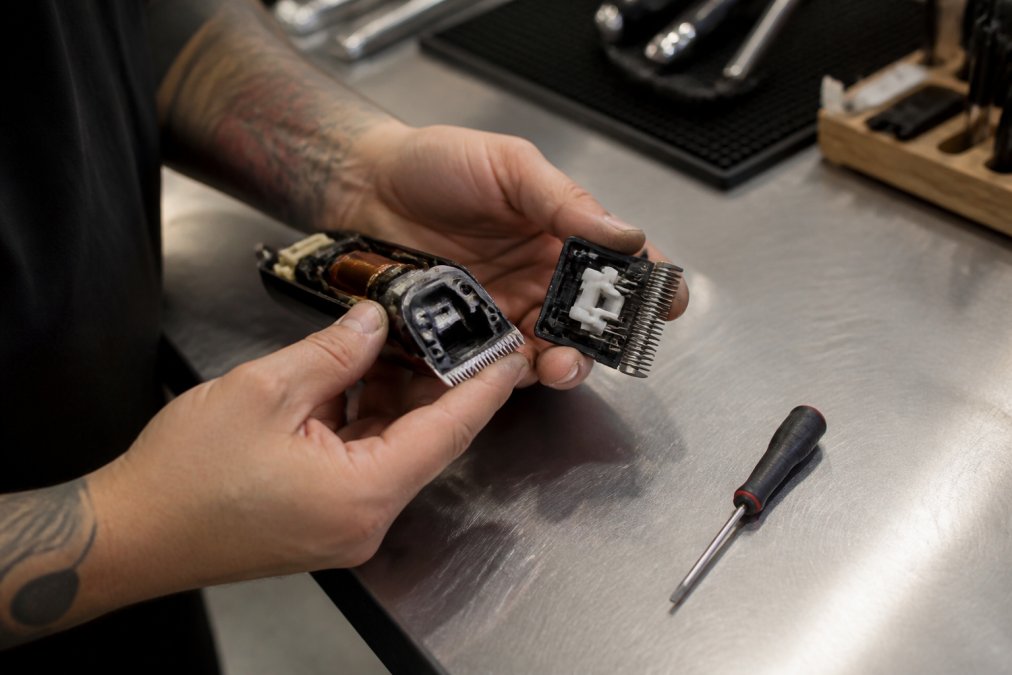
Correct blade alignment means the top blade sits slightly behind the bottom blade, with the top blade's teeth ending just short of the bottom blade's outer corner teeth.
Step-by-step blade alignment:
- Power off the clipper completely before handling the blade set
- Loosen the two blade screws with a flathead screwdriver until the top blade can slide freely
- Position the top blade so its teeth sit approximately 1/32 of an inch behind the bottom blade's corner teeth
- Verify the top blade is centered left to right
- Hold the alignment in place and tighten one screw partially, then the other, alternating until both are snug
- Power on and test on a small section of hair before continuing the cut
Snug, not forced, is the target for blade tension.
How to Clean Hair Clipper Blades and Remove Hair Buildup
Hair buildup between the blade teeth is a direct cause of clipper hair pulling. Most barbers do not clean often enough during the workday.
How to clean hair clipper blades properly:
- Power off the clipper and remove the blade set if possible
- Use a stiff cleaning brush to sweep hair debris from between the teeth
- For stubborn buildup, tap the blade set face-down against a hard surface
- Use a blade wash solution to flush residual debris; submerge the blade teeth only
- Shake off excess blade wash and allow the blade set to air dry briefly before oiling
- Reattach the blade set and apply oil before the next client
Between clients, a quick brush-out takes under 30 seconds and prevents gradual accumulation that leads to pulling.
Sanitization vs. Lubrication: What Most Barbers Confuse
Sanitization and lubrication are two separate processes serving different purposes. Confusing them leads to either unsanitary tools or improperly maintained blades.
Sanitization kills pathogens on blade surfaces. According to guidelines from the Professional Beauty Association on infection control, blade disinfection between clients is a professional standard. Spray disinfectants and blade wash solutions handle this, but they do not lubricate.
Lubrication reduces friction between the top and bottom blades during cutting. Oil creates a thin film that prevents metal-on-metal wear and reduces heat. Disinfectant sprays do not substitute for oil.
The correct sequence: clean first, disinfect second, oil third. Never skip the oil step after using a spray disinfectant.
| Step | Purpose | Frequency | Product Type |
|---|---|---|---|
| Brush clean | Remove hair debris | Between every client | Cleaning brush |
| Disinfect | Kill pathogens | Between every client | Blade disinfectant spray or wash |
| Oil | Reduce friction and heat | Every 2-3 clients | Clipper oil |
| Deep clean | Remove buildup and corrosion | Weekly | Blade wash soak |
| Blade inspection | Check alignment and wear | Weekly | Visual + field test |
How to Oil Hair Clippers the Right Way
Proper oiling is the single maintenance step with the most direct impact on cutting performance.
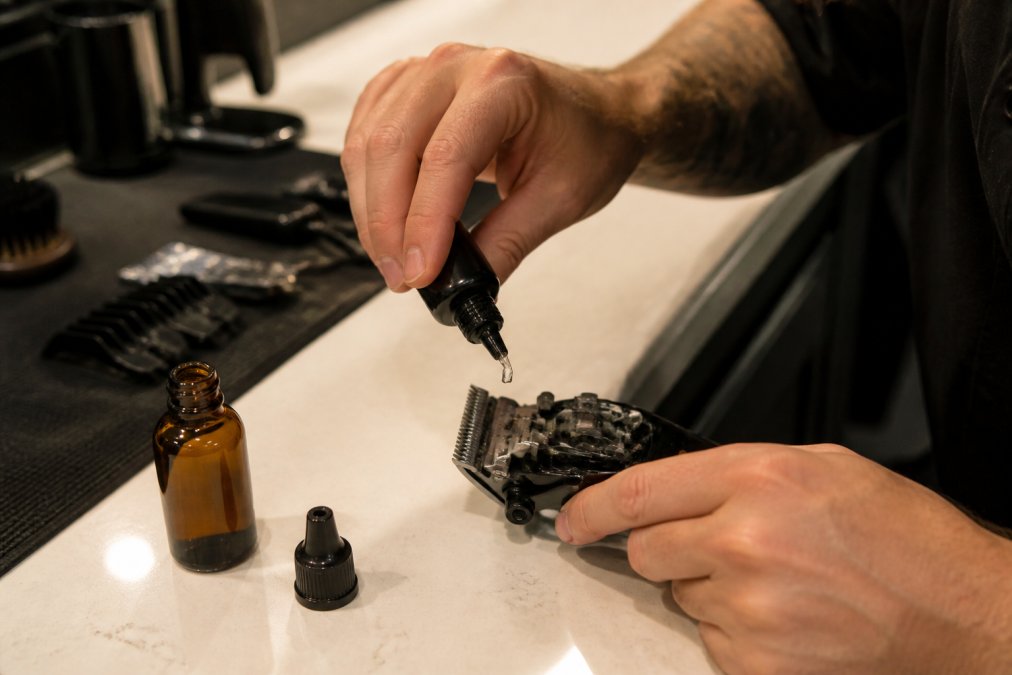
The correct oiling method:
- Power on the clipper so the blades are moving
- Apply two to three drops of clipper oil across the top blade: one drop at each corner and one in the center
- Allow the clipper to run for 10-15 seconds so the oil distributes evenly
- Power off and wipe away any excess oil with a clean cloth
- Never over-oil. Excess oil attracts hair debris and clogs the blade teeth faster
According to barber licensing and sanitation standards from the National Interstate Council of State Boards of Cosmetology, proper tool maintenance is part of professional competency standards. Oiling is not optional; it is a professional baseline.
Troubleshooting Clipper Hair Pulling by Clipper Type
Not all pulling problems have the same fix. The type of clipper you are running changes the diagnostic approach.
Corded Clippers vs. Cordless Clippers
Corded clippers deliver consistent motor speed throughout the workday. When a corded clipper pulls hair, the cause is almost always the blade set: alignment, dullness, or debris buildup.
Cordless clippers introduce the voltage drop variable. A cordless clipper pulling hair late in a charge cycle is frequently a battery issue, not a blade issue. Test this by fully charging the clipper and repeating the same cut. If the pulling disappears, the battery is the culprit. For high-volume shops, rotate cordless clippers throughout the day so no single unit runs into a low-battery state during a cut.
Attachment Comb Problems That Cause Pulling
Attachment combs are a frequently overlooked source of pulling. A cracked, warped, or poorly fitting attachment comb disrupts the hair feed path before the hair reaches the blade. The comb should sit flush against the blade set with no visible gap or wobble.
Common attachment comb problems include cracked teeth that catch hair, warping from heat exposure, incorrect size pairing, and hair buildup inside the comb. Clean attachment combs with the same frequency as blades and inspect for cracks regularly.
DIY Blade Sharpening vs. Professional Sharpening
DIY sharpening using a honing wheel or sharpening stone is a learnable skill. The advantage is speed and cost over time. The disadvantage is that improper technique removes too much metal and can create uneven cutting surfaces that pull worse than dull blades.
Professional sharpening produces a more consistent result because trained sharpeners use calibrated equipment. The cost per sharpening is higher, but the result is predictable. According to guidance from the American Barber Association on tool maintenance standards, blade maintenance competency is a recognized component of professional barbering practice.
When to sharpen vs. when to replace:
- If blade teeth are chipped, bent, or broken, replace the blade set.
- If the blade set shows visible corrosion or rust that has pitted the metal surface, replacement is more cost-effective.
- If the blade cuts unevenly after two professional sharpenings in a row, the blade set has reached the end of its useful life.
A well-maintained blade set that is sharpened before it becomes severely dull will outlast a neglected set by a significant margin.
Your Weekly Clipper Maintenance Routine
Preventing clipper hair pulling is a maintenance discipline. The barbers who never have pulling problems run a consistent routine.
Daily maintenance (every shift):
- Brush hair debris from blade teeth between every client
- Disinfect blades between every client
- Oil blades every two to three clients
- Inspect blade alignment visually before the first cut
- Rotate cordless clipper units to maintain full charge
Weekly maintenance:
- Perform a full blade wash soak on all clipper blade sets
- Inspect blade teeth closely for chips, bends, or corrosion
- Check attachment combs for cracks and warping
- Test blade alignment on every unit and adjust as needed
- Run a field test on any unit that felt off during the week
- Clean clipper bodies and blade screw threads
Monthly:
- Assess which blade sets need professional sharpening
- Check clipper cord condition on corded units
- Evaluate battery performance on cordless units
- Restock clipper oil, cleaning brushes, and blade wash
Fade Supply Co stocks professional-grade tools and station essentials selected based on real-world experience behind the chair. For barbers who want to tighten their grip and control during cuts, the BaBylissPRO® Clipper Grips are a practical addition to any station setup.
The maintenance schedule above is not complicated. What makes it work is consistency. A clipper that is cleaned, oiled, and inspected regularly will almost never pull hair.
Frequently Asked Questions
Why are my clippers pulling hair even after oiling?
Oiling reduces friction but does not fix every cause of clipper hair pulling. If your blades are misaligned, the top blade may sit too far forward and snag rather than cut. Dull blade teeth are another common culprit, oil cannot restore a cutting edge that is worn down. Check blade alignment first, then inspect the teeth under good light. If the teeth look flat or chipped, sharpening or replacing the blade set is the next step.
How often should you oil your hair clippers?
In a high-volume shop, oil your clippers before every client or at minimum every 30 minutes of continuous use. Clipper oil burns off quickly under the heat generated by blade friction. For lighter use, oiling at the start and end of each session is sufficient. Skipping lubrication accelerates blade wear, increases overheating, and is one of the fastest ways to turn a smooth-cutting blade set into one that pulls hair.
Can dull clipper blades cause skin irritation?
Yes. Dull blades do not cut cleanly through the hair shaft, they drag and tug, which pulls the follicle and creates micro-abrasions on the scalp. Clients often describe this as a burning or scratching sensation. Beyond discomfort, repeated irritation from dull blades can cause razor bumps and folliculitis, particularly on clients with tightly coiled hair. Keeping blades sharp and properly aligned protects both cutting performance and client skin health.
What is the best way to clean hair clippers to prevent snagging?
Remove the blade set after every few clients and brush out hair debris with a cleaning brush, packed hair buildup between blade teeth is a leading cause of snagging. Use a blade wash or isopropyl alcohol spray to dissolve debris and sanitize the metal. Let blades dry fully before re-oiling, since applying clipper oil over wet blades traps moisture and accelerates corrosion. A full clean at the end of each workday keeps cutting performance consistent.
Clipper hair pulling frustrates clients and slows down high-volume shops, but it is entirely preventable with the right knowledge and routine. Fade Supply Co exists to support professional barbers with dependable tools and the expertise to use them correctly. Explore the Fade Supply Co collection for professional-grade clipper accessories, station essentials, and supplies built for barbers who cannot afford downtime.
This article was written using GrandRanker