Last Updated: November 4, 2026
Quick Summary
Mobile barber insurance is business coverage that protects a barber who works at client locations, usually combining general liability, professional liability, commercial auto, and tools coverage. It transfers the financial cost of client injuries, property damage, and equipment loss to an insurer so the business can keep operating.
- General liability often follows you to client homes, not only licensed shops, so confirm it applies on location.
- Personal auto policies commonly exclude business use, so ask your carrier about business-use coverage in writing.
- Tools that travel are often poorly covered by standard property forms, so ask whether inland marine coverage applies.
- Compare at least three quotes line by line, checking limits, deductibles, and exclusions rather than premium alone.
- Many salons and venues require a certificate of insurance, so keep a current COI on hand for every client.
Table of Contents
- Why Mobile Barbers Need Business Insurance
- Mobile Barber General Liability Insurance: What It Covers
- Mobile Barber Commercial Auto Insurance for Your Vehicle Setup
- Protecting Tools, Equipment and Business Property Away From the Shop
- Barber Business Insurance Cost: Premiums, Deductibles and Limits
- Workers' Compensation, Contracts and Certificates of Insurance
- Choosing Your Mobile Barber Policy: Next Steps
- Frequently Asked Questions
Why Mobile Barbers Need Business Insurance
Mobile barbers face liability risks that a shop-based barber rarely encounters, and This essential mobile barber insurance guide explains them. A client's chair can tip on an uneven driveway, a stray blade can cut a customer, and a tool kit can be stolen from a parked car. Without coverage, a single incident can wipe out a small business's savings.
The core reason is that a mobile operation carries the same exposures as a fixed shop but without a landlord, a building policy, or other staff to share the burden. U.S. Small Business Administration guidance on business insurance recommends that small business owners evaluate liability, property, and income-protection coverage before taking on clients. For a mobile barber, that evaluation starts with understanding where you work and what you carry.
Insurance does not remove the risk. It transfers the financial consequences of a claim to an insurer, so you can keep operating after an accident or loss, and a well-chosen mobile barber insurance policy is what makes that transfer work.
Mobile Barber General Liability Insurance: What It Covers
General liability insurance is the foundation of most barber business policies. It protects against third-party claims for bodily injury and property damage that arise from your work or operations. Here is the part many new mobile barbers miss: general liability typically follows you wherever you service clients, not only inside a licensed shop.
Quotes for general liability coverage vary, so it is worth requesting quotes from several providers before committing. Look closely at the coverage limits, the deductible, and the policy exclusions that apply to on-location services.
Bodily Injury and Property Damage
Bodily injury coverage pays medical expenses and related costs if a client is hurt during a service, such as a cut from a clipper blade or a slip on a wet floor at a home. Property damage coverage addresses harm to a client's belongings, such as a stained couch or a damaged mirror in a home where you set up.
A common mistake is assuming that a client's home policy will cover an injury caused by your work. Carriers often pursue the service provider instead, so your own liability policy is what protects your business.
Professional Liability for Barbering Errors
Professional liability, sometimes called errors and omissions coverage, addresses claims that your work caused harm, such as a chemical reaction from a product or a cut that a client says was negligent. These claims are about the quality of the service rather than an accident.
Many barbers pair professional liability with general liability, because a single client complaint can involve both injury and a claim that the service itself was faulty.
Mobile Barber Commercial Auto Insurance for Your Vehicle Setup
If you drive your equipment to clients, your personal auto policy may not cover business use. Commercial auto insurance is generally designed for vehicles used for business purposes.
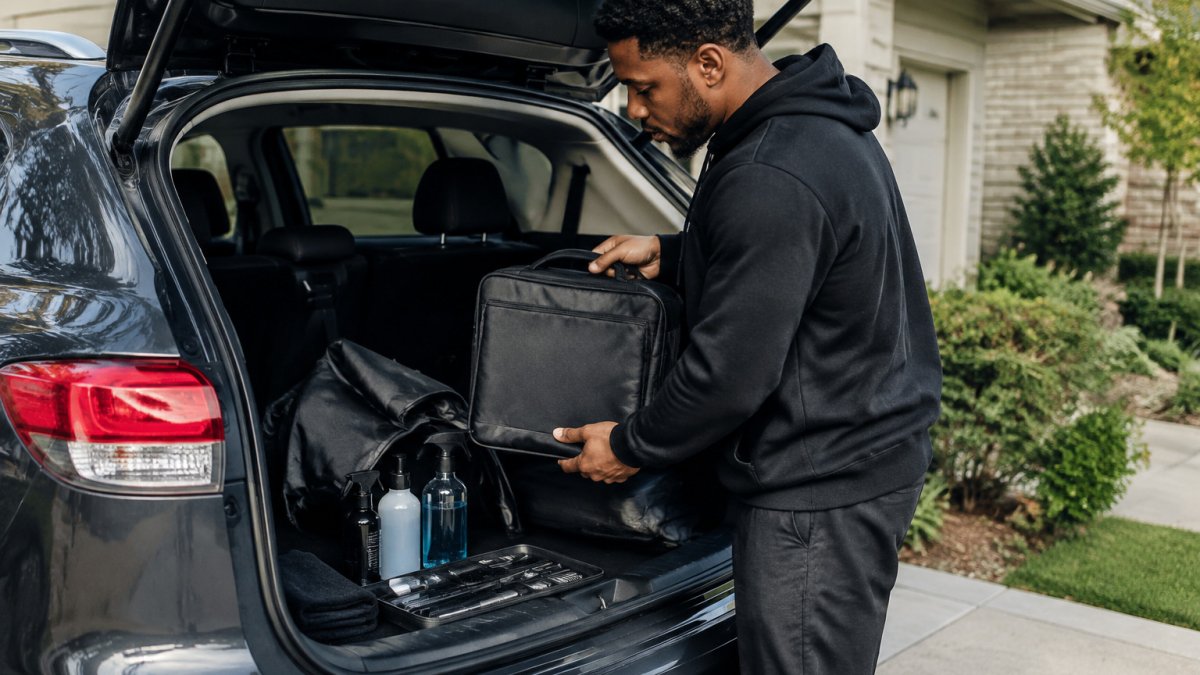
What matters in practice is how your vehicle is set up. A hatchback loaded with a portable station, clipper kit, and disinfectant needs a policy that reflects regular business use.
The gap most mobile barbers fall into is assuming that because they drive a personal vehicle, their personal auto policy will respond to a crash on the way to a client.
Vehicle setup drives both your premium and your claim outcome. A van converted into a mobile station, a pickup with a locked bed cap, and a sedan with a folding chair in the trunk present different risk profiles.
Watch out: if your auto policy and your property policy both exclude tools in transit, a theft from a parked vehicle can leave you with no coverage at all.
Protecting Tools, Equipment and Business Property Away From the Shop
Your clippers, trimmers, and station essentials are business property, and they travel with you. Tools and equipment coverage, typically written as an inland marine or business personal property endorsement, protects them against theft, damage, and loss while they are away from your shop.
Keep your equipment organized and secured when you transport it. A large organized mobile station kit can store and move your equipment in one place. A durable waterproof barber backpack is one way to carry clippers, brushes, and capes on the road.


The question that separates a real mobile-first policy from a generic one is simple: does the coverage follow the tools?
Ask three questions of any quote. First, where does coverage apply, at the client's home, in the vehicle, in a hotel room, at an event venue? Second, what is the deductible per claim, and is there a separate deductible for theft versus damage? Third, are there sub-limits for specific categories such as electronics, or for property left in an unattended vehicle?
Watch out: many property forms exclude or sharply limit coverage for tools left in an unlocked vehicle or visible through the window.
A claim scenario makes the mechanics concrete. Suppose your backpack is stolen from a locked car outside a client's home.
Finally, match the limit to replacement cost, not what you paid years ago.
The table below sums up the questions to ask any quote for tools and equipment that travel with you.
| Question to ask | Why it matters | What to check |
|---|---|---|
| Where does coverage apply? | Standard property forms are often tied to a fixed location | Client's home, vehicle, hotel, event venue |
| What is the deductible? | It sets your out-of-pocket cost per claim | Separate deductible for theft versus damage |
| Are there sub-limits? | A high overall limit can hide low caps on specific losses | Theft from vehicle, electronics |
| Is property left in an unattended vehicle covered? | Many forms exclude or limit this scenario | Unlocked car or visible tools |
| Does it pay replacement cost? | Actual cash value can leave a large gap after total loss | Replacement cost versus actual cash value |
Barber Business Insurance Cost: Premiums, Deductibles and Limits
Premiums depend on your location, the services you offer, your revenue, and your claims history. Policies are usually priced as an annual premium, and a higher deductible generally lowers that premium while raising what you pay out of pocket after a claim. Coverage limits define the maximum the insurer will pay, so a limit that is too low can leave you exposed after a serious injury.
Request at least three quotes and compare them line by line. A cheaper premium with narrow exclusions can cost more than a slightly higher premium that covers your actual operation. Pricing for insurance policies is set by carriers, so obtain current quotes directly.
Workers' Compensation, Contracts and Certificates of Insurance
Workers' compensation insurance covers medical costs and lost wages for employees who are hurt on the job. Requirements vary, so check the rules that apply where you work. Independent contractors usually do not carry this coverage themselves, but misclassifying a worker can create serious liability.
Many salons, event venues, and property managers request a certificate of insurance (COI) before allowing a barber to work on their premises. A COI is a document issued by your insurer that confirms your coverage and limits. Review any contract for insurance requirements before you sign, and keep a current COI on hand for every client who asks.
Choosing Your Mobile Barber Policy: Next Steps
Start by listing every service you offer, every location where you work, and every piece of equipment you carry. Use that list to ask providers whether general liability, professional liability, commercial auto, and tools coverage apply to your setup. Confirm exclusions in writing, and ask how a claim scenario, such as a client injury at a home visit, would be handled.
Once you have a policy, review it annually and whenever your services or equipment change. Browse the station essentials at Fade Supply Co to keep your mobile setup ready for clients.
Frequently Asked Questions
What insurance do I need for a barbershop?
Most barbers start with general liability insurance, which covers bodily injury and property damage claims from clients or visitors. Professional liability coverage addresses claims that a service was performed negligently, such as a cut that causes a scalp injury or a chemical reaction. Commercial property insurance protects clippers, chairs and other equipment at a fixed location, and workers' compensation is required in most states once you have employees. Your state and any lease terms may set requirements, so check those before choosing a policy.
Do mobile barbers need general liability insurance?
Yes. Mobile barbers face the same liability exposure as shop-based barbers, and often more, because they work in clients' homes, hotels or event venues they do not control. General liability coverage pays for a client's medical bills or property damage if you are found responsible, and many clients, event hosts and landlords will ask for a certificate of insurance before they let you work. Without it, a single slip, cut or damaged floor could cost far more than the premium.
Does a mobile barber need commercial auto insurance?
If you use your personal vehicle to carry equipment and drive to clients, your personal auto policy may exclude business use, and an accident during a paid appointment could be denied. A commercial auto policy or a business-use endorsement covers accidents that happen while you are working. Check whether your policy treats carrying tools as business use, and whether it covers the equipment itself if the vehicle is damaged or the items are stolen from it.
How much does mobile barber business insurance cost?
Costs vary by state, coverage limits, your claims history and how often you work away from a fixed location. Ask providers for quotes on general liability with at least $1,000,000 per occurrence, add commercial auto or equipment coverage separately, and compare the deductible against the premium. Quotes will show the annual total; a higher deductible lowers the premium but means you pay more out of pocket on any claim.
Does business insurance cover barber tools and equipment?
A business property or inland marine policy can cover clippers, shears, chairs and portable stations, but coverage usually applies only to the stated limit and to specific perils such as theft or fire. Equipment kept in a vehicle may be excluded under a standard property policy, so confirm whether off-site and in-transit coverage is included. Keep receipts and a current inventory with serial numbers, since insurers will ask for proof of value after a loss.
Can a mobile barber work without insurance?
Licensing requirements vary, so check with the relevant barber licensing board, and many clients, property managers and event venues will require proof of coverage before you can work there. Working without insurance leaves you personally responsible for any injury or damage claim, which can exceed your savings. Going uninsured is a financial risk that rarely pays off.
Does barber insurance cover clients' injuries or damaged property?
General liability insurance typically covers bodily injury and property damage that you cause to a client or a third party, including legal defense costs up to the policy limits. Professional liability applies to claims that your work was negligent. Policies commonly exclude intentional acts, injuries you knowingly caused, and damage to your own tools. Read the exclusions section closely so you know which claim scenarios your policy will not pay.
Are barbers struggling in 2026?
Demand for barbering services remains steady, but competition from shops and independent operators is strong, and margins depend heavily on location and pricing. Insurance is a fixed cost that does not scale with revenue, so it helps to compare quotes and bundle coverage to keep it predictable. Track your costs against your bookings before deciding how much coverage your business can carry.