

Table of Contents
- Why Clippers Overheat During Fades
- How Often to Oil Clippers for Heat Prevention
- The Role of Blade Lubrication in Cooling
- Best Clipper Coolant Spray for Professional Use
- Signs of Dull Clipper Blades and Heat Buildup
- Step-by-Step Maintenance Routine to Prevent Overheating
- Common Mistakes That Make Clippers Overheat
- Frequently Asked Questions
Last Updated: September 18, 2026
Why Clippers Overheat During Fades
Clippers generate heat through blade friction and motor strain during high-volume work. When you're cutting tight fades back-to-back, your blades work harder and longer than normal. The friction between the blade teeth increases with each pass, and the motor spins faster to maintain cutting power. Add poor lubrication or debris buildup to the mix, and heat builds rapidly.
The real problem isn't just the heat itself, it's what happens when you ignore it. Overheated clippers pull hair instead of cutting it cleanly. Your fade lines blur. Clients notice the difference immediately. Worse, continuous overheating damages the motor and blade set permanently, turning a $60-100 tool into scrap metal in months instead of years.
Understanding why this happens is the first step to prevent clipper overheating. The barbers who master heat prevention keep their tools sharp and reliable for years.
The culprit is usually one of three things: friction buildup from debris, inadequate lubrication, or pushing the motor beyond its thermal limits without breaks.
How Often to Oil Clippers for Heat Prevention
Oil your clippers every 2-3 clients during a busy day. This is the single most important maintenance habit you can build.
Clipper oil reduces blade friction (lowering temperature), flushes out hair and skin debris, and protects against rust.

The sweet spot is every 2-3 clients, enough to keep blades lubricated without oversaturating them, which creates buildup.
The type of oil matters. Use clipper oil specifically formulated for your blade type. Andis clipper oil is specially formulated to clean and lubricate without leaving sticky residue. A small bottle lasts weeks because you're using just a few drops per application.
Apply oil by running the clipper over a small amount on a paper towel for 3-5 seconds. You'll see the oil distribute across the blade. That's enough. Wipe away excess with a clean towel.
The Role of Blade Lubrication in Cooling
Blade lubrication is the primary defense against clipper overheating, but its cooling effect works differently depending on your motor type.
How lubrication reduces heat in rotary motors: Rotary motors spin continuously at high RPM. Lubrication reduces friction directly, lowering blade temperature. A small reduction in lubrication can cause a 15-20 degree temperature spike.
How lubrication affects magnetic motors: Cordless clippers use magnetic motors that oscillate the blade. Lubrication reduces resistance, keeping the blade moving freely and reducing coil temperature.
The debris factor: Hair and skin debris trapped between blade teeth create friction and micro-scratches. Clean debris first, then lubricate, a clean but dry blade runs cooler than a lubricated but clogged one.
Choosing the right lubricant for your motor type: Corded clippers benefit from thinner oils; cordless clippers need slightly thicker formulations to reduce motor coil drag. Check your manual for recommended viscosity.
Proper lubrication prevents hair pulling. Dry or dull blades snag hair, forcing the motor to work harder and generate more heat.
The best clipper lubricants do more than just reduce friction. They also disinfect, cool, and prevent rust. Andis Cool Care combines lubrication with active cooling and works with both rotary and magnetic motor systems. For high-volume shops, this saves time and prevents overheating simultaneously.
Apply lubrication between every 2-3 clients, or whenever you notice your clipper getting warm to the touch. Don't wait until it's hot. Prevention is always faster than recovery.
Best Clipper Coolant Spray for Professional Use
A dedicated coolant spray is essential for shops doing 15+ fades daily. These sprays cool overheated blades instantly while disinfecting and lubricating simultaneously. However, choosing and using them safely requires understanding both product chemistry and environmental factors.

How aerosol coolants work: Most use evaporative cooling, dropping blade temperature 20-30 degrees in seconds. They contain disinfectants and light oils that lubricate after cooling, plus rust inhibitors.
The best professional-grade option: Clippercide spray is a 5-in-1 formula that disinfects, cleans, lubricates, cools, and prevents rust in one application. It's designed specifically for clipper blades and works with all major brands. Another proven option is Andis Blade Care dip jar, which works differently, you dip your clipper blades into the solution for 10-15 seconds for deep cleaning and cooling. The dip method removes hair buildup more thoroughly than spray alone and is ideal between clients or during longer breaks.
How to use coolant spray safely: When your clipper feels warm, spray directly onto the blade for 2-3 seconds while the clipper is running. The spray cools the blade instantly and flushes out debris. This takes 10 seconds and prevents a shutdown. However, avoid spraying directly onto client skin or open cuts. Aerosol coolants contain alcohol and disinfectants that can irritate sensitive skin or cause stinging in minor nicks. Always apply spray to the clipper blade only, not to the scalp or neck area.
Skin sensitivity and chemical protocols: Test coolant on sensitive skin first. Some formulations contain high alcohol concentrations that can cause irritation. Use dip-jar methods for sensitive-skin clients. Ensure adequate shop ventilation to prevent VOC buildup.
Environmental factors affecting coolant performance: In hot, humid environments (above 75°F and 60% humidity), evaporative cooling is less effective. Use dip-jar methods instead. In dry, cool shops, aerosol sprays are highly effective.
High humidity accelerates rust formation. Always dry blades thoroughly after coolant spray, especially in humid climates. Store clippers in a dry location with silica packets.
Storage and shelf life: Aerosol sprays lose effectiveness after 6+ months. Keep coolant in a cool, dry place. Replace dip-jar solutions when cloudy or discolored.
For mobile barbers, aerosol coolant fits easily in your kit. For stationary shops, a dip jar provides deeper cleaning.
Signs of Dull Clipper Blades and Heat Buildup
Your clippers tell you when they're in trouble. Learn to read the signs before overheating damages the motor.
Hair pulling is the first warning sign. Dull or misaligned blades force the motor to work harder, generating excess heat. Sharpen or replace the blade set immediately.
Excessive vibration means blade tension is off or debris is packed between teeth. Stop and clean your blades.
The clipper feels hot to the touch after 5-10 minutes of use means thermal buildup is happening. This is your signal to apply coolant spray and check your blade lubrication. If it's still hot after oiling, your blades may be dull.
Motor sounds different, louder, strained, or grinding, indicates stress from dull, misaligned blades or debris. Clean and oil immediately. If sound persists, sharpen the blade set.
Uneven cutting or skipping sections of hair means blade alignment is off or one blade is duller than the other. This creates uneven friction and uneven heat distribution. Check blade tension and consider a blade replacement.
The key is catching these signs early. A clipper that's getting warm is fixable in seconds.
Step-by-Step Maintenance Routine to Prevent Overheating
Build a daily maintenance routine into your workflow to prevent clipper overheating. This takes less than 2 minutes total and prevents 90% of overheating problems.
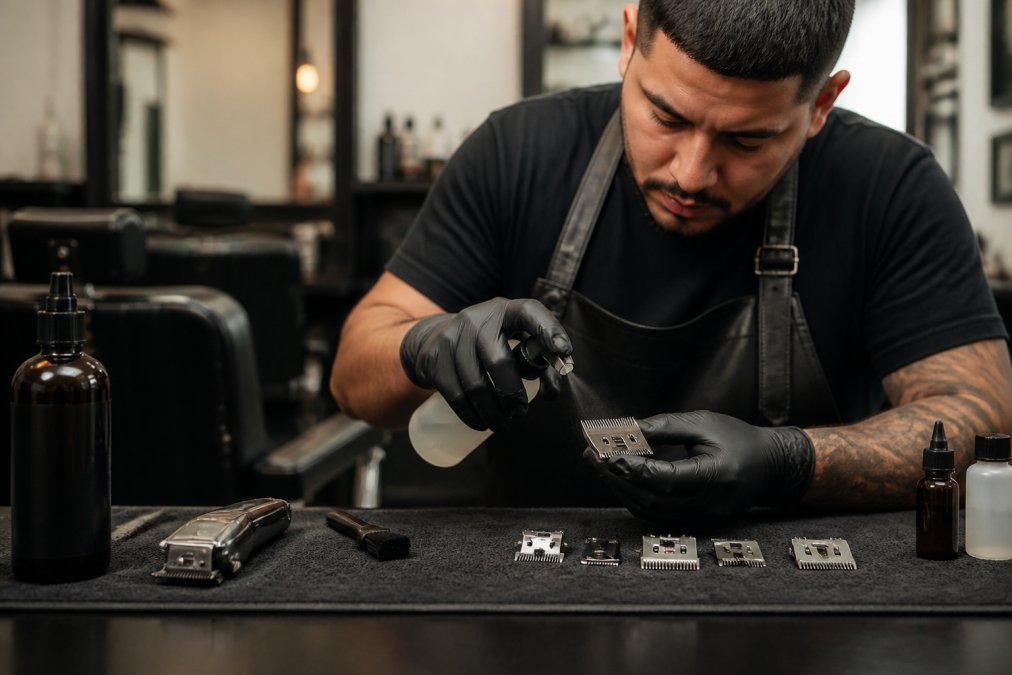
Clean Blades Between Clients
Stop for 15 seconds between clients. Use a small brush to remove hair and skin debris from between blade teeth.
Apply Clipper Oil Regularly
Apply 2-3 drops of clipper oil to the blade. Run the clipper over a paper towel for 3-5 seconds to distribute evenly. Wipe away excess.
Rotate Tools During High-Volume Sessions
Rotate between two clipper sets during high-volume days. This prevents any single clipper from building up dangerous heat.
Check Blade Tension and Alignment
Every morning, check blade tension. Loosen the screw slightly, then tighten until you feel slight resistance. Blades should move smoothly without play.
Common Mistakes That Make Clippers Overheat
Most barbers make one or two of these mistakes without realizing it. Fix them and your clipper overheating problems disappear.
Frequently Asked Questions
Why do hair clippers get hot so fast during a fade?
Clippers generate heat from blade friction and motor strain during extended use. When cutting thick hair in high-volume sessions, the blades work harder, friction increases, and heat builds quickly. Dull blades and dirty clipper teeth compound the problem by forcing the motor to work longer. Proper lubrication, regular cleaning, and tool rotation reduce friction and thermal buildup significantly.
How often should I oil my clippers to prevent overheating?
Oil your clippers between every 2-3 clients during a busy day, or at minimum once daily. High-volume barbers benefit from oiling every 1-2 clients to maintain consistent blade friction reduction. Keep a bottle at your station and make oiling part of your transition routine between fades.
What is the best coolant spray for barber clippers?
Clippercide Spray and Andis Cool Care both serve as 5-in-1 solutions that disinfect, clean, lubricate, cool, and prevent rust in one application. Clippercide Spray ($11.99) is ideal for quick station maintenance. Andis Cool Care ($11.99) also cools the clipper. For deeper cleaning and cooling, Andis Blade Care Dip Jar ($14.99) removes hair buildup and acts as a coolant and rust preventative.
Can dull blades cause clippers to overheat more quickly?
Yes. Dull blades increase cutting load and blade friction, forcing the motor to work harder and longer on each pass. This accelerates thermal buildup. Signs of dull blades include hair pulling, uneven cutting, and clippers heating up faster than normal. Replace dull blades promptly and maintain your existing blades with regular oiling and cleaning to preserve sharpness and keep heat generation minimal.