

Quick Summary
Client comfort in a barber shop comes from repeatable habits: a short consultation to set expectations, clear communication before, during and after the cut, a properly adjusted chair, and a clean, predictable station. Each of these is a decision you control, not a feeling you hope for.
- Ask what the client wants and repeat the plan back before the first clipper pass.
- Check in during the service with a quick question like "Is this pressure okay?
- Set the chair height so the client's feet rest flat on the footrest.
- Keep a fresh neck strip on before the cape goes on and dust the neck afterward.
- Set the thermostat for the client side of the room, not the barber side.
Table of Contents
- Why Client Comfort Decides Whether Clients Come Back
- Start With a Consultation That Sets Expectations
- Communicate Clearly Before, During and After the Cut
- Chair Comfort and Ergonomics for Client and Barber
- Shop Environment, Hygiene and Privacy
- Measuring Client Comfort and Satisfaction
- Book Your Next Comfort Upgrade at Your Station
- Frequently Asked Questions
Why Client Comfort Decides Whether Clients Come Back
Client comfort is one of the strongest reasons a client books the same barber again. A clean cut matters, but a client who feels relaxed, heard and safe is the one who returns.
Improving client comfort in barber shops starts with small, repeatable habits. You don't need a renovation. You need a process that makes every visit feel predictable and well cared for.
Comfort is a set of decisions, not a feeling. The client's neck is protected, the temperature is right, the questions are asked, and the wait is short. Each one is a choice you control.
- Clients notice a clean neck strip and a gentle neck duster immediately
- Clients remember when you ask before you start
- Clients rebook when the visit feels calm from start to finish
Start With a Consultation That Sets Expectations
Most uncomfortable haircuts start with a mismatch. The client expected one thing, the barber delivered another, and nobody talked about it until the mirror came out. A short consultation before the first clipper pass prevents most of that.
Ask what the client wants, how they wear their hair day to day, and whether they have any sensitivities on the scalp or neck. Then repeat the plan back in plain words so both of you agree.
- Ask about length, guard size and the finish they want
- Ask about sensitive skin, past irritation or products they avoid
- Confirm the time you expect the cut to take
Communicate Clearly Before, During and After the Cut
Clear communication is the difference between a client who feels in control and one who feels anxious. Narrate what you are doing. Say when the clippers will get close to the ear. Warn before you tilt the head.
Check in during the service, not just at the start and end. A quick "Is this pressure okay?" costs nothing and builds trust. After the cut, ask how it feels and whether anything needs adjusting before the client leaves.
Watch out: a client who stays quiet is not always comfortable. Look for tension in the shoulders and ask directly.
Chair Comfort and Ergonomics for Client and Barber
A comfortable chair helps the client relax, and a well-set station protects the barber's back and wrists over a long day. Both matter. A chair that sits at the right height lets you work without reaching, and a client who can rest their head and neck in a natural position stays still longer.
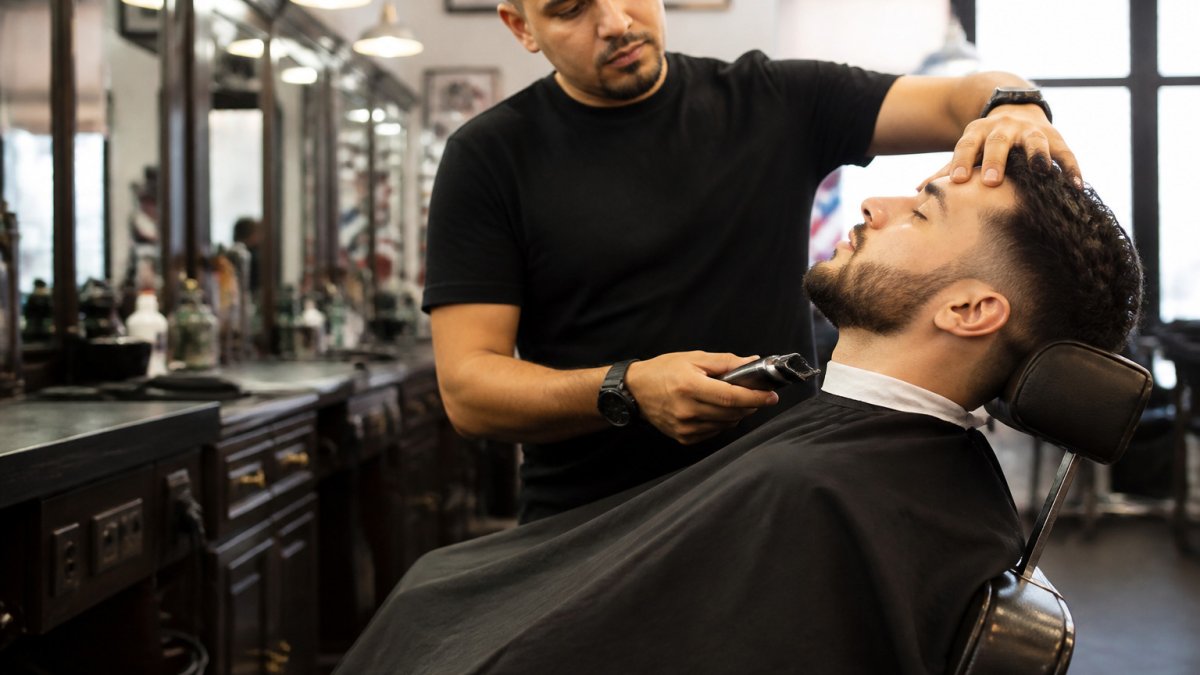
Pay attention to the small details. Keep the headrest adjusted to the client's height, keep the footrest steady, and make sure the seat does not tilt while you work.
Adjusting the Chair for Different Clients
Build a short adjustment routine you run for every client:
- Height: lower the chair so the client's feet rest flat on the footrest, not dangling. A client who has to brace their feet stays tense through the shoulders.
- Headrest: set it so the client's neck is supported without pushing the chin toward the chest. If the headrest is too high, the client holds their own head up and tires quickly.
- Recline: keep the backrest close to upright for most cuts. Keep the recline modest so the client can still see the mirror.
- Armrests: lower or swing them away for clients who use a wheelchair or walker, and offer a hand on the armrest when they transfer into the chair.
Physical Comfort and Accessibility
Plan for client mobility needs before the client walks in:
- Keep at least one chair at a height a client can reach from a standing position, or keep a stable step stool nearby.
- Offer a neck pillow or rolled towel for clients with neck or shoulder issues.
- For clients who need to stand or stretch mid-cut, build in a pause rather than rushing the service.
- Keep the floor clear of cords and clippings so clients with canes, walkers, or limited vision can move safely.
- Ask before you tilt the head back.
Sensory Sensitivities and Neurodivergent Clients
A few adjustments can make the visit more comfortable for clients who are sensitive to noise or tight fabric:
- Offer ear covers or a quiet clipper setting for clients who flinch at noise.
- Let the client hold the cape away from the neck, or use a looser cape, if tight fabric is uncomfortable.
- Explain each step before it happens: "I'm going to tilt your head to the left now." Predictability lowers anxiety.
- Offer a quieter chair away from the door, the radio, and the blow dryer when the shop is busy.
Setting Up the Neck Strip and Neck Duster Routine
A neck strip is a simple barrier between the client's skin and the cape, and it does a lot of work. It catches loose hair, keeps clippings off the neck, and makes the client feel cared for.
Keep both ready at the station so you never have to stop mid-service. Here is a routine that works for most shops:
- Place a fresh neck strip before the cape goes on
- Dust the neck gently with a soft brush after the cut
- Remove the strip carefully, starting from one side
- Dust again if any hair remains on the collar
Stock a neck strip dispenser at each chair so strips stay clean and easy to reach. For shops that go through strips quickly, buying in bulk keeps stations from running low mid-week. For the neck duster, choose one that suits your clients' comfort.
Percu Natural Bristles Neck Duster Assorted Sizes →
The article points to a few chair adjustments that keep clients comfortable, which are summarised below.
| Adjustment | Goal | Why it matters |
|---|---|---|
| Height | Feet rest flat | Prevents tension through shoulders |
| Headrest | Supports neck | Avoids chin pushed to chest |
| Recline | Near upright | Lets client see the mirror |
| Armrests | Lowered or swung away | Helps clients who transfer from a wheelchair or walker |
Shop Environment, Hygiene and Privacy
Clients judge a shop in the first few seconds. A clean floor, a fresh cape and a clear workstation signal that the barber takes care seriously. Hygiene is part of comfort, not separate from it.
Temperature, Air and Noise
A shop that is too cold makes clients tense, and a shop that is too hot makes them sweat under the cape. If chair comfort is on your list, budget-friendly chair alternatives are worth a look before you commit to a costly model.
Noise is the most overlooked comfort factor. Keep the radio at a level where a client can hear you without leaning in. Move blow dryers and clippers away from the waiting area. If the shop gets loud, offer a quiet chair in the corner and keep that corner free of equipment.
- Keep a light blanket or towel available for clients who get cold under the cape
- Check the thermostat at the start of each shift and again mid-afternoon
- Turn down the music during consultations so clients can hear you clearly
Waiting Area Comfort
A client who waits standing up starts the service uncomfortable. Keep the waiting area clean, with enough seats for a busy Saturday and a clear path to the chairs. A coat hook, a place to set a bag, and a visible price list reduce small frictions that add up.
- Keep the wait predictable: tell clients how long the wait is and update them if it changes
- Offer water or a restroom location to clients who have been waiting
- Keep the waiting area free of hair and clutter so clients do not have to move things to sit down
Tool Sanitation and Station Hygiene
Hygiene is a comfort issue because clients notice what touches them. Follow standard barbering sanitation practice: keep a clean cape for each client, and never reuse a neck strip. Keep a clean towel at each station for wiping down the chair arms between clients.
- Wipe down the chair arms and the station between clients
- Keep capes and neck strips in a covered, clean spot
- Organize tools so you can find them without looking, and compare professional barber station organizers that keep tools tidy and out of sight.
- Store clean tools separately from used tools, and keep a covered container for used blades
Privacy and Personal Space
Privacy matters too, especially for clients who feel self-conscious. Keep conversations at a comfortable volume, offer a quiet chair when the shop is busy, and make sure no one walks through the work area during a cut. Ask before you move a client's head or touch their face, and keep personal comments about hair loss, skin, or appearance out of the chair talk.
- Keep the work area clear of foot traffic during a cut
- Lower your voice when a client shares something personal
- Offer a private corner chair for clients who ask for one
Measuring Client Comfort and Satisfaction
You cannot improve what you never check. Ask clients how the visit felt, and watch for signs they did not say out loud.
Track patterns over time. If several clients mention the same discomfort, you have found something to fix. If clients keep rebooking with the same barber, that is a strong sign the comfort routine is working.
Keep it simple. A three-question check works better than a long survey: Was the visit comfortable? Did you feel heard? Would you book again?
Book Your Next Comfort Upgrade at Your Station
Client comfort grows one habit at a time. Start with the consultation, add clear communication, and tighten up your neck strip routine this week. Each change makes the next visit easier for both you and the client.
Fade Supply Co carries professional-grade tools and station essentials built for daily use behind the chair. Our catalog covers the neck strips, neck dusters and station accessories that support a calm, clean service from start to finish. Get started by stocking your station and shop the Fade Supply Co collection for the next round of supplies.
Frequently Asked Questions
How can barbers make clients feel more comfortable?
Start with a short consultation, explain each step before you do it, and check in during the service. Keep the chair at a comfortable height, use a neck strip so loose hair does not fall onto the skin, and use soft natural or synthetic bristle dusters on the neck and face. Small habits such as asking about pressure signal that the client's comfort matters. Clients who feel in control of the experience are more likely to relax and book again.
What should a barber ask during a consultation?
Ask what the client wants, how they usually wear their hair, how much time they have, and whether they have any sensitive skin or past irritation. Confirm the length and the shape of the fade or cut. Ask about any areas they are self-conscious about or any tools they dislike. Writing these answers down on a client card helps you deliver the same experience on every visit.
How can a barber make a first-time client feel welcome?
Greet the client by name when possible, offer a seat right away, and explain the process before you start. Show them the products you will use and ask if any scent or texture bothers them. Keep the first visit focused on understanding their preferences rather than rushing to finish. A clear explanation and a relaxed pace tend to earn trust faster than a fast cut.
How can a barber reduce discomfort during a haircut?
Use sharp, well-maintained clippers and blades so they pull less hair. Check the neck strip and neck duster for fit so the client is not itchy or irritated afterward. Give the client a clear heads-up before touching sensitive areas and adjust your pressure based on their feedback. The Marmara Barber Cologne is a fresh sport fougère fragrance in a glass bottle.
