

Table of Contents
- Mobile Barber Setup Essentials for Professional Service
- Portable Barber Station Setup Guide
- Mobile Barber Van Equipment List and Layout
- Mobile Barber Workflow Optimization
- Mobile Barber Business Licensing Requirements
- Managing Operational Costs and Profitability
- Building Your Brand and Client Acquisition
- Frequently Asked Questions
Last Updated: September 22, 2026
Mobile Barber Setup Essentials for Professional Service
A mobile barber setup transforms your vehicle into a fully operational barbershop, enabling you to serve clients wherever they are. Whether you're building a mobile barber van or starting with a portable station in your car, the foundation depends on three core elements: reliable equipment, organized storage, and practical power solutions.
The mobile barber setup market has evolved significantly. What once meant cramped conditions and compromised service quality now includes professional-grade options that rival traditional shop stations. The difference comes down to intentional planning and the right tools.
At Fade Supply Co, we're dedicated to professional barbers, students, and shop owners. We understand that when space is limited and mobility is essential, storage needs and realistic equipment use are key considerations.
Portable Barber Station Setup Guide
A portable barber station setup works best when every item serves multiple purposes and fits within tight spatial constraints. Unlike a traditional shop where you can spread tools across multiple surfaces, mobile work demands ruthless prioritization.
Organizing Your Equipment for Efficiency
Equipment organization determines whether your mobile barber workflow runs smoothly or becomes chaotic. The most efficient mobile barbers follow a simple principle: tools in use stay accessible, everything else stays contained.
Start with a tiered system. Your primary tools, clippers, trimmers, and razors, should be within arm's reach during service. Secondary items like guards, oils, and cleaning supplies go in organized cases. The Fade Supply Co Pro Travel Barber Backpack provides three-layer storage designed specifically for this workflow, keeping cordless clippers, foil shavers, and high-torque trimmers organized and protected during transit.
Daily setup should take under five minutes. If your station organization requires more time to arrange, redesign it. Mobile efficiency depends on speed without sacrificing quality.
Storage Solutions That Travel
Storage solutions make or break a mobile barber operation. You need protection for expensive equipment, quick access during service, and compact dimensions that fit your vehicle.
Hard-shell cases protect your cordless clippers and high-torque trimmers from damage during transport. The Fade Supply Co Hard-Shell Clipper Case uses protective interior storage designed around popular clipper and trimmer sets, keeping your primary tools safe and organized.

For barbers starting with a backpack-based setup, the Fade Supply Co 3-Layer Mobile Barber Kit combines large-capacity storage with included cape and brush accessories. This layered approach lets you separate tools by function: cutting tools in one layer, sanitation supplies in another, client-facing items in a third.
Water-resistant exteriors matter. Rain, client spills, and humid climates will test your storage. Choose cases that protect against moisture without adding unnecessary weight.
Mobile Barber Van Equipment List and Layout
A mobile barber van setup requires deliberate space planning. Your vehicle becomes your shop, so every square foot must serve a purpose. The typical mobile barber van includes a barber chair, clipper station with organized tool storage, professional lighting, and sanitation systems.
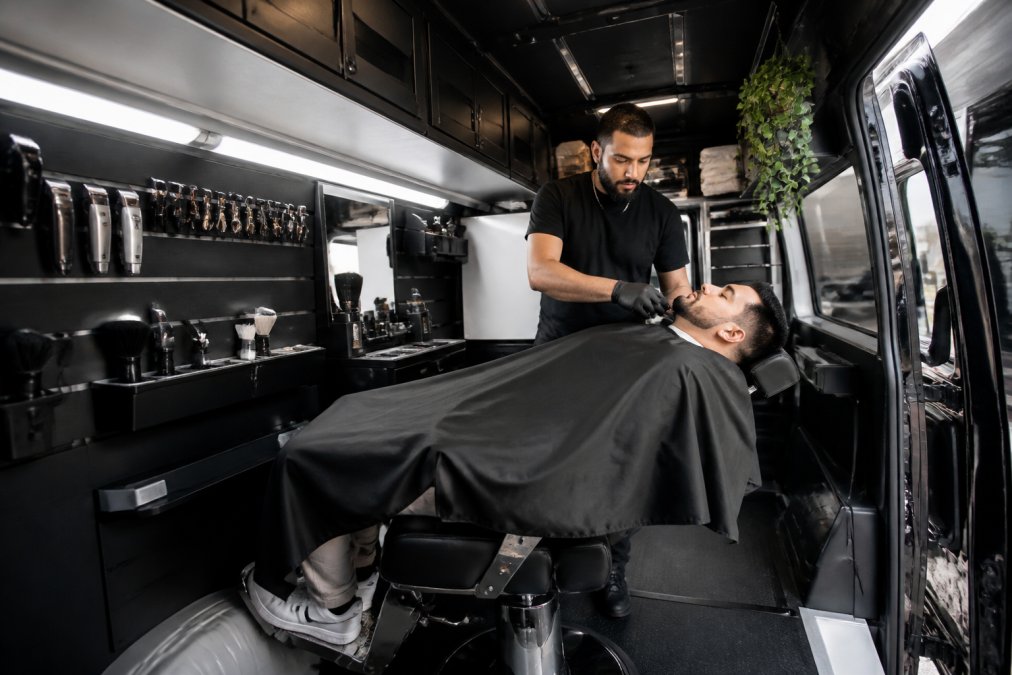
Start with a quality barber chair. A reclining chair with footrest takes up significant space but is non-negotiable for professional service. Position it to maximize legroom and client comfort. Mount your clipper station at elbow height on the wall opposite the chair, keeping your primary tools within arm's reach during service.
Lighting transforms a cramped space into a professional environment. LED strip lighting mounted along the ceiling provides shadow-free visibility without heat buildup. Position additional task lighting above your clipper station for detail work on fades and line designs.
Power and Water Supply Solutions
Power and water supply solutions separate professional mobile barber operations from amateur setups. Without reliable power, your cordless clippers die mid-fade. Without water access, sanitation becomes impossible.
Power inverters convert vehicle battery power to 120V AC current, running clippers, trimmers, and charging devices.
Water supply requires two systems: clean water for washing and rinsing, and waste water disposal that complies with local regulations. A portable water tank system with gravity feed or manual pump provides client-facing washing. Waste water collection prevents environmental contamination and keeps your vehicle interior clean.
Many mobile barbers use collapsible water containers that store flat when empty, taking minimal space.
Climate Control and Interior Design
Climate control in a mobile barber van prevents discomfort for you and your clients. A hot, humid van during summer service degrades the client experience and makes precision cutting difficult. Ventilation systems, window coverings, and strategic air circulation solve this.
Interior design choices affect perceived professionalism. Light-colored walls make the space feel larger. Antimicrobial wall coverings simplify cleaning and sanitation. Mirrors positioned strategically give clients visibility without adding clutter.
Mobile Barber Workflow Optimization
Workflow efficiency determines how many clients you can serve daily and how much you earn per hour. A simplified mobile barber workflow maximizes service time and minimizes setup and transition periods.
Fade Supply Pro Travel Barber Backpack →
Client Booking and Scheduling Systems
Client booking and scheduling systems prevent gaps in your service day and reduce travel time between appointments.
Keep your service area manageable. Trying to serve clients across a sprawling geographic region wastes fuel and time.
Sanitation and Hygiene Protocols
Sanitation and hygiene protocols are non-negotiable in a mobile environment. Clients expect professional cleanliness standards.
Establish a cleaning routine between each client. Disinfect clipper blades, sanitize your chair, and wipe down work surfaces. Disposable neck strips and fresh capes for each client prevent cross-contamination. Hand sanitizer and antibacterial wipes stay within arm's reach during your service day.
Portable sanitation systems collect and contain waste materials safely. A small sharps container for used blades and a sealed waste bin for hair clippings keep your van clean and compliant with local health codes.
Mobile Barber Business Licensing Requirements
Mobile barber business licensing requirements vary by state and local jurisdiction, but common elements apply across most regions. You need a business license, barbering license, and often a mobile service permit specific to your operating area.
State barbering boards regulate licensing and continuing education requirements. Most states require proof of barbering certification or apprenticeship completion before you can operate independently. Mobile barbers must verify that their home state recognizes mobile service as a valid business model.
Local health departments often require a separate mobile service permit. This permit confirms that your vehicle meets sanitation standards and that you comply with waste disposal regulations.
Insurance becomes critical for mobile operations. General liability coverage protects you if a client is injured during service (Get business insurance). Vehicle insurance must include commercial coverage if you're operating a business from your vehicle.
Managing Operational Costs and Profitability
Operational costs for a mobile barber setup include vehicle maintenance, fuel, equipment replacement, insurance, and licensing fees. Understanding these costs helps you set competitive pricing while maintaining healthy profit margins.
Vehicle-related costs represent your largest expense category. Fuel consumption, maintenance, and eventual vehicle replacement require budgeting. A fuel-efficient vehicle reduces daily operating costs significantly. Regular maintenance prevents expensive breakdowns that interrupt service.
Quality tools from Fade Supply Co are designed for daily professional use.
Building Your Brand and Client Acquisition
Brand identity for mobile barbers centers on reliability, professionalism, and convenience. Your vehicle becomes your storefront, so its appearance and maintenance directly impact client perception.
Professional vehicle wrapping with your business name, phone number, and social media handles turns your van into mobile advertising. Clean, well-maintained vehicles signal professionalism.
Social media marketing reaches clients in your service area directly. Before-and-after photos of your work, client testimonials, and service availability updates keep your business visible. Location tagging on posts helps local clients discover your services.
Client retention through consistent quality and professional service is key. A satisfied client tells friends and family.
Starting a mobile barber business requires intentional planning around vehicle setup, equipment organization, and operational systems. The tools you choose and how you organize your space determine whether your mobile operation feels professional or improvised. Fade Supply Co provides storage and equipment solutions designed specifically for mobile barbers, helping you maintain the professional standards your clients expect while working within space constraints. Explore our mobile barber collection to build a setup that supports your business growth and client satisfaction.
Frequently Asked Questions
What equipment is essential for a mobile barber setup?
A professional mobile barber setup requires clippers, trimmers, a portable barber chair or seat, organized storage cases, a power solution for charging tools, water supply containers, sanitation supplies, and a barber cape. The Fade Supply 3-Layer Mobile Barber Kit ($61.99) includes organized storage with a waterproof cape and brush, making it ideal for barbers starting their mobile service. Pair this with a hard-shell clipper case to protect your most valuable tools during transport.
How do I set up a portable barber station in a van?
Start by measuring your van's interior space and planning a layout that maximizes workflow efficiency. Install a secure barber chair or professional seat, position your clipper station within arm's reach, and mount shelving for tool storage. Use the Fade Supply Hard-Shell Clipper Case ($27.99) for your clippers and trimmers, and the Pro Travel Barber Backpack ($66.99) for daily essentials. Ensure adequate lighting, install a 12V or 110V power inverter, and set up a portable water supply system. Proper ventilation and climate control prevent tool damage and client discomfort during appointments.
What are the legal requirements for operating a mobile barbershop?
Mobile barbers must obtain a state barber license and a mobile business license from their local municipality. You'll need commercial vehicle insurance, liability insurance covering mobile services, and proof of sanitation compliance. Check with your state's cosmetology or barber board for specific requirements, as regulations vary. Many states require mobile units to meet health department standards for water disposal and sanitation. Some municipalities restrict service areas or require permits for each location where you operate.
How can I manage power and water in a mobile barber van?
Use a power inverter connected to your vehicle battery or a portable generator for clippers and lighting. Install a portable water tank for washing and sanitation, with a separate waste water disposal container. A portable sanitation system ensures compliance with local health regulations. Keep backup power banks for charging tools, and maintain regular vehicle maintenance to prevent electrical system failures during client appointments.