

Table of Contents
- Why Barber Supply Quality Matters for Veterans
- Professional Hair Clippers and Trimmers for Heavy-Duty Use
- Essential Barber Accessories and Station Setup
- Barber Tool Maintenance Guide for Long-Term Durability
- Barber Shop Startup Checklist for Veterans
- Veteran-Specific Discounts and Support Programs
- Professional Grade vs. Consumer Grade: What the Difference Means
- Conclusion
Last Updated: August 24, 2026
Why Barber Supply Quality Matters for Veterans
Professional-grade barber supply for veterans isn't just about having tools, it's about equipment that performs under real-world conditions. A clipper that dies mid-shift costs you clients and revenue. At Fade Supply Co, founded by a veteran and informed by real-world experience behind the chair, we know professional barber supply must meet two critical standards: durability under heavy use and accessibility for those who've served.
The difference between consumer-grade and professional-grade equipment becomes obvious within the first month of daily use. Consumer clippers overheat, lose cutting precision, and require constant adjustment. Professional equipment maintains consistent blade tension, motor speed, and cutting performance across dozens of fades per day.
Professional Hair Clippers and Trimmers for Heavy-Duty Use
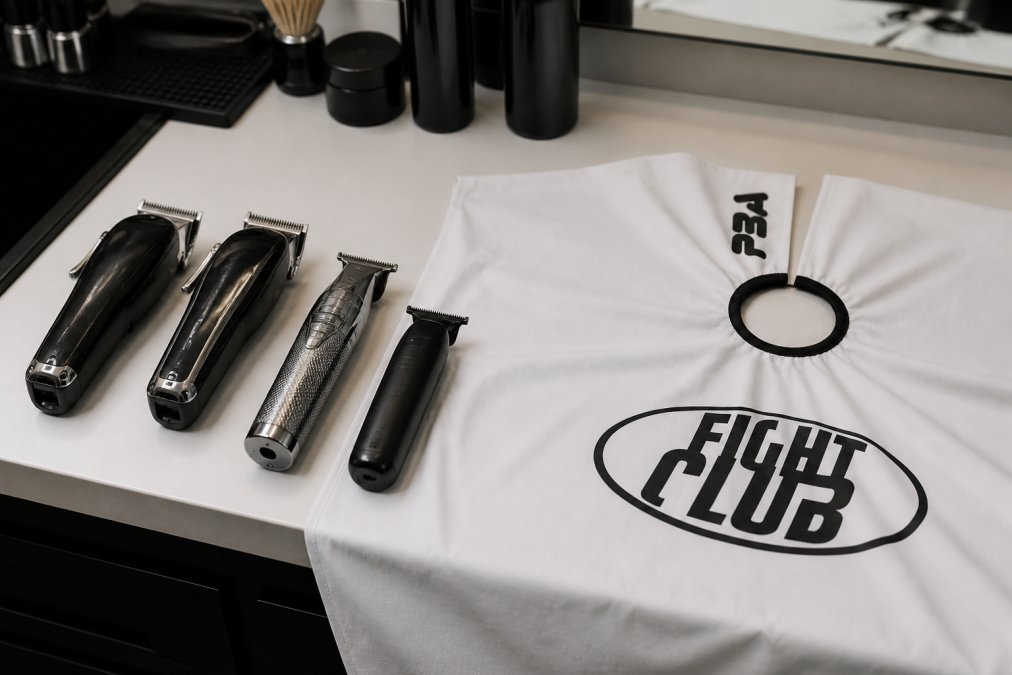
Professional hair clippers designed for heavy-duty use feature motors that maintain consistent RPM under load, blades that stay sharp through hundreds of cuts, and ergonomic designs that reduce hand fatigue during long shifts.
High-carbon steel blades are the industry standard. They hold their edge significantly longer than cheaper alternatives and can be honed repeatedly without losing cutting precision. When you're performing 15-20 fades per day, blade quality directly impacts your final results.
Motor speed matters more than most barbers realize. Professional clippers typically operate between 4,000 and 10,000 RPM (peer-reviewed research). A motor that drops RPM under load causes inconsistent lines and requires multiple passes over the same area, wasting time and stressing equipment.
Look for adjustable taper levers and clipper guards that stay secure during use. Veterans especially appreciate equipment that doesn't require constant micro-adjustments.
Cordless vs. Corded: Which Works Best for Field Use
Lithium-ion battery technology now delivers runtime and power that approaches corded clippers, making cordless equipment viable for professional use.
Corded clippers offer unlimited runtime and consistent power delivery. For barbers working in established shops with fixed stations, corded equipment remains the reliable choice.
Cordless clippers excel for mobile barbers and those managing multiple stations. A high-quality lithium-ion clipper delivers 90-120 minutes of runtime on a single charge. Many professional operations use both: cordless for flexibility and corded for high-volume days.
Battery quality determines whether cordless equipment serves you reliably. Professional-grade cordless clippers use premium battery packs rated for hundreds of charge cycles, separating equipment that lasts years from equipment that becomes unreliable within a season.
Essential Barber Accessories and Station Setup
A complete barber station requires more than clippers. Essential items include clipper guards in full size ranges, barber capes, neck strips, and cleaning tools.
Barber capes protect client clothing completely, which reduces liability and builds client confidence. The PBA Fight Club Barber Cape ($50.00) from Fade Supply Co provides professional protection with durable construction designed for daily commercial use. Available in white, yellow, black, and camo, these capes maintain a cohesive station aesthetic while meeting professional standards.

Clipper guards must be complete and organized. A full set includes guards for every cutting length you offer, typically ranging from 0.5mm to 25mm. Neck strips prevent hair from irritating client skin and reduce the need for excessive washing between clients.
Barber Tool Maintenance Guide for Long-Term Durability
Professional-grade equipment demands professional maintenance. Clippers, trimmers, and shears require regular cleaning, lubrication, and inspection to maintain cutting precision and prevent premature failure.
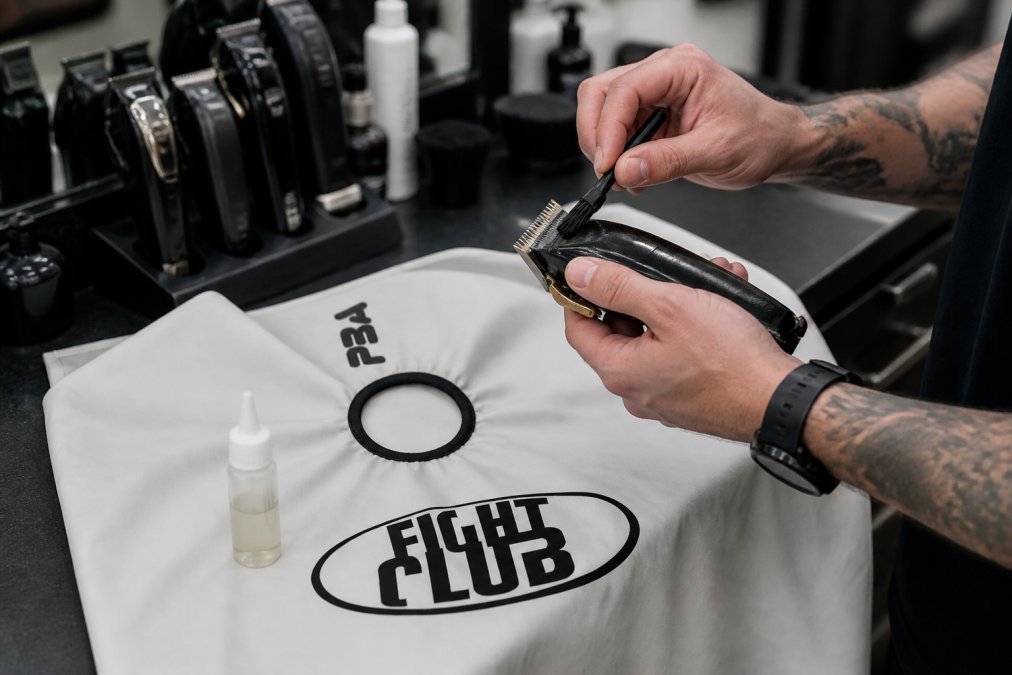
Daily maintenance takes five minutes and prevents most equipment problems. After each client, use a cleaning brush to remove hair from the clipper blade and motor housing. Hair buildup causes overheating and reduces motor efficiency.
Weekly maintenance involves deeper cleaning and lubrication. Remove the blade and soak it in clipper oil or professional cleaning solution for 10-15 minutes. Use a soft brush to gently clean the blade, then dry completely before reinstalling. Apply a small amount of quality clipper oil to the blade before each use to reduce friction and maintain cutting precision.
Blade Maintenance and Sanitization Protocols
Blade maintenance separates professional barbers from casual operators. Your blades are precision instruments that require specific care protocols to maintain cutting performance and prevent cross-contamination.
After your final client, soak your blades in professional disinfectant solution for the time specified on the product label, typically 10-15 minutes. Pat dry with a clean towel and store in a clean, dry container.
Many professional barbers maintain two sets of blades: one in use while the other soaks in disinfectant. This rotation ensures you always have sanitized equipment ready.
Blade sharpening extends equipment life and maintains cutting precision. Professional blade sharpening services cost $15-30 per blade and should happen every 3-6 months depending on usage volume (peer-reviewed research). A dull blade tears hair instead of cutting cleanly, damaging your reputation.
Store sanitized blades in a clean, dry container away from moisture and heat. A sealed container with silica packets keeps blades in optimal condition and prevents corrosion.
Barber Shop Startup Checklist for Veterans
Starting a barber shop or independent operation requires comprehensive planning. Begin with your core cutting tools: professional-grade clippers, trimmers, shears, and razors. Budget $400-600 for quality equipment that will serve you for years.
Add station essentials: barber capes, neck strips, cleaning supplies, and clipper oil. These items cost $100-150 for initial stock and require regular replenishment.
Invest in a charging dock if you're using cordless equipment. A dedicated charging station ensures your backup clippers are always ready and costs $30-50.
Stock pre-shave and aftershave products. Quality products cost $20-40 per unit and create additional revenue opportunities.
Budget-Friendly Entry Points for New Barbers
Professional-grade equipment is more accessible than many new barbers realize. Begin with one professional-grade clipper and one trimmer. A quality clipper costs $80-120, and a trimmer runs $40-60, $120-180 for your core cutting tools.
Use a cordless setup to eliminate power outlet dependency. A high-quality cordless clipper with battery and charger costs $100-150.
Add accessories gradually. Start with basic clipper guards, a quality cape, and neck strips for under $50. As your client base grows, expand your station with additional tools.
Many veteran barbers appreciate Military Discount Programs available through professional supply vendors. Fade Supply Co supports veteran-owned businesses and offers dedicated resources for military-connected barbers.
Veteran-Specific Discounts and Support Programs
The barbering community recognizes and values veteran participation. Fade Supply Co prioritizes veteran barbers through dedicated support programs. As a veteran-owned business, we provide guidance on equipment selection, maintenance protocols, and business operations specific to barber shop startups.
Professional barber associations often offer veteran membership rates and mentorship programs. Membership typically costs $50-100 annually and provides access to continuing education, networking events, and industry resources.
Veteran-owned business certifications open additional discount opportunities. Many suppliers offer preferential pricing for certified veteran-owned businesses.
Educational institutions frequently offer veteran benefits for barber training programs. The GI Bill covers approved barbering courses at many institutions, reducing or eliminating tuition costs.
Online communities dedicated to veteran barbers provide peer support and resource sharing, accelerating your learning curve and helping you avoid common mistakes.
Professional Grade vs. Consumer Grade: What the Difference Means
Understanding the distinction between professional and consumer-grade barber equipment directly impacts your purchasing decisions and long-term business success.
Professional-grade clippers use brushless motors with consistent RPM maintenance under load. A brushless motor can operate continuously for 8+ hours daily without overheating (peer-reviewed research). Consumer-grade motors typically overheat after 2-3 hours of continuous use.
Blade quality separates professional from consumer equipment more than any other factor. Professional clippers use high-carbon steel blades hardened to specific specifications, maintaining cutting precision across hundreds of cuts per day. A professional blade lasts 6-12 months of full-time use; consumer blades degrade within 2-3 months.
Ergonomic design reflects genuine engineering in professional equipment. Professional clippers feature balanced weight distribution and grip designs that reduce hand fatigue during long shifts.
The cost difference narrows dramatically when you factor in replacement frequency. A consumer clipper costs $40-60 but requires replacement every 3-4 months. A professional clipper costs $100-150 but lasts 3-5 years. Over five years, the consumer approach costs $200-300; the professional approach costs $100-150. Professional-grade equipment is actually more economical long-term.
The best barber supply for veterans combines professional-grade quality with veteran-focused support. Fade Supply Co delivers both through equipment selection informed by real-world barbering experience and dedicated resources for veteran-connected barbers. Whether you're starting your first chair or managing a multi-station shop, professional-grade tools and reliable support systems define your success. Shop Fade Supply Co's collection and experience the difference that veteran-owned commitment makes in your daily work.
Frequently Asked Questions
Q: What makes professional-grade barber clippers different from consumer models?
A: Professional-grade clippers feature high-carbon steel blades, adjustable taper levers, and motor speeds engineered for extended daily use in high-volume shops. Consumer models use softer metals that dull quickly and lack precision controls. Professional clippers maintain cutting accuracy across hundreds of fades and tapers daily, while consumer versions pull hair and require frequent replacement. The ergonomic design of professional tools also reduces hand fatigue during long shifts.
Q: Do barber supply companies offer discounts for veterans?
A: Many veteran-owned and veteran-friendly barber supply businesses prioritize supporting the barbering community with competitive pricing and loyalty programs. Fade Supply Co, founded by a veteran, offers professional-grade tools selected from real-world experience behind the chair. Check directly with suppliers about bulk discounts for shop owners and apprenticeship pricing for students. Some veteran-owned vendors also provide exclusive programs for military-connected barbers.
Q: What essential tools should a veteran barber prioritize when opening a shop?
A: Start with professional hair clippers, adjustable trimmers, quality shears, and razors designed for fades and tapers. Add barber capes (like the PBA Fight Club capes at $50), a clipper maintenance kit with blade oil and cleaning brushes, and a charging dock for cordless tools. For mobile barbers, a portable crossbody bag ($55) keeps tools organized during house calls. Prioritize durability and cutting precision over quantity, a few professional-grade tools outperform a large collection of consumer-grade equipment.
Q: How often should professional barber tools be maintained?
A: Clean clipper blades and trim guards daily after use with a soft brush to remove hair and debris. Apply clipper oil to blades every 2-3 hours during heavy-use days to maintain smooth operation and prevent overheating. Sanitize all tools according to health department standards in your area. Deep maintenance, including blade sharpening and motor inspection, should happen every 3-6 months depending on shop volume. Regular maintenance extends tool life by years and prevents mid-shift failures.
This article was written using GrandRanker