

Table of Contents
- Quick Comparison: Durable Clippers for High Volume Shops
- What Separates Durable Clippers From Disposable Ones
- Cordless vs Corded Clippers for Barbers: Which Wins in a Busy Shop
- Best Clippers for Smooth Skin Fades Under Heavy Daily Use
- Professional Clipper Maintenance Tips That Extend Motor Life
- Repairability, Spare Parts, and Long-Term Wear
- Matching Clippers to Your Shop's Workflow and Budget
- Frequently Asked Questions
Last Updated: September 15, 2026
Quick Comparison: Durable Clippers for High Volume Shops
Durable clippers for high volume shops are professional-grade tools built to survive eight or more hours of daily use without motor failure, blade warping, or battery degradation. The difference comes down to motor type, blade material, and repairability.
Here's how the top professional-grade options stack up:
| Model | Price | Motor | Run Time | Best For |
|---|---|---|---|---|
| Wahl 5-Star Vapor | $200.99 | Brushless, 8,000 RPM | 150 min | All-day fading |
| Andis Master Cordless | $229.00 | Rotary, high-speed | 90+ min | Skin-tight fades |
| Wahl Senior 2.0 | $229.95 | 8,000 RPM | Cord/cordless | Bulk removal |
| StyleCraft Saber 2.0 | $299.95 | EON brushless, 7,200 RPM | 150 min | Modular repair |
| Gamma+ Shorty | $249.99 | EON brushless, 7,500 RPM | 120 min | Detailed work |
| Wahl Cordless Legend | $144.99 | Rotary | 100 min | Budget-conscious shops |
The clippers that survive high-volume shops share three traits: a brushless or heavy-duty rotary motor, DLC-coated or carbon-steel blades, and available spare parts. Everything else is secondary.

What Separates Durable Clippers From Disposable Ones
The gap between a clipper that lasts two years and one that lasts two months comes down to motor construction and blade metallurgy.
Motor Type and Strokes Per Minute
Brushless motors outlast brushed motors in continuous use: brushed designs rely on carbon contacts that wear down under friction, while brushless eliminates that contact point. The Wahl 5-Star Vapor runs brushless at 8,000 RPM with Adaptive Speed Control, and the Gamma+ Shorty pushes 7,500 RPM via an EON digital brushless motor. Higher strokes per minute reduce drag and keep the motor from overheating through a full day of fades.
Blade Materials and Heat Dissipation
Blades generate friction heat, and heat kills motors over time. DLC (diamond-like carbon) coatings reduce that friction significantly. The Wahl Senior 2.0 uses a DLC-coated blade, and the StyleCraft Saber 2.0 pairs a Black Diamond Carbon DLC Echo blade with a full-metal body that pulls heat from the cutting edge. Carbon-steel blades on the Andis Master hold their edge longer than stainless but need more frequent oiling.

Cordless vs Corded Clippers for Barbers: Which Wins in a Busy Shop
Cordless wins for most high-volume shops, but not for the reason most guides give. The deciding factor isn't peak runtime on a spec sheet, it's usable runtime after 300 charge cycles.
The Real Chair-Time Math
A busy barber doesn't run a clipper for a full eight hours. Actual cutting time across a shift typically lands between four and six hours, since the rest goes to consultation, caping, cleanup, and client turnover.
- Wahl 5-Star Vapor: 150 minutes per charge, 60-minute charge time
- StyleCraft Saber 2.0: 150 minutes per charge
- Gamma+ Shorty: 120 minutes per charge
- Wahl Cordless Legend: 100 minutes per charge
- Andis Master Cordless: 90+ minutes per charge
At 150 minutes, a Vapor or Saber 2.0 covers roughly half a shift of continuous cutting; a mid-day top-up on the dock closes the gap. At 90 minutes, the Andis Master needs a second unit or a corded fallback to survive a full day.
Battery Chemistry and Charge-Cycle Degradation
Lithium-ion cells lose capacity over time, and charging habits determine how fast (energy.gov). Two accelerate the loss:
- Deep discharge. Running a battery to zero before charging stresses the cell. Topping up at 30-40% is easier on the chemistry than draining to 0%.
- Heat during charge. Charging a hot battery, one that just finished a full fade on coarse hair, degrades it faster than charging a cool one. Let the unit sit for a few minutes before docking it.
A well-treated lithium-ion pack holds usable capacity for roughly two to three years of daily shop use; one routinely run to zero and charged hot may show the same drop in half that time (pubmed.ncbi.nlm.nih.gov).
When Corded Still Wins
Corded operation matters as a fallback, with two exceptions:
- Bulk removal stations. If a barber's job is mostly clipper-over-comb and taper work on thick hair, a corded unit like the Wahl Senior 2.0 running at 8,000 RPM with Adaptive Speed Control never has to think about battery state.
- Shops with unreliable power. A corded clipper on a surge protector is more predictable than a cordless unit that might not have finished charging overnight.
The Wahl Senior 2.0 and the Vapor both run corded or cordless, so a dead battery never ends your day.

Heat Buildup During Continuous Cutting
A cordless clipper running continuously for 30+ minutes on thick hair builds heat in two places: the blade edge (friction) and the motor housing (current draw). Corded units run cooler at the blade but hotter at the motor if the housing has poor airflow.
The practical test: after a full fade on coarse hair, touch the blade housing. If it's uncomfortable to hold for more than a second, the clipper is running hot, and that heat is transferring into the motor windings. A full-metal body like the StyleCraft Saber 2.0's pulls heat from the cutting edge faster than plastic. Rotating between two clippers lets each cool while the other works, extending motor life noticeably in a high-volume shop.
Best Clippers for Smooth Skin Fades Under Heavy Daily Use
The best clipper for smooth skin fades under heavy daily use is the Wahl 5-Star Vapor, because its F32 FADEOUT blade is engineered specifically for balding and close fading with zero-gap adjustability and 32 fine ball-point teeth that glide without nicking.
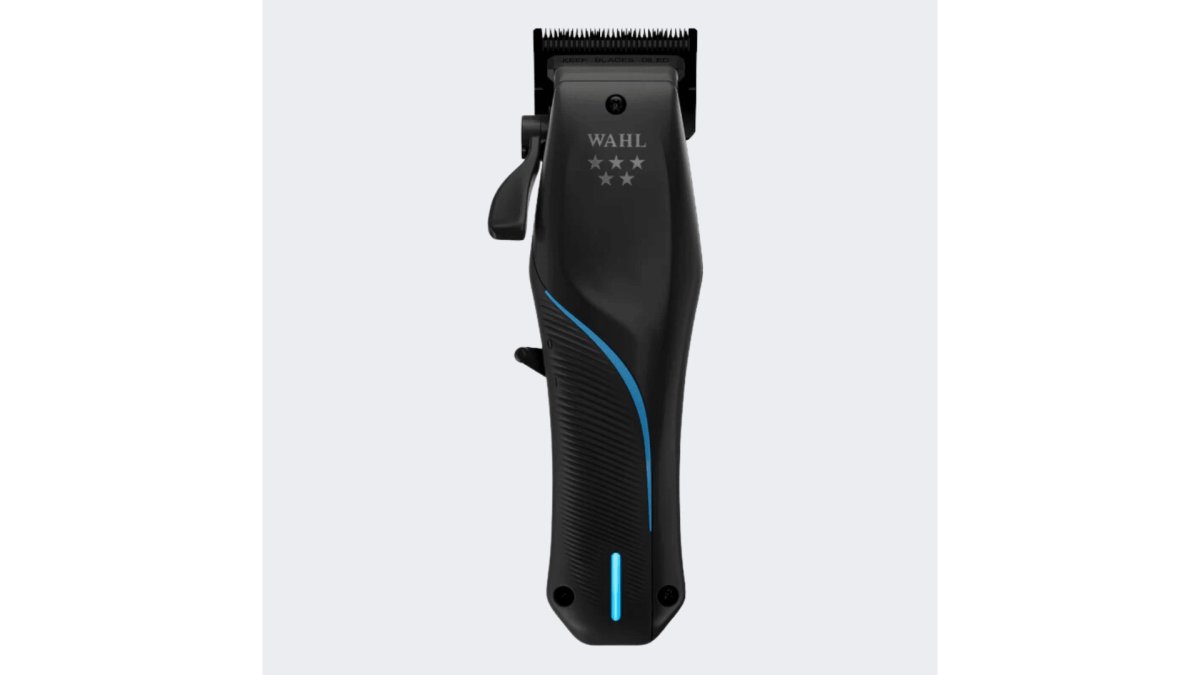
The Vapor's blade is 6 grams lighter than standard with 50% more teeth, translating to faster feeding and less snagging on coarse or curly texture.
The Andis Master Cordless is the other serious contender. Its carbon-steel blades adjust from 000 to 1 for the shortest cutting lengths without swapping guards, and the aluminum body takes abuse plastic housings can't (Master® Adjustable Blade Clipper). At $229.00, it's a legacy tool with 90+ minutes of runtime.
If budget is the constraint, the Wahl Cordless Legend at $144.99 handles clean fades with a Wedge blade and 100 minutes of runtime. It won't match the Vapor's blade geometry for balding work, but it's a legitimate professional tool.
Professional Clipper Maintenance Tips That Extend Motor Life
Professional clipper maintenance tips that actually extend motor life come down to four habits: oil daily, clean after every client, replace worn blades before they drag, and never store a clipper with a dead battery.
Repairability, Spare Parts, and Long-Term Wear
What Actually Wears Out, and In What Order
Models Built for Self-Service
Sourcing Parts and Reducing Downtime
Long-Term Wear: What to Watch For
Matching Clippers to Your Shop's Workflow and Budget
Frequently Asked Questions
What features make hair clippers durable for professional use?
Look for a brushless or heavy-duty rotary motor rated 7,000 RPM or higher, stainless steel or DLC-coated blades, and a metal housing that resists cracking. Battery quality matters too: lithium-ion packs rated for 90 to 150 minutes per charge handle back-to-back clients without mid-cut stalls. Detachable blades and a zero-gap taper lever add flexibility. Models like the Wahl 5-Star Senior 2.0 and StyleCraft Saber 2.0 are built around these specs.
How often should you replace professional barber clippers?
With proper maintenance, a professional-grade clipper should last two to five years in a high-volume shop. The motor usually outlasts the blade assembly, so replacing blades every six to twelve months keeps cutting performance sharp. If a clipper starts pulling hair, running hot within minutes, or losing runtime after a full charge, those are signs the motor or battery is near the end of its service life.
Are cordless clippers reliable enough for high-volume shops?
Yes, if you plan around runtime. A clipper with 120 to 150 minutes of cordless runtime covers most of a shift, and USB-C fast charging means a 60-minute top-up gets you back to full. Many durable clippers for high volume shops also run corded while charging, so you never stop mid-client. Keep one backup clipper charged at all times and cordless models hold up fine in a busy shop.
How do you maintain professional clippers to extend their lifespan?
Oil the blade before every shift and after every few cuts, brush out hair debris daily, and zero-gap or realign blades monthly. Replace worn blades rather than over-tightening them, and store clippers in a dry case to prevent moisture damage to the motor. Following professional clipper maintenance tips like these adds months or years to a clipper's working life, especially in shops running five or more chairs.
What is the difference between home-use and professional-grade clippers?
Home clippers typically use pivot motors with plastic housings, lower torque, and shorter runtimes, which is fine for occasional trims but breaks down under daily use. Professional-grade clippers use rotary or brushless motors, metal or reinforced housings, detachable stainless steel or ceramic blades, and batteries rated for hundreds of charge cycles. That build difference is why durable clippers for high volume shops cost more upfront but last far longer under continuous use.