

Table of Contents
- What You'll Need to Maintain Your Clippers
- Daily Cleaning and Removing Hair Debris
- How to Clean and Sanitize Barber Tools Properly
- Best Clipper Oil for Barbers and Proper Lubrication
- How to Keep Clippers Sharp Through Blade Alignment
- Barber Clipper Maintenance Schedule and Storage
- Common Maintenance Mistakes to Avoid
- When to Replace Your Clipper Blades
- Frequently Asked Questions
What You'll Need to Maintain Your Clippers
Maintaining professional barber clippers starts with having the right tools on hand. You don't need much, but what you do have should be reliable and purpose-built for the job.
A quality cleaning brush is essential. This removes loose hair and debris that accumulate in the blade teeth after every cut. Compressed air works well for this too, though a brush gives you more control. Isopropyl alcohol or a dedicated clipper disinfectant spray handles sanitization without damaging the blade coating. For lubrication, you'll need clipper oil formulated specifically for barber tools, generic machine oil won't cut it because it's too heavy and attracts dust.
Beyond the basics, a lint-free cloth prevents fibers from settling on freshly cleaned blades. Many barbers keep a small container of blade care dip for deeper cleaning when buildup accumulates. If you work with multiple clipper models, check whether they share the same blade type before investing in maintenance supplies.
At Fade Supply Co, we understand the importance of reliable tools. A maintenance kit that bundles these essentials together saves both money and guesswork. The Fade Supply Maintenance Kit includes everything a professional barber needs to keep their tools clean, lubricated, and performing at their best.
The real time investment isn't in buying supplies, it's in building the habit of using them consistently.
Daily Cleaning and Removing Hair Debris
Daily cleaning is where clipper maintenance actually happens. Everything else builds on this foundation. The moment you finish a cut, hair debris starts working its way into the blade teeth and around the pivot point. Leave it there and you're looking at friction, heat buildup, and accelerated blade wear.

Start by running the clippers for 5-10 seconds while holding them over a trash can or towel. The vibration helps shake loose hair free. Then use a soft cleaning brush to gently brush against the blade direction, working the bristles between the teeth. Don't force it, you're clearing debris, not scrubbing. Pay special attention to the sides of the blade where hair collects most.
For cordless clipper models, this becomes even more critical because the motor works harder when blades are clogged. A few extra seconds of daily cleaning prevents the battery from draining faster than it should.
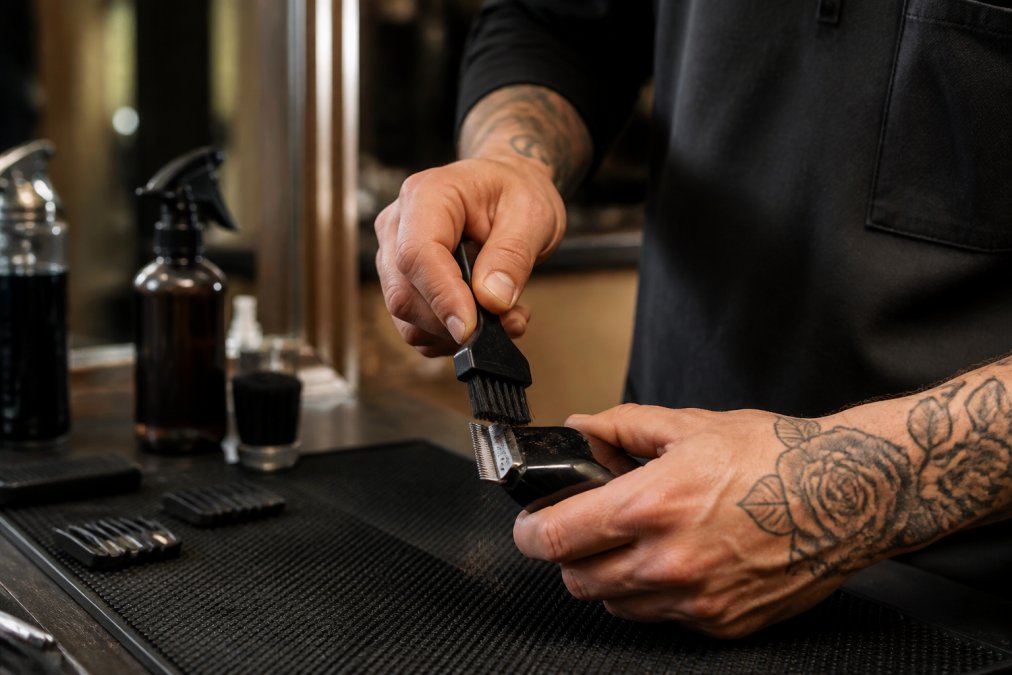
After brushing, spray a light coat of disinfectant spray on the blades while they're running. This serves two purposes: it sanitizes the blade surface and helps flush out remaining hair particles. Let the clippers run for another 3-5 seconds. Wipe the blades dry with a lint-free cloth.
This entire process takes about two minutes. Do it between every client and you've eliminated the single biggest cause of clipper performance decline. Most barbers who skip this step end up replacing blades twice as often as they should.
How to Clean and Sanitize Barber Tools Properly
Sanitization goes beyond what daily cleaning covers. You're targeting bacteria, fungi, and pathogens that accumulate on blade surfaces over time. This isn't optional, it's a hygiene standard that protects both you and your clients.
The most effective approach uses isopropyl alcohol or a clipper-specific disinfectant spray. Spray the blades thoroughly while the clippers are running, then let them run for 5-10 seconds to distribute the solution across all surfaces. The friction and heat from the motor help the disinfectant work more effectively than if you applied it to stationary blades.
For deeper sanitization, a blade care dip jar works exceptionally well. Submerge the clipper head in the solution for 30 seconds to a minute. The liquid penetrates areas a spray can't reach, including around the tension screw and inside the blade housing. After soaking, run the clippers for 10 seconds to expel excess liquid, then dry completely with a lint-free cloth.
Never use harsh chemicals like bleach or acetone. These corrode the blade coating and damage the motor housing. Stick to products formulated for barber tools. The Andis Cool Care spray cleans, disinfects, and lubricates in one application, which makes it efficient for high-volume shops where time matters.

Sanitize once daily at minimum. If you're running a busy shop with multiple barbers sharing equipment, sanitize between every client. This prevents cross-contamination and maintains hygiene standards that clients expect from professional service.
Best Clipper Oil for Barbers and Proper Lubrication
Lubrication is what keeps clippers running smoothly and prevents heat buildup that destroys blades prematurely. Without proper oil, friction increases, the motor works harder, and blade alignment drifts. You'll notice performance decline in weeks instead of months.
Use only clipper oil formulated for barber tools. Standard machine oil, sewing machine oil, or motor oil won't work. Clipper-specific oil has the right viscosity, thin enough to flow between blade teeth but thick enough to provide lasting lubrication. It also includes additives that prevent rust and reduce heat.
Apply oil to the blade teeth while the clippers are running. A few drops on each side of the blade is enough. Run the clippers for 3-5 seconds to distribute the oil evenly. Wipe away excess with a lint-free cloth. Excess oil attracts hair and dust, which defeats the purpose.
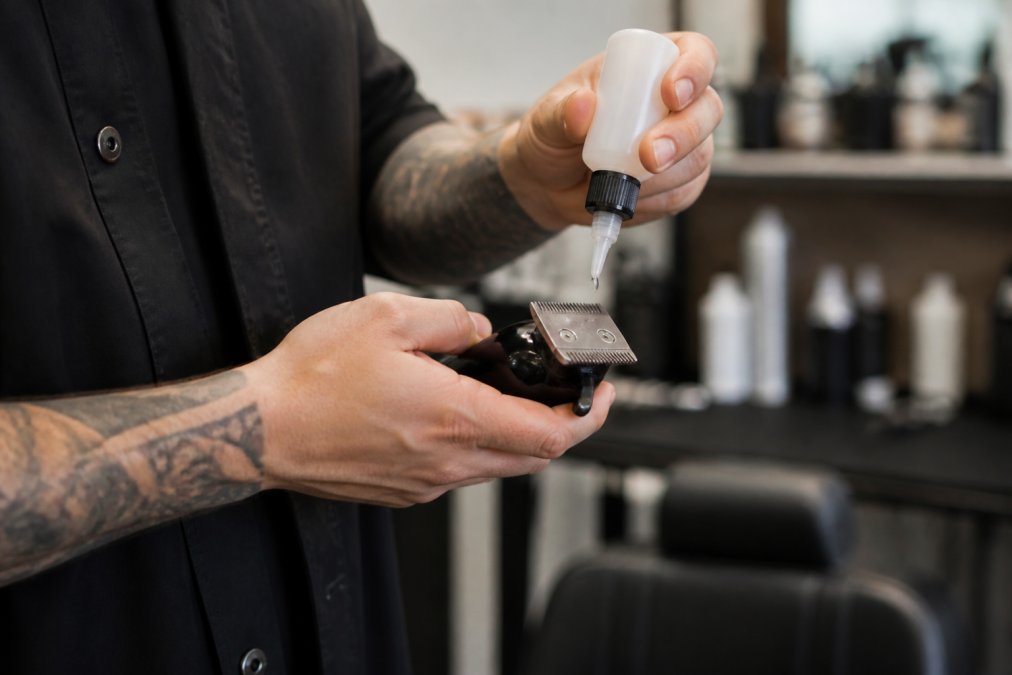
The Andis Clipper Oil is formulated specifically for professional clipper maintenance. It reduces friction, extends blade life, and prevents the overheating that happens when clippers run dry. Many barbers apply oil before their first client of the day and again mid-shift if they're running high volume.
How often you oil depends on usage. A barber cutting 10-15 clients daily should oil twice daily (peer-reviewed research). A mobile barber working 4-5 clients might oil once daily. The key is consistency. Clippers that run without oil for weeks will show performance problems that oil alone can't fix once damage starts.
How to Keep Clippers Sharp Through Blade Alignment
Blade sharpness isn't just about the blade itself, it's about alignment. Even a sharp blade performs poorly if it's misaligned. The two blades must sit parallel and meet at the cutting edge without gap or overlap. When alignment drifts, you get pulling, uneven cuts, and accelerated wear.
Check alignment monthly by looking at the blade edge under bright light. The two blades should form a straight line with no visible gap. If you see light between them or if one blade sits higher than the other, adjustment is needed.
Most professional clippers have a tension screw that controls blade alignment. Locate it on the side of the clipper head, it's usually a small screw near the pivot point. Loosen it slightly, realign the blade by hand until it sits parallel, then tighten gently. Don't over-tighten or you'll create friction that burns out the motor.
If the blade still doesn't align after adjustment, the pivot point may be worn. This happens with heavy use over time. A worn pivot point means the blade rocks instead of sliding smoothly. At this stage, blade replacement becomes necessary. Trying to force alignment on a worn pivot point will only damage the clipper housing.
Check blade alignment whenever you notice pulling or uneven cutting. Many barbers develop a feel for proper alignment and can spot problems before clients notice. This proactive approach prevents the frustration of clippers failing mid-shift.
Barber Clipper Maintenance Schedule and Storage
A maintenance schedule keeps your clippers performing consistently. Without one, maintenance becomes reactive instead of preventive. You'll replace blades more often, experience unexpected failures, and lose money on downtime.
Here's what a realistic maintenance schedule looks like:
| Maintenance Task | Frequency | Time Required |
|---|---|---|
| Clean and remove hair debris | After every client | 2 minutes |
| Disinfect blades | Once daily minimum | 3 minutes |
| Apply clipper oil | Once or twice daily | 1 minute |
| Check blade alignment | Monthly | 5 minutes |
| Deep clean blade care dip | Weekly | 5 minutes |
| Inspect for rust or corrosion | Monthly | 2 minutes |
| Replace clipper blades | Every 6-12 months | 5 minutes |
Storage matters as much as maintenance. Store clippers in a clean, dry location away from moisture and dust. A clipper stand or hook keeps them upright and prevents blade damage from being dropped or knocked over. Never store clippers in a damp environment, moisture causes rust on steel blades and corrosion on the blade housing.

If you're a mobile barber working out of your car or traveling between locations, a protective case prevents damage during transport. Keep maintenance supplies in a small kit so you can clean and oil clippers regardless of where you're working. Consistency in maintenance routine matters more than location.
For shops with multiple barbers, designate one person responsible for equipment maintenance or rotate the responsibility weekly. When nobody owns it, maintenance gets skipped. A simple checklist posted near the station keeps everyone accountable.
Common Maintenance Mistakes to Avoid
Most clipper problems stem from preventable mistakes. Understanding what goes wrong helps you avoid expensive repairs and blade replacements.
The biggest mistake is skipping daily cleaning. Hair buildup accelerates blade wear and creates friction that heats the motor. Barbers who clean consistently see blade life double compared to those who don't (peer-reviewed research). This single habit saves more money than any other maintenance practice.
Using the wrong oil is another costly error. Generic machine oil is too heavy and attracts dust. It clogs the blade teeth instead of lubricating them. Clipper-specific oil costs more upfront but lasts longer and actually protects your investment. Cheap oil becomes expensive when it damages your blades.
Over-tightening the tension screw during blade alignment creates friction that burns out the motor. The screw should be snug, not tight. If you can't feel the blade move smoothly by hand after tightening, you've gone too far. Back it off slightly until movement feels natural.
Storing clippers while wet or damp is a guarantee for rust and corrosion. Always dry blades completely before storing. If you've just sanitized with alcohol or spray, give the clippers 30 seconds of running time to expel moisture, then wipe with a lint-free cloth.
Ignoring early warning signs is how small problems become big ones. If clippers start pulling hair or running hot, address it immediately. Don't assume it will resolve itself. Early intervention prevents blade damage and motor failure.
When to Replace Your Clipper Blades
Blade replacement timing is about performance, not calendar dates. A blade that cuts cleanly for 12 months in a slow shop might need replacement after 6 months in a high-volume shop. Watch for these signs that replacement is due.
Pulling hair instead of cutting cleanly is the clearest sign. This happens when the blade edge dulls or alignment drifts beyond adjustment. A sharp blade cuts hair with one pass. A dull blade requires multiple passes and irritates the scalp.
Excessive heat during use means the blade is working too hard. If clippers feel hot to the touch after 30 minutes of cutting, the blade is either dull or misaligned. Oil and cleaning won't fix this, replacement is necessary.
Visible rust or pitting on the blade surface means corrosion has started. Steel blades are prone to this if stored improperly or used in humid environments. Ceramic blades resist rust better but are more expensive. Once rust appears, the blade is compromised.
A blade that won't stay aligned despite adjustment indicates pivot point wear. The blade rocks insteads of sliding smoothly. This is a sign the clipper itself may be near the end of its service life, depending on the model.
Most professional-grade blades last 6-12 months with proper maintenance (peer-reviewed research). High-volume shops might replace every 6 months. Low-volume users might stretch to 12-18 months. Keep spare blades on hand so you're never without working clippers. Fade Supply Co provides professional-grade tools and station essentials designed to help barbers perform at their best.
Frequently Asked Questions
What's the best oil to use for professional barber clippers?
Use clipper-specific oil like Andis Clipper Oil formulated for barber tools. Avoid WD-40, olive oil, or generic machine oils, which can gum up blades or attract hair debris. Clipper oil is designed to reduce friction, prevent corrosion, and maintain clipping performance without damaging the blade's precision pivot point.
How often should you oil your barber clippers?
Oil your clippers daily after your last client of the day. For high-volume shops, consider a quick oil application between clients if you notice increased friction or heat. A proper barber clipper maintenance schedule includes daily oiling as the foundation of blade longevity and consistent cutting performance.
Can you use rubbing alcohol to sanitize clipper blades?
Yes, isopropyl alcohol is effective for sanitization, but it should be part of a complete cleaning process, not a replacement for clipper-specific disinfectant spray. Alcohol kills bacteria but doesn't remove hair buildup or provide lubrication. Use a dedicated disinfectant spray or blade care dip jar after alcohol cleaning to ensure hygiene standards and rust prevention.
Why are my clippers pulling hair instead of cutting?
Pulling usually indicates dull blades, misaligned blades, or inadequate lubrication. Check blade alignment by ensuring the tension screw is properly adjusted. Apply clipper oil to reduce friction and heat dissipation issues. If pulling persists, your blades may need sharpening or replacement. Regular maintenance prevents this problem from developing.
Clipper maintenance isn't complicated, but it requires consistency. The barbers who invest two minutes daily in cleaning and oiling spend far less on replacements and experience fewer equipment failures. Fade Supply Co's maintenance products are designed by professionals who understand the demands of high-volume cutting. Start with the basics, daily cleaning, proper oil, and regular sanitization, and you'll extend blade life while maintaining the cutting performance your clients expect.
This article was written using GrandRanker