

Table of Contents
- What Makes Professional Clippers Different for Apprentices
- Cordless vs Corded Clippers for Students
- Motor Types: Rotary, Magnetic, and Pivot Motors
- Best Clippers for Smooth Skin Fades
- Barber Clipper Maintenance Tips
- Essential Barber Tools for Beginners
- Ergonomics and Weight Considerations for Apprentice Training
- Choosing Your First Professional Clippers
Last Updated: August 26, 2026
What Makes Professional Clippers Different for Apprentices
Professional clippers are engineered with precision, durability, and ergonomic design that consumer-grade tools don't deliver. The difference lies in blade technology and motor consistency. Professional clippers maintain zero-gap capability, meaning the blade gap stays consistent throughout your cut without drift or chatter. They're built to handle 20-30 heads per day in a high-volume barbershop, while consumer tools overheat, lose cutting power, and fail within months.
For apprentices, professional clippers offer a critical advantage: they train you on the right equipment from day one. Learning on inferior tools teaches bad habits, you compensate for poor blade alignment by applying unnecessary pressure and adjusting your grip to manage vibration that shouldn't exist. Starting with professional clippers means your muscle memory develops correctly from the beginning.
Cordless vs Corded Clippers for Students
The cordless versus corded debate hinges on one question: what matters more, freedom of movement or guaranteed power consistency?
Cordless Advantages and Battery Considerations
Cordless clippers offer mobility that transforms your workflow, especially for apprentices managing multiple stations. Modern lithium-ion batteries deliver 60-120 minutes of continuous cutting on a single charge, more than enough for a full shift (peer-reviewed research). The Wahl 5 Star Cordless Senior Clipper, available through Fade Supply Co, offers extended runtime with adaptive speed technology that maintains cutting performance even as the battery depletes.

Battery life degrades over time, after 18-24 months of daily use, you'll notice runtime dropping. Plan for battery replacement as a maintenance cost. Cordless clippers are also typically heavier than corded models due to the battery pack, which compounds fatigue over an eight-hour day for apprentices with developing hand strength.
Corded Reliability and Power Consistency
Corded clippers deliver unlimited runtime and zero battery degradation. Your cutting power never wavers, regardless of how long you've been working. This consistency is invaluable when learning, you can isolate variables and focus on technique rather than managing battery anxiety.
The cord requires management around your station and outlet positioning. In crowded training environments or small booths, cord management becomes a friction point. Corded clippers tend to be lighter, more affordable, and more durable long-term with no battery to degrade.
Motor Types: Rotary, Magnetic, and Pivot Motors
The motor determines cutting speed, durability, and how the clipper feels in your hand.
Rotary motors use a spinning shaft to drive the blade back and forth at 3,000-4,000 strokes per minute, ideal for bulk removal and general cutting. They're durable, reliable, and forgiving, rewarding proper blade angle and pressure control. For apprentices, rotary motors teach foundational technique because they're less forgiving of sloppy technique, which accelerates learning.
Magnetic motors use electromagnetic pulses to drive the blade at 6,000-8,000 strokes per minute and generate less heat, making them ideal for detailed work and extended sessions. They're lighter and quieter, reducing hand fatigue. The trade-off is complexity, more electronic components mean more potential failure points. Magnetic clippers require more precise maintenance because the magnetic coils are sensitive to dirt and oil buildup.
Pivot motors use a weighted lever system and are rare in professional barbering. They're slower and less consistent than rotary or magnetic options and aren't recommended for serious apprentices.
For most apprentices, start with a rotary motor. The cutting speed is manageable, the motor is forgiving, and the equipment is affordable. Once you've developed consistent technique, upgrade to a magnetic motor for speed and precision advantages.
Best Clippers for Smooth Skin Fades
A smooth skin fade, cutting hair completely to the skin without visible steps or lines, is the technical test that separates competent barbers from excellent ones. Your clippers make this possible or impossible.
Blade Technology for Fade Precision
Blade quality determines whether you achieve a smooth fade or end up with visible steps and pulled hair. Professional fade clippers use precision-ground blades with tight tolerances measured in fractions of a millimeter. Zero-gap capability is essential, this means you can adjust the blade gap down to zero without the blades locking up. Clippers without zero-gap capability can't cut close enough for true skin fades.
The Wahl 5 Star Vapor Clipper, available through Fade Supply Co, features F32 FADEOUT blade technology designed specifically for seamless balding and close fading. This blade type maintains edge sharpness through hundreds of cuts, keeping your fade line clean throughout the day. Professional clippers use hardened steel or DLC-coated blades. DLC (diamond-like carbon) coating reduces friction, meaning less heat generation and longer blade life. Cheaper clippers use softer steel that dulls quickly, forcing you to apply more pressure and pull hair.

Taper Lever Adjustability and Zero-Gap Capability
The taper lever adjusts the blade gap incrementally, allowing you to transition from longer hair to skin in smooth steps. A responsive taper lever with positive detents gives you confidence that your adjustment will hold steady through the cut. Zero-gap clippers let you set the blade gap to absolute zero, the only way to achieve a true skin fade without leaving visible stubble.
Test the taper lever action before buying. It should move smoothly without grinding or resistance. Stiff levers fatigue your thumb after 20-30 fades. Loose levers drift during cutting, ruining your line.
Barber Clipper Maintenance Tips
Professional clippers are precision instruments. Treat them that way, and they'll last years. Neglect them, and they'll fail within months.
Daily Sanitation and Compliance
Sanitation is non-negotiable in barbering. Your clippers contact skin, and skin carries bacteria and fungi. Many state barbering boards require specific sanitation protocols for clippers, typically documented in your state's Department of Professional Regulation guidelines (the CDC).
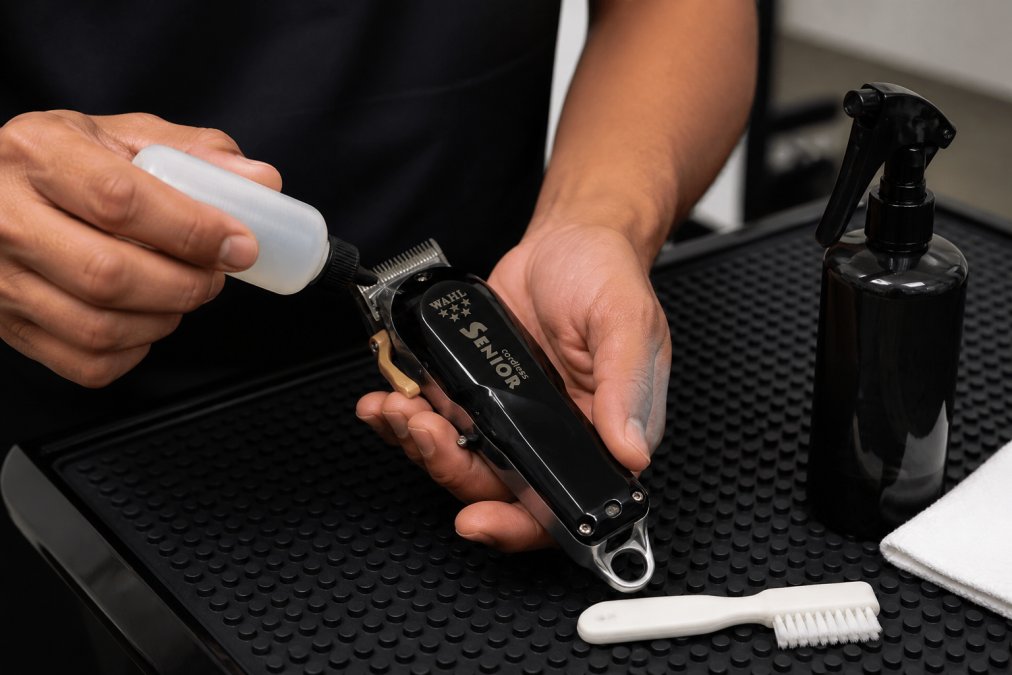
Daily sanitation starts with removing loose hair immediately after each client using a soft brush. Hair buildup traps oil and moisture, accelerating rust and corrosion. Next, wipe the blade with a clean, dry cloth to remove skin oils and sweat. Apply a light spray of cooling and disinfecting spray designed for clipper sanitation. Don't oversaturate; a light mist is sufficient.
At the end of your shift, remove the blade cartridge and soak it in a barbicide or approved disinfectant solution for 15 minutes. While the blade soaks, wipe down the clipper body with a disinfectant wipe, paying special attention to crevices. Allow the blade to air dry completely before reattaching. Store your clippers in a clean, dry location, ideally in a protective case.
Blade Care and Longevity
Your blade is the most expensive component. A well-maintained blade lasts 12-18 months of daily professional use; a neglected blade fails within 3-6 months (osha.gov).
Oil the blade regularly using clipper blade oil, not general machine oil. Apply a small amount while the clipper is running, let it run for 5-10 seconds, then wipe away excess. Do this at the start of your day and mid-shift if cutting heavily. Never apply oil to a hot blade; let the clipper cool first.
Avoid dropping your clippers or striking the blade against hard surfaces. Even small misalignments create visible lines in fades. When the blade starts pulling hair instead of cutting cleanly, it's time for professional sharpening or replacement. Don't extend a dull blade's life by applying more pressure, you'll damage hair and develop bad technique.
Essential Barber Tools for Beginners
Professional clippers are the foundation, but supporting tools enable the techniques you're learning.
Clipper guards are your fade control system, typically numbered 0 through 4 corresponding to cutting lengths. Professional guards maintain their shape and position consistently; budget guards are flimsy and misaligned. Blade oil is non-negotiable, professional-grade oil reduces friction, dissipates heat, and prevents corrosion. A small bottle costs a few dollars and lasts months.
Cooling and disinfecting spray cools the blade during extended use and sanitizes between clients. A soft-bristle brush clears hair without damaging the blade. Detailing shears complement your clippers for precision work around edges and hairlines. A neck duster removes loose hair after cutting, essential for professional presentation.
Ergonomics and Weight Considerations for Apprentice Training
You'll hold your clippers for 8-10 hours daily during your apprenticeship. Poor ergonomics compound into chronic pain, reduced precision, and career-limiting injuries.
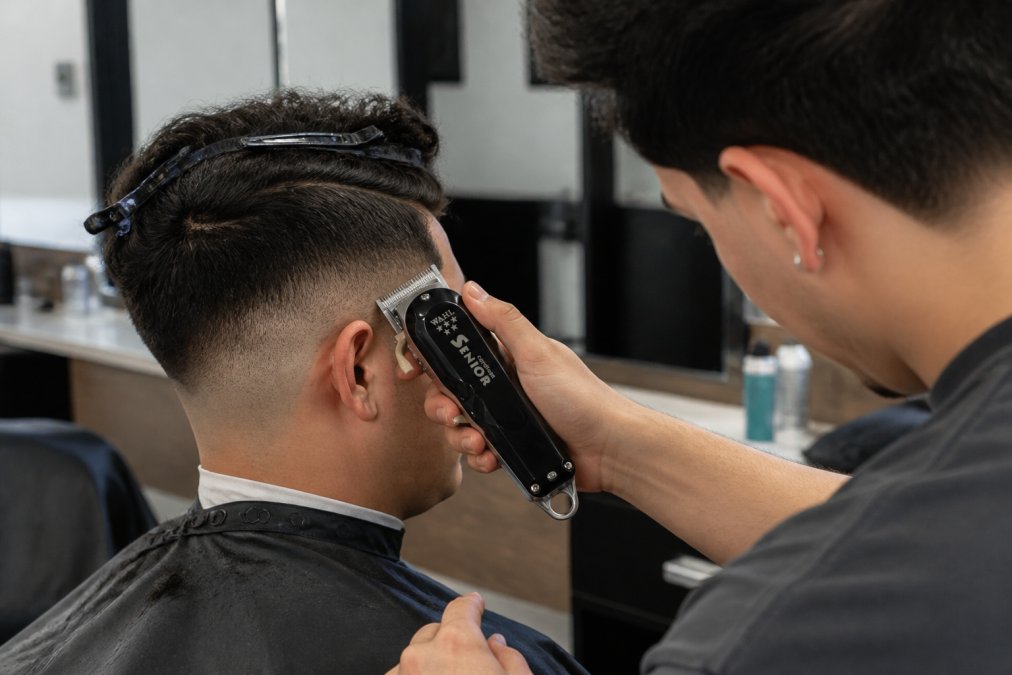
Weight distribution matters more than absolute weight. A 6-ounce clipper that concentrates weight in your fingers causes faster fatigue than a 7-ounce clipper that balances weight toward the motor. Professional clippers distribute weight evenly, placing the center of gravity near your palm rather than at the blade tip.
Grip texture affects fatigue and control. Textured or slightly rubberized grips provide friction without requiring a death grip. Vibration management is critical for long-term hand health, excessive vibration causes nerve irritation and can develop into carpal tunnel syndrome. Professional clippers use vibration dampening to reduce vibration transmitted to your hand.
Blade balance affects wrist strain. An unbalanced blade creates rotational forces that twist your wrist during cutting. Professional clippers balance the blade precisely to eliminate this force. Noise levels matter more than most realize, loud clippers cause fatigue through acoustic stress. Professional clippers run quieter, reducing overall fatigue and improving focus.
The Wahl 5 Star Cordless Senior Clipper and Wahl Professional 5-Star Senior 2.0 Cordless Clipper, both available through Fade Supply Co, are engineered with apprentice ergonomics in mind, balancing weight distribution, managing vibration, and maintaining consistent cutting performance throughout your shift.

Choosing Your First Professional Clippers
Your first professional clippers are an investment in your career. Start by identifying your primary use case. Fixed stations favor corded clippers for unlimited runtime and simplicity. Mobile or multi-station work favors cordless for freedom of movement.
Consider motor type. Rotary motors are forgiving and ideal for apprentices learning foundational technique. Magnetic motors are faster and better for detail work but demand more skill. Start rotary, upgrade to magnetic once you've mastered basics.
Test the weight and grip in person if possible. Online specs don't capture how a clipper feels during actual cutting. If you can't test in person, buy from retailers with generous return policies. Verify zero-gap capability if fade work is your focus, this is non-negotiable for smooth skin fades.
Professional clippers for barber apprentices range from around $140 to $230. The Wahl 5 Star Black Cord/Cordless Magic Clip at $139.99 offers versatility and reliability. The Wahl 5 Star Cordless Senior Clipper at $164.99 delivers extended runtime and fade precision. The Wahl Professional 5-Star Senior 2.0 Cordless Clipper at $229.95 represents the premium tier with advanced motor technology and adaptive speed control. Buy one quality clipper rather than two budget clippers. One excellent tool teaches proper technique and builds confidence.
Consider buying from Fade Supply Co, a veteran-owned company dedicated to supporting barbers and apprentices. They stock professional-grade equipment selected based on real-world experience behind the chair. Quick shipping means you're not waiting weeks to start training, and their focus on the barbering community means they understand the specific needs of apprentices.
Choosing professional clippers for barber apprentices is about investing in your foundation. The right equipment accelerates learning, prevents injury, and sets you up for a sustainable career. Start with a professional clipper that matches your learning environment, master the fundamentals with quality tools, and upgrade strategically as your skills develop. Fade Supply Co stocks the professional-grade equipment you need to perform at your best from day one, no compromises on the tools that define your craft.
Frequently Asked Questions
What clippers do most professional barbers use?
Most professional barbers rely on high-speed rotary or magnetic motor clippers from established brands like Wahl's 5 Star series. These clippers offer consistent cutting speed, precision blade alignment, and durability for high-volume work. The Wahl 5 Star Cordless Senior Clipper and Wahl 5 Star Vapor Clipper are popular choices because they handle fades, bulk removal, and detailed tapering without pulling hair or losing power under extended use.
What are the best hair clippers for a beginner barber?
Beginner barbers benefit from cordless clippers with lithium-ion batteries and ergonomic designs that reduce hand fatigue. Look for models with adjustable taper levers and zero-gap capability to build precision skills. The Wahl Professional 5 Star Series Cordless Legend Clipper ($144.99) offers 100 minutes of runtime and professional-grade performance at an accessible price point, making it ideal for apprentices building their foundation.
Do barber apprentices need cordless or corded clippers?
Cordless clippers offer mobility and freedom of movement, which helps apprentices develop proper technique without cord management distractions. However, corded clippers provide consistent power without battery concerns during long shifts. Many apprentices start with cordless for training flexibility, then add corded models as backup for high-volume shop work. Choose based on your training environment and whether you'll work mobile or in a fixed station.
How do I maintain my professional clippers as an apprentice?
Clean your clippers daily after each client using blade oil and a soft brush to remove hair and debris. Wipe the blades with a sanitation spray to meet health codes. Check blade alignment weekly and adjust the taper lever if cutting performance changes. Oil the motor housing and pivot points monthly. Store clippers in a dry location and avoid dropping them. Proper maintenance extends clipper life and ensures consistent fade quality throughout your apprenticeship.
What motor type is best for learning fades as an apprentice?
Rotary motors deliver consistent, high-speed cutting (typically 8,000+ RPM) ideal for learning smooth fades without hair pulling. Magnetic motors offer faster blade acceleration and are excellent for detail work. Pivot motors provide lighter weight for extended training sessions. For apprentices, rotary motors are the most forgiving because they maintain steady power during the learning curve, allowing you to focus on technique rather than compensating for power loss.
Will professional-grade clippers actually be more durable than budget options?
Yes. Professional clippers use reinforced motors, precision-engineered blades, and durable materials designed for 40+ hours weekly use. Budget clippers often fail within months under shop conditions. Professional models like the Wahl 5 Star series are built for repairability, with replaceable blades and serviceable motors. Investing in certified professional clippers early in your apprenticeship saves money long-term and ensures reliable performance when you're building your client base.
This article was written using GrandRanker