

Table of Contents
- Best Professional Trimmers at a Glance
- How We Evaluate Professional Trimmers
- StyleCraft Instinct: The 9,500 SPM Powerhouse
- BaBylissPRO FXONE: Precision T-Blade Options
- Andis GTX-EXO: The Magnetic Motor Choice
- JRL ONYX and Gamma+ XCEED: Value and Innovation
- What Makes the Best Clippers for Smooth Skin Fades
- How to Zero Gap a Trimmer for Crisp Lines
- Frequently Asked Questions
Last Updated: September 5, 2026
Best Professional Trimmers at a Glance
Choosing which professional trimmer is best comes down to whether the tool holds up under a full chair schedule. The options below represent the current standard for professional-grade equipment, each with a distinct motor and blade configuration suited to different working styles.
At Fade Supply Co, we stock only tools we would use behind the chair ourselves. The lineup spans the 9,500 SPM vector motor power of the StyleCraft Instinct, the magnetic tension system in the Andis GTX-EXO, and the precision T-blade engineering of the BaBylissPRO FXONE series. Every model here is zero-gap adjustable, runs on a lithium-ion battery, and is built for daily sanitation cycles.
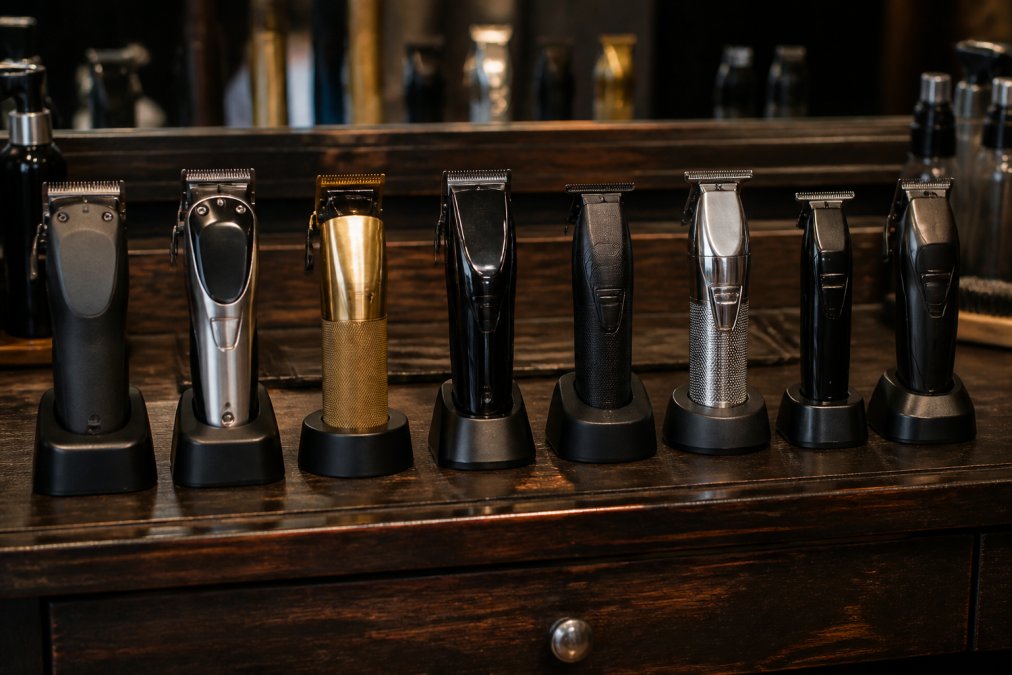
| Trimmer | Motor | Blade | Runtime | Price |
|---|---|---|---|---|
| StyleCraft Instinct Metal | IN2 Vector 9,500 SPM | Black Diamond X-Pro | Up to 4 hours | $259.95 |
| BaBylissPRO FXONE Lo-ProFX | N1 Brushless 7,200 RPM | Graphite T-Blade | Up to 3 hours | $239.99 |
| Andis GTX-EXO II | M-Force Magnetic | GTX-Z Blade | Up to 2 hours | $199.99 |
| JRL ONYX 2020T-B | High-speed 8,200 RPM | EZ-GAP M Blade | Up to 3.5 hours | $159.99 |
| Gamma+ XCEED | IN2 Vector 9,500 RPM | X-Pro Black Diamond | Up to 180 minutes | $259.95 |
How We Evaluate Professional Trimmers
A professional trimmer is judged on motor torque, blade alignment, ergonomic balance, and battery reliability. Understanding what separates a $90 tool from a $260 tool starts with the motor, there are three fundamentally different motor architectures driving these tools.

Rotary Motors: The Workhorse
Rotary motors use a spinning armature that converts rotational motion into the back-and-forth stroke of the blade. They are the most common design because they deliver consistent torque across a wide speed range. The StyleCraft Instinct and Gamma+ XCEED both use the IN2 Vector motor, rated at 9,500 SPM.
The IN2's torque-sensing circuitry detects resistance in dense, coarse hair and increases power output rather than letting the blade stall. This makes rotary motors the safest choice for barbers who work with thick, curly, or coarse hair textures.
The trade-off: rotary motors generate more vibration and heat than other designs. The metal housing on the Instinct dampens some of that, but doing 20+ fades a day will feel different compared to a magnetic motor.
Magnetic Motors: Tension Over Speed
The Andis GTX-EXO II uses a magnetic motor with a patent-pending M-Force tension system. Instead of a spinning armature, an oscillating magnet creates rapid back-and-forth motion, and the magnetic field maintains constant tension so the cutting edge stays in consistent contact with the comb blade.
This design excels at precision work, the blade doesn't chatter or bounce during zero-gap detailing or crisp outline work. Magnetic motors also run cooler and produce less vibration, reducing hand fatigue during long detailing sessions.
The trade-off: magnetic motors have lower peak speed ratings (the GTX-EXO II runs at 7,200 SPM) and can struggle with extremely dense hair if tension isn't set correctly. They suit barbers who prioritize line work and finishing over bulk removal.
Pivot Motors: Speed With a Catch
Pivot motors use a swinging arm mechanism that drives the blade in a rapid arc. They're less common in professional trimmers but appear in budget and mid-range models, offering high stroke rates at lower manufacturing cost, though they lack the torque consistency of rotary designs and the tension stability of magnetic systems.
For most professional applications, pivot motors are a compromise, they work fine on fine or medium hair but snag or pull on coarse hair. A pivot-motor trimmer can handle basic lineups on a budget, but it's not a primary chair-side workhorse.
Matching Motor Type to Hair Texture
| Motor Type | Best For | Weakness | Example Models |
|---|---|---|---|
| Rotary | Coarse, thick, curly hair | More vibration and heat | StyleCraft Instinct, Gamma+ XCEED |
| Magnetic | Precision line work, fine-to-medium hair | Lower peak speed | Andis GTX-EXO II |
| Pivot | Budget backup tools, fine hair | Snags on dense hair | Entry-level trimmers |
Blade Materials: Beyond the Marketing
Blade material determines how often you sharpen, how hot the blade runs, and how it interacts with different skin types. The three materials you'll encounter are:
- Stainless steel, Holds an edge well and resists corrosion. It's the most common material and the easiest to sharpen. The JRL ONYX uses a stainless EZ-GAP M Blade.
- DLC (Diamond-Like Carbon) coated steel, The coating reduces friction, which means less heat buildup and smoother gliding over skin. The StyleCraft Black Diamond X-Pro and Gamma+ XCEED blades use this coating. It's more expensive to replace but lasts longer between sharpenings.
- Titanium-coated steel, Similar benefits to DLC but with different wear characteristics. The BaBylissPRO FX729 uses a Blue DLC/Titanium coating that resists corrosion and runs cooler than uncoated steel.
Coated blades are worth the premium for high-volume skin fade work, as reduced heat translates to less client irritation. Uncoated stainless is fine for general cutting but runs hotter during extended use.
The Evaluation Framework We Use
Every trimmer in this guide is tested against the same protocol:
- Torque test, Run the trimmer through a section of coarse, untreated hair at full speed. Note any stalling, snagging, or speed drop.
- Heat test, Run the trimmer continuously for 10 minutes and measure blade temperature. Anything above 110°F is a fail for skin-contact work (the CDC).
- Ergonomics test, Hold the trimmer in cutting position for 15 minutes. Note vibration transfer, grip comfort, and balance point.
- Battery test, Run the trimmer cordless until it stops, then time a full recharge. Compare against the manufacturer's rated runtime.
- Zero-gap stability test, Set the blade to zero gap, then run the trimmer for 5 minutes. Re-check the gap to see if vibration loosened the blade.
This framework separates marketing claims from real-world performance. A trimmer can have an impressive spec sheet and still fail the heat test or lose its zero gap mid-cut, both deal-breakers behind the chair.
StyleCraft Instinct: The 9,500 SPM Powerhouse
The StyleCraft Instinct Metal Trimmer is our top pick for barbers who need raw cutting power. Its IN2 Vector Motor delivers 9,500 SPM with Intuitive Torque Control, automatically adjusting power when the blade meets resistance, no snagging or pulling, even through dense, coarse hair.
The rear metal housing dampens noise and absorbs vibration. The fixed Black Diamond X-Pro wide blade with the deep cutter produces crisp lines and smooth bulk removal. Battery life reaches up to 4 hours of cordless runtime with a 2-hour recharge, covering a full day of appointments.
The kit includes the trimmer, a cleaning and maintenance kit, a charging stand, and three lid modifications. At $259.95, it's an investment, but the motor performance justifies the cost for high-volume shops.
BaBylissPRO FXONE: Precision T-Blade Options
The BaBylissPRO FXONE Lo-ProFX series offers the most versatile T-blade lineup here. The N1 brushless motor runs at 7,200 RPM with dual ball bearings, delivering efficient power with minimal heat buildup. The interchangeable lithium battery pack provides up to 3 hours of runtime, and the quick-release button lets you swap batteries between clients without downtime.

The Lo-ProFX Matte Red edition features a black graphite deep-tooth T-blade that is zero-gap adjustable and hypoallergenic. Lower blade temperature reduces skin irritation during detailed line work on sensitive areas. The ultra-low-profile metal shield cover adds durability without bulk.
For a standard-tooth blade, the FX729 model uses a Blue DLC/Titanium coating that resists corrosion and runs cooler. The GoldFX FX799G offers the same motor with a knurled metal barbell grip. All three share the 4-stage LED ring battery indicator.
Andis GTX-EXO: The Magnetic Motor Choice
The Andis GTX-EXO II takes a different approach with its patent-pending M-Force magnetic tension system. Instead of relying solely on motor speed, the magnetic system maintains consistent blade contact, translating to sharper lines and finer detailing, for barbers who prioritize precision over raw speed.
The GTX-Z blade delivers a finer cutting edge out of the box, and the brushless motor runs at 7,200 SPM. Battery runtime reaches up to 120 minutes, shorter than some competitors, but the included premium charging stand keeps the tool ready between cuts. Redesigned ergonomics reduce hand fatigue.
The special-edition all-black model includes attachment combs, a blade brush, blade guard, and blade oil. At $199.99, the GTX-EXO II offers strong value for barbers who want magnetic motor technology without the flagship price.
JRL ONYX and Gamma+ XCEED: Value and Innovation
The JRL ONYX 2020T-B is the budget-friendly entry point that doesn't compromise on performance. Its patented EZ-GAP M Blade ensures clean, flawless zero gaps every time, removing guesswork from blade alignment. Smart-Clip Technology senses resistance and automatically increases motor speed, so the tool never drags or stalls mid-cut.

With an 8,200 RPM motor engineered to last up to 1,000 hours, the ONYX is built for long-term reliability. The 360-degree exposed T-blade works well for lining, designing, and dry shaving. At $159.99, it's the best pick for apprentices or barbers needing a dependable backup without the flagship cost.
The Gamma+ XCEED pushes innovation further with modular customization. Its IN2 Vector Motor matches the StyleCraft at 9,500 RPM, and the removable magnetic drop top allows for fast cleaning and lubrication. Four magnetic wide blade guards snap on with neodymium magnets for consistent cutting lengths without screws.
What Makes the Best Clippers for Smooth Skin Fades
Achieving a smooth skin fade requires more than a sharp blade. The best clippers combine zero-gap adjustability with a motor that maintains consistent speed under pressure, a blade that stalls on dense hair pulls and leaves uneven lines that ruin the fade.
Blade heat is another factor, extended use generates friction that can irritate sensitive skin. DLC-coated and titanium blades run cooler than standard steel, which is why the BaBylissPRO and StyleCraft models perform well for detailed fade work.
Proper maintenance also plays a role. A blade that is oiled and cleaned after each client holds its alignment longer and cuts more smoothly; skipping maintenance leads to blade drag, uneven cuts, and premature replacement.
How to Zero Gap a Trimmer for Crisp Lines
Zero gapping aligns the cutting blade flush with the comb blade for the closest possible cut without touching the skin. Most professional trimmers ship with a factory gap that leaves hair slightly longer; adjusting it takes about five minutes with the right tool.
- Remove the blade screws with the included screwdriver.
- Loosen the screws just enough to allow blade movement, do not remove them.
- Slide the cutting blade forward until it sits flush with the comb blade.
- Tighten the screws evenly, checking alignment after each turn.
- Test on a small section of hair before using on a client.
A common mistake is over-tightening, which can warp the blade and cause uneven cutting. The StyleCraft Instinct ships with a dual-ended zero-gap blade setter that takes the guesswork out of alignment. The JRL ONYX goes further with its patented EZ-GAP blade, which maintains a flawless zero gap without manual adjustment.
The Total Cost of Ownership: Blade Replacement and Battery Degradation
Purchase price is only the entry point. Working barbers replace blades every 3-6 months, with replacements ranging from $25 to $60. The StyleCraft Black Diamond X-Pro runs around $45, the BaBylissPRO graphite T-blade is closer to $55, and the JRL ONYX EZ-GAP is on the lower end at roughly $30.
Battery degradation is the second hidden cost. Lithium-ion batteries lose capacity after 300-500 charge cycles, so a trimmer rated for 4 hours will typically deliver closer to 2.5-3 hours after 18 months of daily use (energy.gov). At that point, you either replace the battery (if removable) or replace the trimmer.
The BaBylissPRO FXONE series uses an interchangeable battery pack, so you can swap in a fresh pack for about $40 instead of retiring the whole tool. The StyleCraft Instinct and Andis GTX-EXO II have internal batteries, meaning full replacement or manufacturer repair when they degrade. The JRL ONYX also uses an internal battery, but its $159.99 price point makes replacement less painful than the $259.95 flagships.
Sanitization Protocols That Meet State Board Standards
Blade alignment matters, but so does hygiene. State cosmetology and barber boards require tools to be disinfected between clients (osha.gov). Rules vary by state, but the common standard is: remove hair from the blade, apply a disinfectant that kills bloodborne pathogens, and allow proper contact time before the next use.
Most practitioners find that a two-step process works best:
- Remove debris, Use the included brush to clear hair from between the cutting and comb blades. Compressed air works faster if you have it.
- Disinfect, Spray the blade with a barbicide-compatible disinfectant or use a UV sanitizer station. Let the disinfectant sit for the contact time listed on the label (usually 1-10 minutes depending on the product).
When to Replace vs. Sharpen
A blade that's dragging or pulling doesn't always need replacement. Professional sharpening services cost $15-$25 per blade and can extend a quality blade's life by 6-12 months. The decision comes down to the blade's construction:
- DLC-coated blades (StyleCraft, Gamma+), Sharpening removes the coating, which defeats the purpose of the low-friction surface. Replace these rather than sharpen.
- Stainless steel blades (JRL ONYX), Sharpen these. The steel responds well to honing and there's no coating to compromise.
- Titanium-coated blades (BaBylissPRO FX729), Same logic as DLC. Replacement is the better call.
Building a Maintenance Schedule
A realistic maintenance schedule for a full-time barber looks like this:
- After every client, Brush out hair, disinfect, oil the blade.
- Daily, Check blade alignment and re-zero-gap if needed. Wipe down the housing with a disinfectant wipe.
- Weekly, Remove the blade completely, clean both surfaces, apply a fresh coat of oil, and re-tighten.
- Monthly, Inspect the battery runtime. If you're losing more than 20% of rated runtime, start budgeting for a replacement pack or new trimmer.
Skipping maintenance leads to blade drag, uneven cuts, and premature replacement. A $45 blade replacement every six months is cheaper than replacing a $260 trimmer every year because the blade was allowed to corrode or the motor was forced to work against a dull edge.
Frequently Asked Questions
What trimmer do professionals use most?
Working barbers most often reach for models from StyleCraft, BaBylissPRO, Andis, and JRL. The StyleCraft Instinct with the IN2 Vector Motor delivers 9,500 strokes per minute, which handles thick hair without pulling. BaBylissPRO FXONE models are popular for their zero-gap T-blades and interchangeable batteries. The best choice depends on your primary work: heavy bulk removal favors a high-SPM motor, while detailed line work benefits from a sharp, adjustable T-blade.
What is the difference between a trimmer and a clipper?
Clippers use wider blades to remove bulk hair and cover large areas quickly, like the main cut on top of the head. Trimmers have narrower T-blades designed for detail work: outlining hairlines, cleaning up edges, and creating crisp lines around ears and necklines. You need both tools for a complete cut, but the trimmer is the one that defines the sharpness of the finish.
How often should I zero gap my professional trimmer?
Check blade alignment at least once a week if you use the trimmer daily. Blade vibration and normal wear shift alignment over time. Zero-gap the blade again when you notice lines are not as clean or the blade is not cutting as close as it did out of the box. Many newer models include a zero-gap setter tool, which makes the adjustment straightforward and repeatable.
How long should a professional trimmer last with daily use?
A quality professional trimmer should last several years even in a high-volume shop. The JRL ONYX motor is engineered for up to 1,000 hours of operation. Brushless motors, like the N1 in BaBylissPRO models, typically outlast older pivot motors because they have fewer moving parts to wear out. Regular cleaning and blade oiling have a bigger impact on lifespan than any other factor.
Are expensive professional trimmers worth the price?
For a working barber, yes. The difference is in components that affect your work and income. A $160 to $260 trimmer has a stronger motor that cuts through thick hair without snagging, a blade that holds an edge longer, and a battery that lasts through a full day of appointments. Consumer-grade tools stall on dense hair and die within months, costing you more in replacements and lost time.
This article was written using GrandRanker